








Issue · Budget & Taxes

Budget & Taxes

Every budget & taxes bill, vote, and legislator stance in California, automatically classified by Maddy, our AI policy reader.

Total bills
133
2025-2026 Regular Session
Top supporter
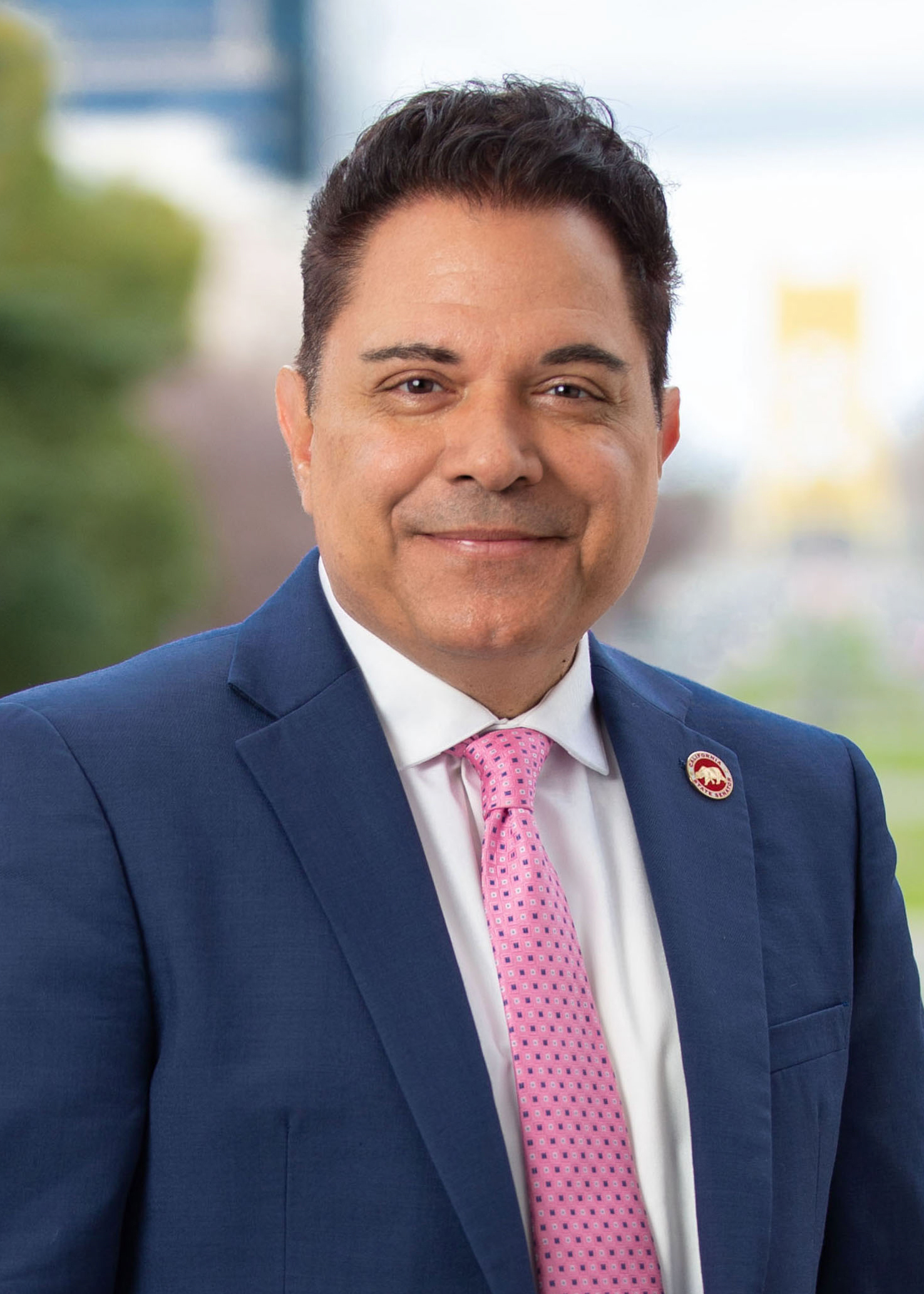
Steve Padilla
97% support rate
Top opponent
Natasha Johnson
4% support rate
Ranked legislators
10
5 support · 5 oppose
Key legislators

Who's moving budget & taxes in California

Legislators moving budget & taxes in California
Legislator Party Stance Support rate Decisive votes
Steve Padilla
Steve Padilla Senate · District 18
D
Strong +
97% 69
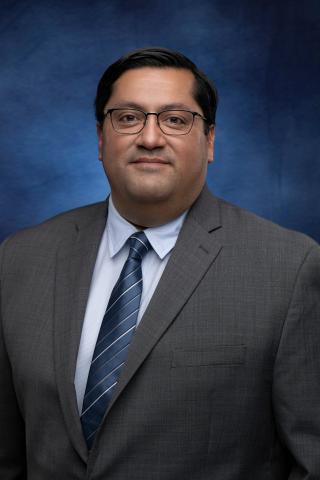
Jesse Arreguín
Jesse Arreguín Senate · District 7
D
Strong +
97% 100
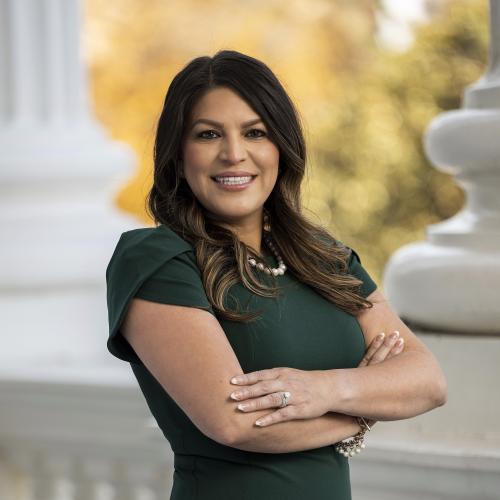
Susan Rubio
Susan Rubio Senate · District 22
D
Strong +
97% 65
Darsh Patel
Darsh Patel House · District 76
D
Strong +
97% 61
Esmeralda Soria
Esmeralda Soria House · District 27
D
Strong +
97% 61
Natasha Johnson
Natasha Johnson House · District 63
R
Strong −
4% 49
Kelly Seyarto
Kelly Seyarto Senate · District 32
R
Strong −
4% 114
Brian Jones
Brian Jones Senate · District 40
R
Strong −
5% 59
Stan Ellis
Stan Ellis House · District 32
R
Strong −
6% 72
Ali Macedo
Ali Macedo House · District 33
R
Strong −
6% 80
Showing 11–20 of 133 bills

All budget & taxes bills

passed both · California · Senate Aug 30, 2026

SB 685: Special education: nonpublic schools and agencies.

(1) Existing law sets forth a method for providing special education and related services to pupils with exceptional needs. Existing law permits, under certain circumstances, contracts to be entered into for the provision of those services by nonpublic, nonsectarian schools or agencies. Existing law defines "nonpublic, nonsectarian school" and "nonpublic, nonsectarian agency" for these purposes. Existing law authorizes a master contract for special education and related services provided by a nonpublic, nonsectarian school or agency only if the school or agency has been certified as meeting specified standards. Existing law sets forth the certification process and procedures for the nonpublic, nonsectarian schools or agencies that seek certification from the Superintendent of Public Instruction, including that the school or agency file an application with specified information. Existing law requires the Superintendent, before certification of a nonpublic, nonsectarian school or agency, to conduct an onsite review of the facility and program for which the applicant seeks certification and authorizes the Superintendent to verify that the school or agency has received a successful criminal background check clearance and has enrolled in subsequent arrest notice service for each owner, operator, and employee of the school or agency. Existing law requires the Superintendent to monitor the facilities, educational environment, and quality of the educational program of an existing certified nonpublic, nonsectarian school or agency on a 3-year cycle, as provided. Existing law requires the master contract for nonpublic, nonsectarian school or agency services to include, among other things, an individual service agreement for each pupil placed by a local educational agency. Existing law requires a contracting local educational agency to pay the full amount of the tuition or fees, as applicable, for individuals with exceptional needs who are enrolled in programs or receiving services provided pursuant to the contract. Existing law requires a master contract for nonpublic, nonsectarian school or agency services to be developed in accordance with specified provisions, including, among others, that the master contract specify the general administrative and financial agreements, including teacher-to-pupil ratios, between the school or agency and the local educational agency to provide the special education and designated instruction services. Existing law requires a certified nonpublic school or agency to provide written notification to the State Department of Education and the local educational agency with which it has a master contract of any pupil-involved incident at the school or agency in which law enforcement was contacted. This bill would eliminate the requirement that nonpublic schools or agencies that enter into contracts for the provision of special education services be nonsectarian. The bill would (A) exclude from the above-described tuition or fees the amount attributable to the provision of religious instruction, which the bill would define for these purposes, (B) prohibit public funds paid pursuant to those contracts from being used to pay for religious instruction at a nonpublic school or agency, (C) prohibit a nonpublic school or agency from providing religious instruction to pupils placed by a local educational agency, as provided, (D) require an applicant seeking an initial or renewal certification to certify, under penalty of perjury, that all educational services provided to pupils placed by a local educational agency under a master contract with a local educational agency are secular, neutral, and respectful regarding religion and religious view, as provided, and (E) notwithstanding any other law, prohibit a nonpublic school or agency, in performing services under a master contract, individual service agreement, or individualized education program, from subjecting any person to discrimination on the basis of specified protected characteristics. By expanding the crime of perjury, the bill would impose a state-mandated local program. The bill would require a master contract and individual services agreement for nonpublic school or agency services to contain provisions requiring compliance with those 5 described provisions. The bill would require the above-described application for a nonpublic school seeking certification from the Superintendent to include (A) an assurance that the nonpublic school has requested from the Commission on Teacher Credentialing a list of all credentialholders who have had final adverse action taken against their credential, (B) commencing July 1, 2027, documentation that specified staff and administrators have obtained fingerprint clearance with the commission, as provided, (C) commencing January 1, 2028, a list of staff providing instruction and services to pupils in the state and copies of their credentials, as specified, and (D) affidavits and assurances necessary to comply with all applicable federal, state, and local laws and regulations that include criminal record summaries and subsequent arrest notifications required of all nonpublic school personnel, including contractors, having contact with minor children. The bill would require, instead of authorize, the Superintendent to verify that a nonpublic school or agency seeking certification has received a successful criminal background check clearance and has enrolled in subsequent arrest notice service for each owner, operator, employee, and contractor of the nonpublic school or agency, as applicable. The bill would require the Superintendent, as part of monitoring the quality of the educational program of an existing certified nonpublic school, to also monitor the criminal background checks required for employment and pupils' receipt of any mandated instruction required for all pupils of local educational agencies, as specified. The bill would require the Superintendent, as part of monitoring an existing certified nonpublic agency, to instead monitor the agency for compliance with applicable statutory and regulatory requirements. The bill would require the department to (A) require each person employed by a nonpublic school interacting with a California pupil to undergo a fingerprint-based state and national criminal history background check, (B) submit those fingerprints, and (C) request subsequent arrest records, as specified. The bill would require the Department of Justice to provide a state and federal response to those requests in accordance with specified provisions. The bill would require a certified nonpublic school to additionally provide written notification to the department and the local educational agency with which it has a master contract of any pupil-involved incident at the school resulting in, among other things, a serious injury to a pupil, as specified, or the commencement of an investigation into an employee or contractor involving an allegation of misconduct. The bill would require a nonpublic school employing a person with a credential to report any change in employment status of the credentialholder to the commission within 30 days if the change in status is a result of an allegation of misconduct, as specified. The bill would also make conforming changes. (2) Existing law authorizes the Superintendent to revoke or suspend the certification of a nonpublic, nonsectarian school or agency for specified reasons, including, among other reasons, failure to notify the department in writing within 45 days of certain occurrences, including changes in staff or facilities, failure to notify the Superintendent in writing within 10 days of revocation or suspension of a license or permit, and failure to notify the Superintendent in writing within 10 days of the death of a pupil. This bill would, among other things, require, instead of authorize, the suspension or revocation of the certification of a nonpublic school or agency for any of those specified reasons, and would revise the above-described notification timelines, as specified. If an investigation conducted by the department results in a finding that pupil health or safety has been compromised or is in danger of being compromised at a nonpublic, nonsectarian school or agency, existing law authorizes the department to immediately suspend or revoke the certification of the nonpublic, nonsectarian school or agency. This bill would require, instead of authorize, the department to take the above-described action. (3) Existing law authorizes the governing board of a school district or a county board of education to request the State Board of Education to waive all or part of specified education laws or regulations adopted by the state board, as provided, with exceptions. Existing law requires the state board to approve any and all requests for waivers except in those cases where the state board specifically finds, among other things, that the educational needs of the pupils are not adequately addressed. This bill would prohibit the state board from waiving all or part of any laws relating to special education pursuant to the above-described provisions. Existing law authorizes a public agency, as defined, to request the state board to grant a waiver of any provision of education laws or regulations adopted pursuant to those provisions if the waiver (A) is necessary or beneficial to the content and implementation of a pupil's individualized education program and (B) does not abrogate any rights provided to individuals with exceptional needs and their parents or guardians, or affect the compliance of a local educational agency with specified federal regulations. Existing law authorizes the state board to grant, in whole or in part, any of those requests when the facts indicate that a failure to do so would hinder implementation of a pupil's individualized education program or compliance by a local educational agency with specified federal mandates. This bill would prohibit a waiver submitted by a public agency on or after January 1, 2027, that is related to the placement of a pupil other than at a local educational agency to waive specified requirements from being approved unless it includes, among other things, a description of how the public agency requesting the waiver will oversee and evaluate the pupil's placement and that certain requirements are met, as provided. (4) Existing law requires the Commission on Teacher Credentialing to establish standards and procedures for the issuance and renewal of credentials, certificates, and permits. Existing law requires the commission to make available to each private school a listing of all credentialholders who have had final adverse action taken against their credential which is required to be identical to that made available to public schools in the state. This bill would require the commission to also make available the above-described listing to the State Department of Education. The bill would require the department to request notice from the commission regarding the list, monitor the status of the credentialholders at nonpublic schools, and confirm that a credentialholder has been removed from contact with California pupils when a credentialholder has their credential suspended or revoked, and would impose the same requirements on a local educational agency with respect to each nonpublic school that it has a master contract with, as provided. (5) This bill would incorporate additional changes to Section 48986 of the Education Code proposed by AB 1943 to be operative only if this bill and AB 1943 are enacted and this bill is enacted last. This bill would incorporate additional changes to Section 51225.2 of the Education Code proposed by AB 1659 to be operative only if this bill and AB 1659 are enacted and this bill is enacted last. (6) The California Constitution requires the state to reimburse local agencies and school districts for certain costs mandated by the state. Statutory provisions establish procedures for making that reimbursement. This bill would provide that no reimbursement is required by this act for a specified reason.
passed both · California · Senate Aug 30, 2026

SB 632: Community colleges: California College Promise.

Existing law establishes the California College Promise, under the administration of the Chancellor of the California Community Colleges, to provide funding, upon appropriation by the Legislature, to each community college meeting prescribed requirements. Existing law authorizes a community college to use that funding to waive some or all of the fees for 2 academic years for first-time community college students and returning community college students, as defined, who are enrolled in 12 or more semester units or the equivalent, or fewer for students certified as "full time" by a staff person in the disabled student services program, as specified, and who complete and submit either a Free Application for Federal Student Aid or a California Dream Act application, except as provided. This bill would instead require, for purposes of eligibility for the California College Promise, that students be enrolled in 9 or more, rather than 12 or more, semester units or the equivalent, or fewer for a student certified as eligible, based on a commitment by the student that is analogous to the 9-semester-unit or equivalent workload, by a staff person in the disabled student services program. The bill would additionally require, as a condition of receiving funding for the California College Promise, community colleges to provide a written notification to initial recipients of the California College Promise that includes specified information related to the 2 academic years of eligibility for the California College Promise.
passed both · California · Assembly Aug 30, 2026

AB 611: Voluntary tax contribution funds: spinal cord injury research.

Existing law allows an individual taxpayer to contribute amounts in excess of their personal income tax liability for the support of specified funds and accounts, including, among others, to the California Cancer Research Voluntary Tax Contribution Fund. This bill, for taxable years beginning on or after January 1, 2027, and before January 1, 2034, would allow an individual to designate on their tax return that a specified amount in excess of their tax liability be transferred to the continuously appropriated California Spinal Cord Injury Research Voluntary Tax Contribution Fund, which would be created by this bill. The bill would require the Franchise Tax Board to revise the tax return form to include a space for the designation of contributions to the fund. By establishing a new continuously appropriated fund, this bill would make an appropriation. The bill would repeal its provisions on December 1, 2034, except as specified.
passed both · California · Assembly Aug 28, 2026

AB 2167: Property tax: documentary transfer tax: exemptions: nonprofit corporations chartered under tribal or federal law.

(1) The California Constitution authorizes the Legislature to exempt from taxation, in whole or in part, property that is used exclusively for religious, hospital, or charitable purposes, and is owned or held in trust by a nonprofit entity. Pursuant to that authority, existing law provides for a welfare exemption under which property used exclusively for an exempt purpose and owned and operated by specified entities, including foundations, limited liability companies, or corporations meeting certain statutory requirements, is exempt from taxation. Chapter 2 of the Statutes of 2026 (AB 1485) provides that, for purposes of the exemption for property used exclusively for the preservation of specified natural resources or open-space lands, for the property tax lien dates for the 2026–27 fiscal year to the 2031–32 fiscal year, inclusive, property may be owned and operated by a federally recognized Indian tribe or a wholly owned subsidiary of a federally recognized Indian tribe meeting certain requirements. This bill would expand the above-described authorization, for purposes of the exemption for property used exclusively for the preservation of specified natural resources or open-space lands, to include property owned and operated by a nonprofit corporation chartered by a federally recognized tribe pursuant to tribal law or a specified provision of federal law, or a wholly owned tribal entity, as defined. (2) Existing law authorizes counties and cities and counties to impose a documentary transfer tax at a specified rate upon deeds, instruments, or other writings by which specified property is transferred. AB 1485 exempts from that tax, until January 1, 2031, the transfer of any deed, instrument, or other writing that makes effective a tribal land return transaction. AB 1485 defines a "tribal land return transaction" to mean a land return acquisition that transfers ownership of land to a federally recognized tribe or a wholly owned subsidiary of a federally recognized Indian tribe in fee simple and that includes specified restrictive covenants. This bill would, for these purposes, expand the definition of "tribal land return transaction" to include a land return acquisition that transfers ownership of land to a nonprofit corporation chartered by a federally recognized tribe pursuant to tribal law or a specified provision of federal law, or a wholly owned tribal entity, as defined. (3) Existing law requires any bill authorizing a new tax expenditure to contain, among other things, specific goals, purposes, and objectives that the tax expenditure will achieve, detailed performance indicators, and data collection requirements. This bill would include additional information required for any bill authorizing a new tax expenditure. (4) The California Constitution requires the state to reimburse local agencies and school districts for certain costs mandated by the state. Statutory provisions establish procedures for making that reimbursement. This bill would provide that, if the Commission on State Mandates determines that the bill contains costs mandated by the state, reimbursement for those costs shall be made pursuant to the statutory provisions noted above. (5) This bill would take effect immediately as a tax levy.
passed both · California · Assembly Aug 28, 2026

AB 2481: Beverage containers: recycling: glass: quality incentive payments.

The California Beverage Container Recycling and Litter Reduction Act requires a distributor of beverage containers to pay to the Department of Resources Recycling and Recovery a redemption payment for every beverage container sold or offered for sale, as provided. The act requires the department to deposit those amounts into the California Beverage Container Recycling Fund. The act requires the fund to be continuously appropriated to the department for specified purposes, including, among other things, to pay refund values, administrative fees, and processing payments associated with the collection and recycling of empty beverage containers. The act continuously appropriates up to $15,000,000 annually from the fund to the department for quality incentive payments for empty glass beverage containers to an operator of a curbside recycling program or other certified entity, as specified. This bill would authorize the department to make quality incentive payments from the fund for empty glass beverage containers that are substantially free from contamination and used for the manufacturing of glass products in the state that are not beverage containers, as specified. By authorizing a new use for continuously appropriated funds, the bill would make an appropriation.
passed both · California · Senate Aug 28, 2026

SB 1073: Income taxes: voluntary contributions: Black Cultural District Voluntary Tax Contribution Fund.

Existing law allows an individual taxpayer to contribute amounts in excess of their personal income tax liability for the support of specified funds and accounts, including, among others, to the Native California Wildlife Rehabilitation Voluntary Tax Contribution Fund. This bill would allow, for taxable years beginning on or after January 1, 2026, and before January 1, 2033, an individual to designate on their tax return that a specified amount in excess of their tax liability be transferred to the continuously appropriated Black Cultural District Voluntary Tax Contribution Fund (fund) , which would be created by this bill. The bill would allocate moneys in the fund to, among other entities, the Arts Council for allocation for the construction and maintenance of the Black Cultural District designated in south City of Los Angeles. The bill would require the Franchise Tax Board to revise the tax return form to include a space for the designation of contributions to the fund. By establishing a new continuously appropriated fund, the bill would make an appropriation. This bill would provide that these provisions would remain in effect only until January 1, 2034, but would further provide for an earlier repeal if the Franchise Tax Board determines that the amount of contributions estimated to be received by September 1, 2028, and later calendar years will not at least equal the minimum contribution amount, in which case these provisions would be repealed on January 1 of the following year.
passed both · California · Assembly Aug 28, 2026

AB 1829: Community colleges: CalWORKs Recipients Education Program: services.

Existing law establishes the California Work Opportunity and Responsibility to Kids (CalWORKs) program, under which each county provides cash assistance and other benefits to qualified low-income families and individuals using federal, state, and county funds. Existing law establishes the CalWORKs Recipients Education Program (program) in the California Community Colleges under which community college districts are required to provide educational services and special services to recipients of aid under CalWORKs who are attending a community college, to the extent funding is provided in the annual Budget Act. Existing law requires special services for CalWORKs recipients to assist CalWORKs recipient students and those students transitioning off of CalWORKs in achieving long-term self-sufficiency through coordinated student services offered at a community college. Existing law authorizes those special services to include workstudy. Existing law prohibits program payments to an employer for workstudy from exceeding 75% of the wage for the workstudy positions and requires an employer to pay at least 25% of the wage for the workstudy positions. This bill would add direct aid designed to meet basic needs and services, as described, as a special service for which program funds may be used. The bill would also require special services for CalWORKs recipients to assist CalWORKs recipient students and those students transitioning off of CalWORKs in achieving economic mobility through coordinated student services offered at a community college. The bill would authorize programs to waive the requirement that an employer pay at least 25% of the wage for workstudy positions if the number of on-campus and off-campus workstudy positions will not decrease. By expanding program services, the bill would impose a state-mandated local program. The California Constitution requires the state to reimburse local agencies and school districts for certain costs mandated by the state. Statutory provisions establish procedures for making that reimbursement. This bill would provide that, if the Commission on State Mandates determines that the bill contains costs mandated by the state, reimbursement for those costs shall be made pursuant to the statutory provisions noted above.
passed both · California · Senate Aug 28, 2026

SB 944: Medi-Cal: acupuncture.

Existing law establishes the Medi-Cal program, which is administered by the State Department of Health Care Services and under which qualified low-income individuals receive health care services. The Medi-Cal program is in part governed by, and funded pursuant to, federal Medicaid program provisions. Existing law sets forth a schedule of benefits covered under the Medi-Cal program, including acupuncture, but only to the extent that federal matching funds are provided for acupuncture. Under this bill, acupuncture would instead be a covered Medi-Cal benefit subject to utilization controls and the availability of federal financial participation. The bill would, if federal financial participation is not available for coverage of acupuncture services, make acupuncture a covered benefit subject to an appropriation and utilization controls. This bill would incorporate additional changes to Section 14132 of the Welfare and Institutions Code proposed by AB 1949 and AB 350 to be operative only if this bill and either or both AB 1949 and AB 350 are enacted and this bill is enacted last.
passed both · California · Assembly Aug 28, 2026

AB 2640: Commission on State Mandates: state mandates.

Existing law creates the Commission on State Mandates and establishes procedures for implementing the requirement in the California Constitution that the state reimburse local agencies and school districts for certain costs mandated by the state. Existing law makes a reimbursement claim for actual costs filed by a local agency or school district subject to the initiation of an audit by the Controller and authorizes the Controller to make a field review of a claim after it has been submitted but before it has been reimbursed. Existing law requires the Controller to notify the claimant in writing within 30 days after issuance of a remittance advice of any adjustment to a claim for reimbursement that results from an audit or review. This bill would, instead, require the Controller to notify the claimant in writing within 30 days of any adjustment that results from an audit or review. The bill would also allow a local agency or school district, upon receipt of the notice, to elect, at its discretion, to have the Controller offset any reduced reimbursement, as prescribed, or to adjust the payment of claims.
passed both · California · Senate Aug 28, 2026

SB 1151: Sales and Use Tax Law: exemptions: infant formula.

Existing sales and use tax laws impose taxes on retailers measured by the gross receipts from the sale of tangible personal property sold at retail in this state, or on the storage, use, or other consumption in this state of tangible personal property purchased from a retailer for storage, use, or other consumption in this state. The Sales and Use Tax Law provides various exemptions from those taxes, including an exemption for the gross receipts from the sale of, and the storage, use, or other consumption in this state of, food products for human consumption, as specified. This bill would specify that "food products" includes infant formula. This bill would take effect immediately as a tax levy.
Showing 11 to 20 of 133 bills