

Maddy summaryArizona's SB 1602 increases monthly stipends for kinship foster parents caring for children in state custody. The bill raises the stipend to $400 per child monthly for 2026-2027, $500 for 2027-2028, and $600 starting in 2029. This directly affects relatives or individuals with significant relationships who provide foster care for children removed from their homes. The increase applies to the existing stipend program under Arizona law, supplementing other financial benefits like full foster care payments or Temporary Assistance for Needy Families. The bill amends Section 8-514.03 of Arizona Revised Statutes to implement these specific, time-bound payment amounts.
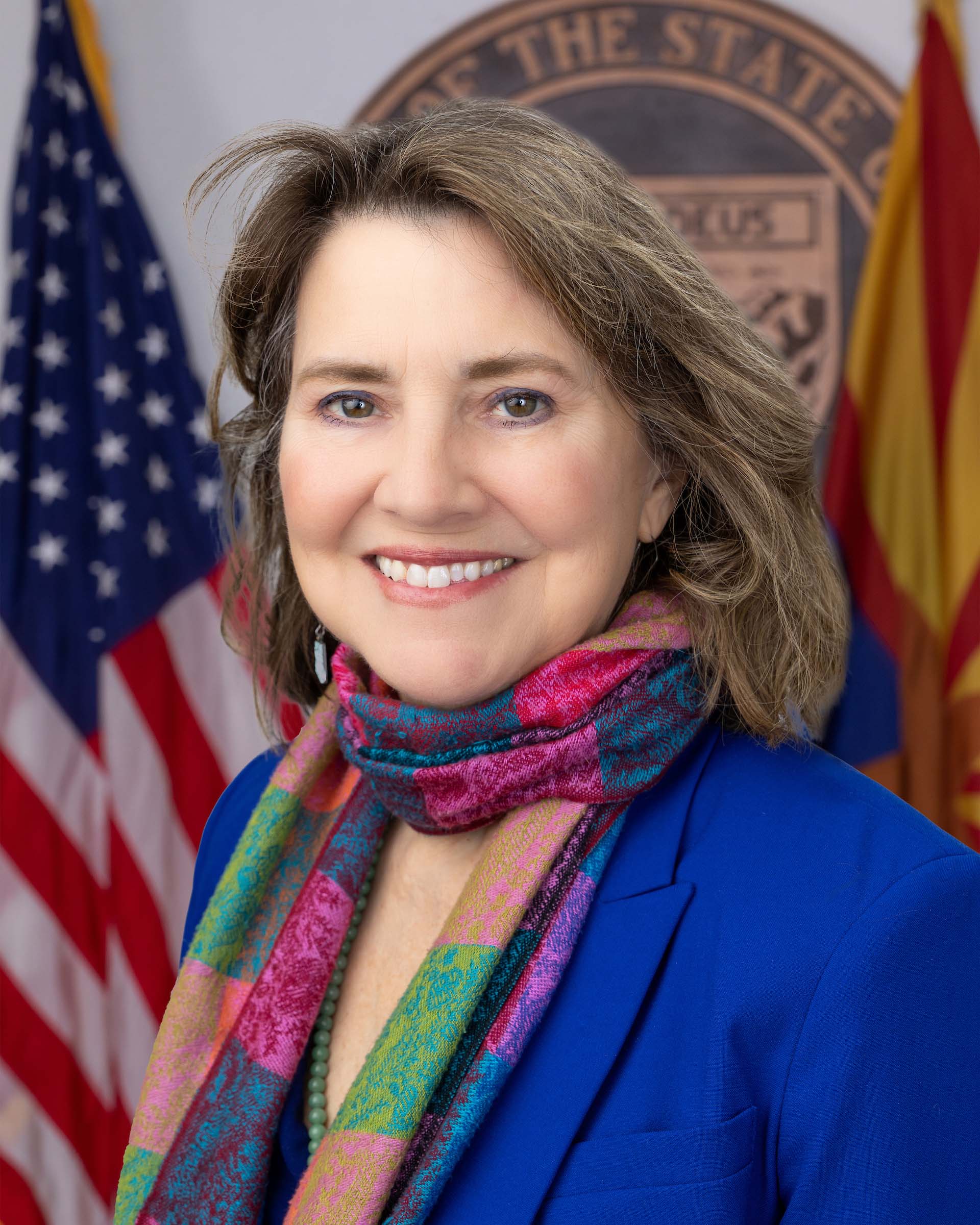
Sen. Lauren Kuby
Sponsored bills
Maddy summarySB 1740 establishes Arizona's "turquoise alert" system to quickly notify the public about missing persons under 65 years old in suspected danger. Law enforcement agencies must meet specific criteria - like using all local resources, confirming suspicious circumstances, and having recovery-assisting information - before requesting an alert. The bill requires all law enforcement agencies to train relevant staff (including dispatchers and supervisors) on the alert system at hire and biannually, focusing on legal criteria and procedures for issuing alerts. This directly affects law enforcement personnel handling missing person cases across Arizona.
Maddy summaryThis is a ceremonial resolution (HCR 2064) expressing the Arizona Legislature's condolences upon the passing of former state legislator Barbara Leff. It honors her 1996-2006 service representing Paradise Valley, her work on HMO reform and economic development, and her contributions to voter information systems. The resolution extends sympathy to her surviving family members (husband, children, grandchildren) and acknowledges her community leadership. It has no policy impact or legislative effect beyond this expression of respect.
Maddy summarySB 1487 extends the deadline for implementing Hopi Tribe special license plates in Arizona from December 31, 2025, to December 31, 2026. It requires individuals to pay $32,000 to the state for these plates, with the payer designing the plates (subject to state approval). The bill specifies that $17 of the $25 plate fee goes directly to the Hopi Tribe’s public safety department for road maintenance and traffic control on tribal reservation roads. This program affects drivers purchasing Hopi plates and directs funds to tribal infrastructure, with retroactive application starting December 30, 2025.
Maddy summarySB 1603 amends Arizona law to clarify eligibility for temporary cash assistance by defining "child only case" in Section 46-101. This specifically covers children in foster care with unrelated adults or nonparent relatives not receiving cash assistance, or placed under court order with such caregivers. The bill ensures these cases are treated separately from "needy families" (which require a parent or relative receiving aid), as stated in Section 46-292. It directly affects children in foster care settings where caregivers do not qualify for cash assistance themselves. The change refines existing eligibility rules without creating new programs or altering benefit amounts.
Maddy summaryHB 4054 establishes Arizona's Veterans' Reinvestment Fund to provide dedicated funding for veteran services. It appropriates $51.8 million from the state general fund for fiscal year 2026-2027 (plus 31 full-time positions) to be managed by the state treasurer in consultation with the Department of Veterans' Services. Each year, 50% of the fund's monies must be distributed to the department for programs supporting veterans in five key areas: education/training, jobs/economic opportunities, health/wellness, mental health/substance abuse services, and housing. The fund's resources are exempt from standard appropriation lapsing rules, ensuring consistent annual funding.
Maddy summaryHB 4104 allocates a specific sum from the state general fund to the Arizona Arts Trust Fund for fiscal year 2026-2027. This appropriation directly provides funding to the trust fund, which supports arts organizations and cultural programming across Arizona. The bill establishes no new policies but ensures ongoing financial support for existing arts initiatives through the trust fund's mechanisms. As a procedural funding measure, it does not alter eligibility or program requirements.
Maddy summaryHB 4046 amends Arizona's campaign finance reporting rules to increase transparency. It requires campaign committees, political action committees, and political parties to file detailed reports disclosing specific contributor information, including occupations and employers for in-state donors over $100, and explicitly labeling lobbyist contributions. The bill mandates itemized reporting of all receipts over $100 and disbursements over $250, including in-kind contributions and independent expenditures. It also clarifies reporting timelines for transactions and allows payroll deduction contributions to be reported cumulatively rather than individually. The bill directly affects all political committees managing campaign funds in Arizona elections.
Maddy summarySB 1790 requires businesses that collect personal data from multiple sources (data brokers) to follow specific rules when handling sensitive information like biometrics, health details, genetic data, precise location tracking, and financial information. It prohibits selling or sharing sensitive data without explicit consent and mandates businesses to verify a child's age (under 16) before collecting their data. The law defines "sensitive data" broadly, including government IDs, health records, and private communications, while exempting deidentified data and publicly available information. It applies to any business collecting data linked to Arizona residents, creating new requirements for transparency and consent.
Maddy summarySB 1690 (visually impaired voters; access procedures) requires Arizona election officials to provide early ballots to blind or visually impaired voters, voters with print disabilities, and overseas/uniformed service voters through electronic means (like fax or internet) upon request. Voters can choose their preferred method for receiving ballot materials, and officials must send ballots by specific deadlines (no later than 45 days before an election for registered voters). The bill eliminates the need for paper ballots when electronic delivery is used and establishes emergency procedures for national or local crises affecting voting access. This directly affects eligible voters with visual impairments or print disabilities who need accessible ballot delivery options.