

Maddy summarySB 1748 adjusts how fees collected by several Arizona professional licensing boards are split between the state general fund and specific agency funds. The bill directly affects regulatory boards for technical registration, barbering and cosmetology, accounting, podiatry, and chiropractic care. Under the new rules, fifteen percent of all fees and revenues will go to the state general fund to help cover general government costs, while the remaining eighty-five percent stays in the agency's dedicated fund for its own expenses and legal enforcement. Additionally, the bill clarifies that civil penalties and administrative fines collected by these boards must be deposited entirely into the state general fund rather than the agency's operating fund.
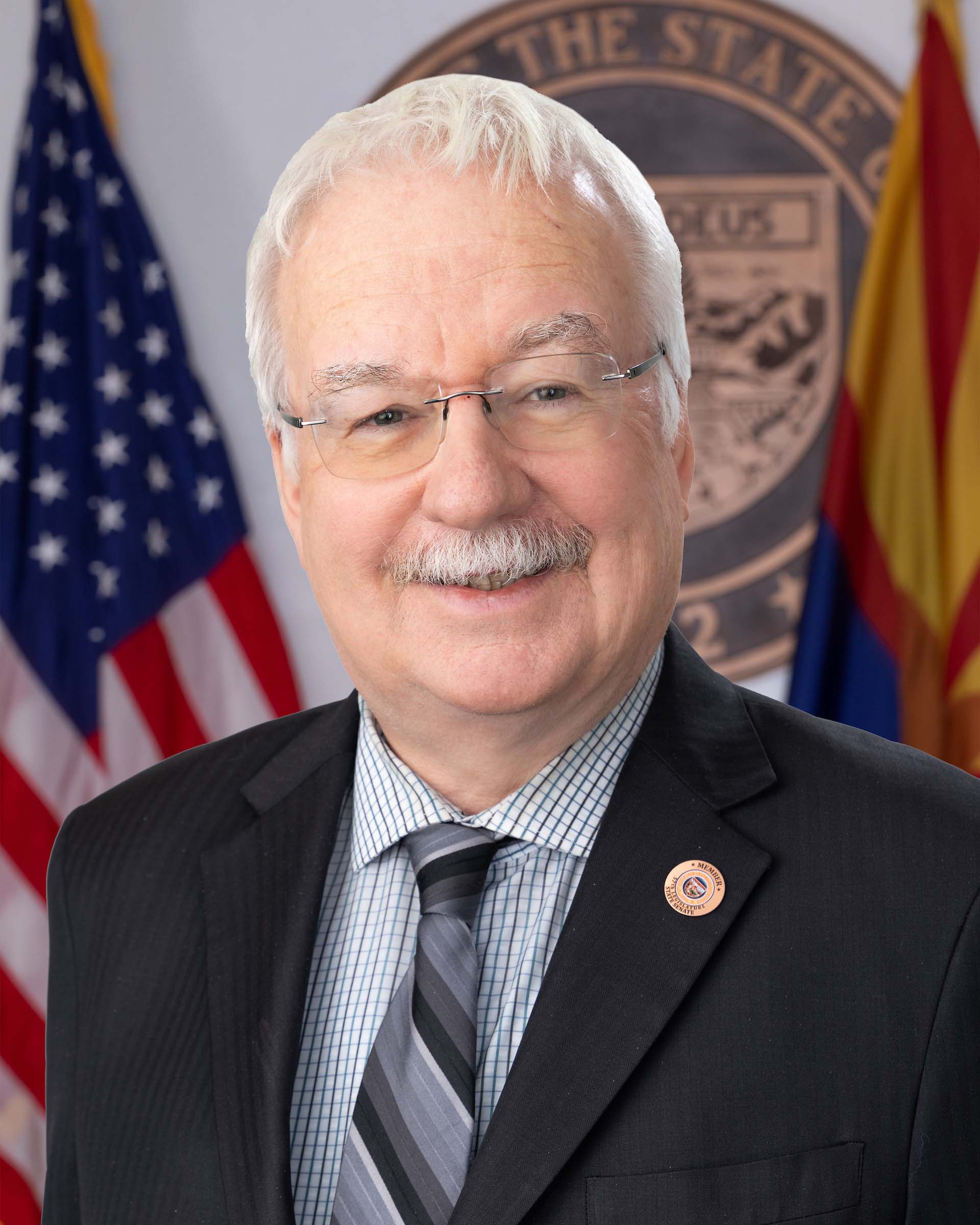
Sen. John Kavanagh
Sponsored bills
Maddy summarySB 1737 appropriates state funds to the Arizona Department of Transportation for a wide range of highway projects across the state during the 2024-2025 fiscal year. The bill allocates money for specific tasks such as building new bridges, reconstructing roads, improving intersections, and designing new interchanges in cities and towns including Phoenix, Queen Creek, and Prescott Valley. Some distributions require local governments to provide matching funds or collaborate with county officials before spending the allocated money. This legislation directly affects Arizona municipalities and counties by providing financial resources for infrastructure development and maintenance.
Maddy summaryThis bill establishes a revolving fund for the Arizona Department of Insurance and Financial Institutions to finance fraud investigations and legal actions without those funds lapsing at the end of the fiscal year. It creates a dedicated fraud unit within the department, empowering its investigators with peace officer powers to examine documents, issue subpoenas, and pursue fraudulent insurance claims. Additionally, the legislation outlines procedures for sharing confidential information with other law enforcement agencies and allows the department to conduct independent investigations when insurers report potential fraud.
Maddy summarySB 1735 is the 2024-2025 General Appropriations Act for Arizona, which allocates over $7.4 billion to the Department of Education and other state agencies. The bill directly affects public school districts, private schools receiving state aid, and various educational programs by distributing funds for teacher salaries, student services, and facility maintenance. Key provisions include specific funding amounts for basic state aid, special education, adult education, and school safety, while also establishing rules on how certain revenue sources must be spent. Additionally, the legislation requires the state board of education to review the financial impact of any proposed changes to the achievement testing program before implementation.
Maddy summarySB 1742 establishes two new scholarship funds to support higher education in Arizona for the 2024-2025 fiscal year. The first fund provides financial assistance to eligible community college students who meet federal Pell Grant criteria, with districts allowed to use up to ten percent of the funds for administrative costs. The second fund offers tuition scholarships to spouses and dependents of law enforcement officers attending public universities, community colleges, or licensed private institutions. Both funds are administered by the Arizona Board of Regents, with money distributed to districts based on enrollment numbers and socioeconomic factors.
Maddy summarySB 1740 establishes three new funds to support emergency management, state park operations, and water conservation efforts in Arizona. The bill creates a revolving fund for the Division of Emergency Management to finance training and exercises, a store fund for Arizona State Parks to cover gift shop expenses, and a grant fund to help eligible entities and non-governmental organizations implement water conservation projects. Additionally, it sets up a temporary fund to provide grants for municipal fire departments to purchase secure incident management software and hardware that enhances communication and safety during emergencies. These funds are designed to be continuously appropriated, meaning the money does not expire at the end of each fiscal year, and the emergency management and fire incident funds will revert to the state general fund after June 2025.
Maddy summarySB 1741 is a procedural bill that amends existing Arizona statutes to define how medical care costs are calculated and funded. It does not introduce new policies or change how healthcare is delivered to residents. The text primarily updates legal language regarding budget allocations for indigent care and long-term care services between the state and counties. As a result, this bill has no direct impact on individuals or businesses.
Maddy summarySB 1744 updates the financial rules for charter schools in Arizona that are sponsored by state agencies, universities, or community colleges. The bill clarifies how these schools calculate their funding base, adjusts how student counts are reported to prevent overestimation, and establishes specific procedures for handling students who are enrolled in both charter and traditional public schools. Additionally, it ensures that if a charter school receives outside grants for basic operations, its state funding is reduced accordingly to avoid double payment. These changes primarily affect the Arizona Department of Education, school districts, and the specific categories of state-sponsored charter schools mentioned in the statute.
Maddy summaryThis bill allows Arizona school districts to spend more of their local money in the 2024-2025 school year than the state's usual spending limit permits. The measure requires a special two-thirds vote in both the Senate and House of Representatives to become active. If passed, it directly affects school districts by temporarily lifting the financial cap that normally restricts how much local revenue they can use.
Maddy summaryThis bill proposes to declare drug cartels as terrorist organizations within Arizona state law. It directs the Department of Homeland Security to take all actions within its authority to address the threat posed by these groups. The legislation defines a drug cartel as an association involved in human smuggling, drug trafficking for profit, or acts of terrorism, and defines a threat as anything harming individual rights or public safety. If approved by voters, this change would formally categorize drug cartels alongside terrorist organizations for legal and enforcement purposes.