

Maddy summaryHB 2448 updates Arizona's election rules for voting locations. It allows counties to combine polling places for efficiency, establishes procedures for emergency voting centers during elections (including updated voter registration at these sites), and requires school principals to provide written reasons if denying polling space. The bill also mandates that government-owned buildings be made available for voting locations starting in 2026. These changes directly affect local election officials and voters by altering where and how elections are conducted.
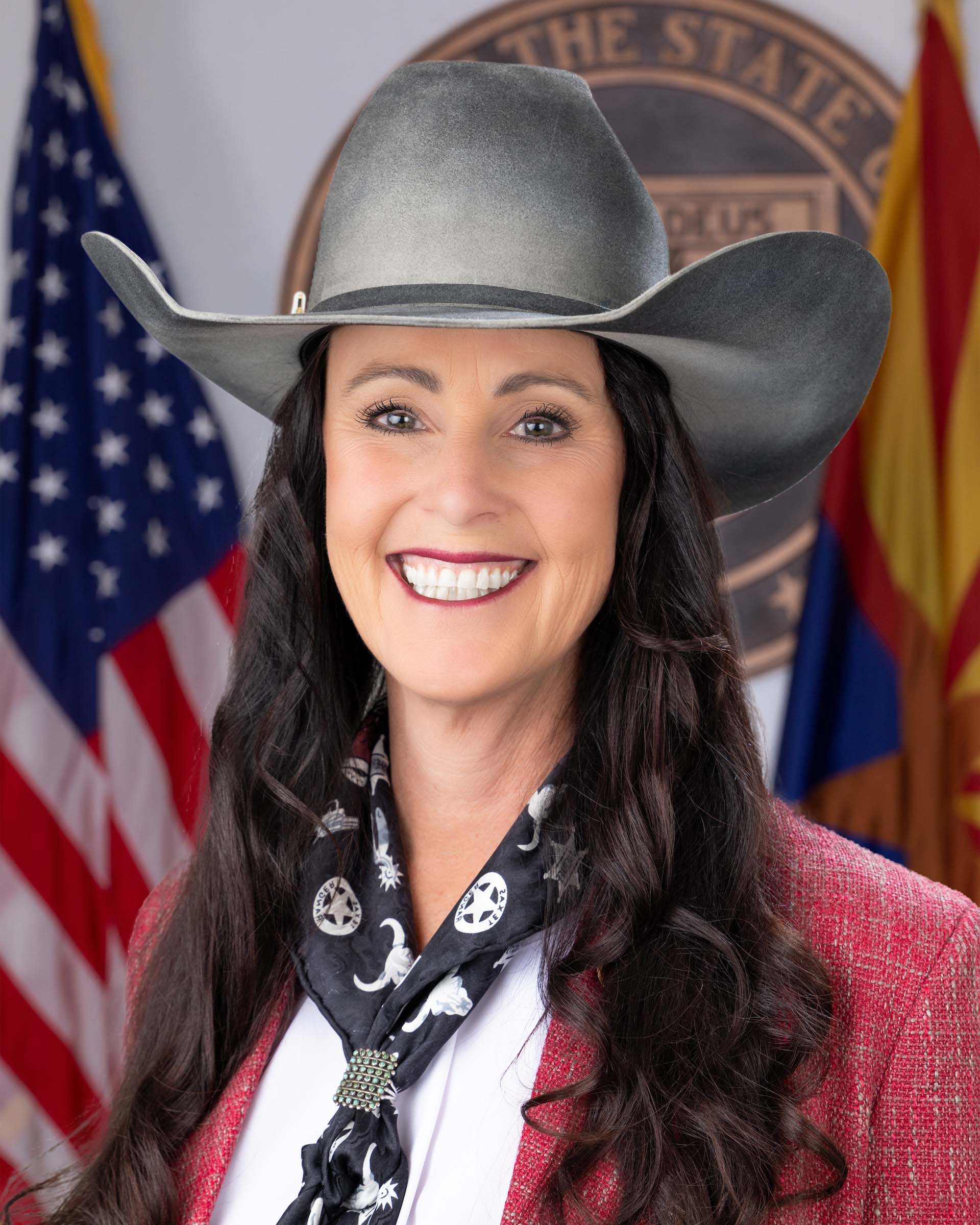
Sen. Janae Shamp
Sponsored bills
Maddy summaryArizona's SB 1109 prohibits foreign principals (including governments, businesses, or individuals from countries identified by U.S. intelligence as posing national security risks) from owning or acquiring most real property in Arizona. Exceptions allow small residential parcels (≤2 acres) for natural persons with valid U.S. visas, provided the property is not near military sites or critical infrastructure. The Attorney General enforces the law, and courts can order the sale of illegally held property, with proceeds distributed to lienholders, the state, and the original owner. The bill directly affects foreign entities from designated countries but exempts existing owners and specific residential purchases meeting strict conditions.
Maddy summaryArizona's HCR 2041 is a state resolution requesting Congress to call a constitutional convention under Article V to propose term limits for U.S. House and Senate members. It asks other states with similar applications to combine their efforts to meet the two-thirds state requirement for such a convention. If Congress fails to act, Arizona and other participating states would proceed with their own convention to draft term limits. This resolution does not create new law but seeks to restart a state-led process for constitutional change, targeting federal congressional representation.
Maddy summaryHB 2679 establishes a new framework for Arizona public power entities (like municipal utilities) to finance infrastructure upgrades by issuing "Transition Bonds." These bonds are secured by future customer payments called "Financing Charges," which become nonbypassable fees added to all customers' utility bills until the costs are fully recovered. The bill creates specific definitions for terms like "Financing Charges," "Qualified Special Purpose Entity," and "Transition Bonds," ensuring these payments cannot be avoided regardless of the customer's service provider or asset ownership. This mechanism allows public power entities to shift financing costs to customers over time rather than relying solely on traditional rate increases.
Maddy summarySB 1600, titled "Patient Rights; Health Care Services," defines core patient rights for anyone receiving healthcare in Arizona. It establishes that patients have the right to care prioritizing their best interest, avoiding harm, and requiring informed consent for medical decisions (except emergencies). The bill directly affects all patients receiving care from licensed health professionals in Arizona. However, the bill was passed by the legislature on May 7, 2025, but was vetoed by the governor on May 13, 2025, so it did not become law.
Maddy summarySB 1056 prohibits unauthorized individuals from filling, emptying, or altering markings on liquefied petroleum gas (LPG) containers, except for cylinders. It directly affects people handling LPG containers who aren’t the owner or authorized by the owner. The bill makes violations a class 3 misdemeanor and explicitly excludes cylinders from these restrictions. This law aims to enhance safety by preventing tampering with LPG container identification and handling.
Maddy summaryArizona's SB 1332 allows the state to issue driver licenses without written or road tests to foreign military members stationed in Arizona from NATO countries and to civilians from foreign countries with matching licensing standards. It requires Arizona and the foreign country to mutually recognize licenses, verify insurance compliance, and document reciprocity. Active-duty foreign military members (18-76 years old) must show military orders and U.S. immigration authorization, while civilians need proof of residency and equivalent licensing standards. The bill excludes commercial driver licenses and mandates the state publish a list of participating countries on its website.
Maddy summaryHB 2092 requires sellers of five or fewer land parcels (not subdivided) in unincorporated Arizona counties to provide buyers with a written disclosure affidavit at least seven days before closing. The affidavit must detail critical property conditions like access, flood zones, water sources, septic systems, and utility services in plain language. Buyers gain a five-day window to cancel the sale if they receive the affidavit, and sellers cannot waive liability for omissions in the disclosure. The bill was passed by the legislature in May 2025 but vetoed by the governor on May 12, 2025.
Maddy summarySB 1586 creates strict liability for healthcare providers who perform gender transition procedures on minors in Arizona. It requires providers to cover all costs of subsequent detransition procedures (reversing gender transition care) for 25 years after treatment begins, and allows minors to sue for medical expenses, damages, and attorney fees up to age 26. The bill prohibits providers from using contracts to waive this liability, stating such waivers violate public policy. The legislation was passed by the Arizona legislature in May 2025 but was vetoed by the governor on May 12, 2025, preventing it from becoming law.
Maddy summarySB 1622 amends Arizona's drug definitions by adding specific chemical names and structural classes to the state's list of controlled substances. It directly affects law enforcement and courts by clarifying which synthetic drugs - such as certain hallucinogens (e.g., MDMA variants, "JWH-018" compounds) and cannabinoid mimetics - are classified as illegal under Arizona law. The bill defines substances through precise chemical descriptions (e.g., "2-(3-hydroxycyclohexyl)phenol" derivatives) to cover new synthetic drugs not previously named. This provides legal clarity for prosecuting drug offenses but does not change penalties or create new policies.