

Maddy summarySB 1129 requires Arizona's Department of Transportation to verify if vehicle owners involved in accidents had valid insurance coverage at the time of the accident. If insurance is denied or unverified, the department mails a notice to the owner, giving 30 days to provide proof of coverage (like an insurance policy or self-insurance documentation). Failure to provide valid proof within that timeframe results in a 15-day suspension of the owner's driver license and vehicle registration, unless they request a hearing. The bill includes an exception: if the owner proves the vehicle was sold before the accident, they cannot be suspended.
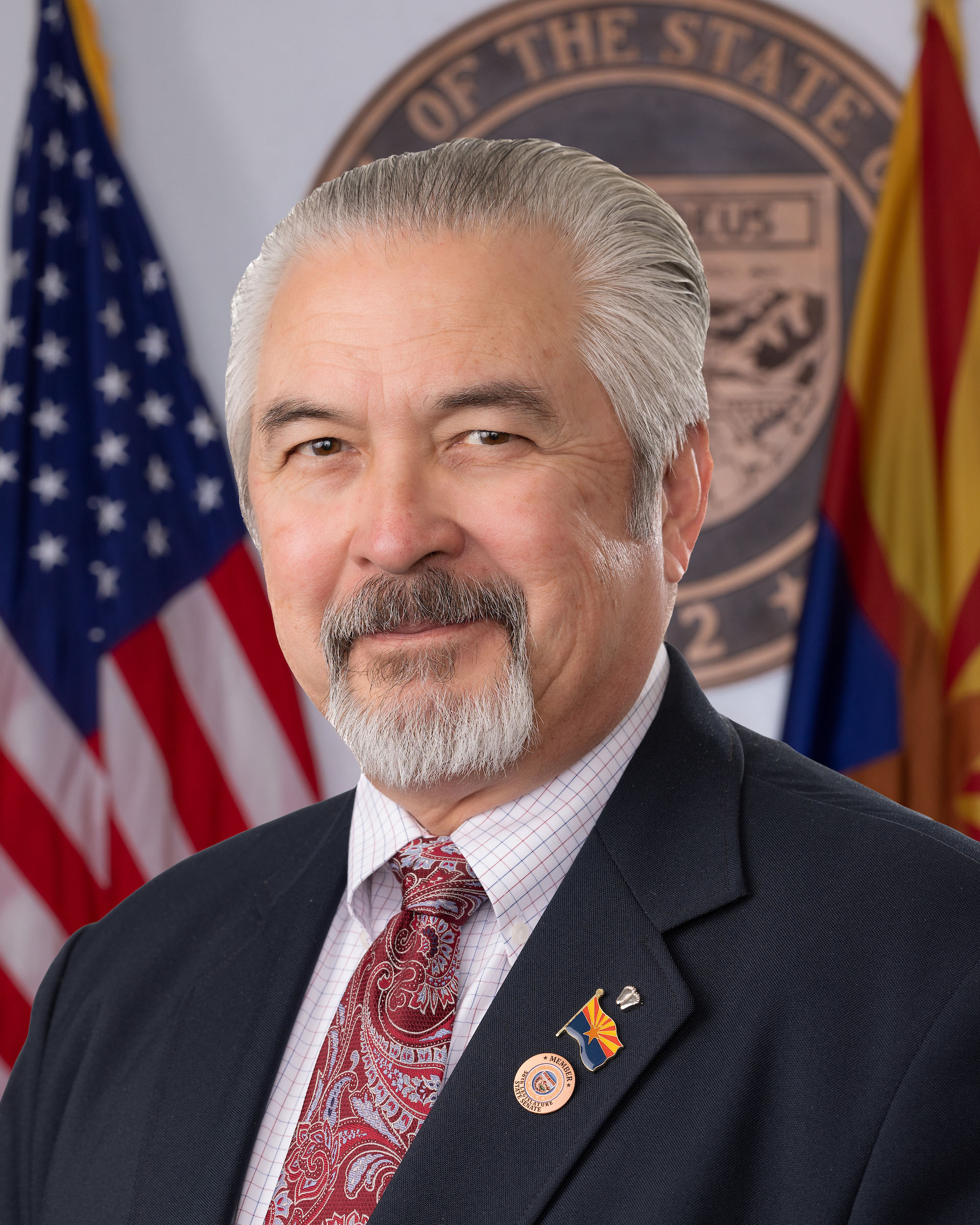
Sen. Frank Carroll
Sponsored bills
Maddy summaryHB 2448 updates Arizona's election rules for voting locations. It allows counties to combine polling places for efficiency, establishes procedures for emergency voting centers during elections (including updated voter registration at these sites), and requires school principals to provide written reasons if denying polling space. The bill also mandates that government-owned buildings be made available for voting locations starting in 2026. These changes directly affect local election officials and voters by altering where and how elections are conducted.
Maddy summaryArizona's SB 1109 prohibits foreign principals (including governments, businesses, or individuals from countries identified by U.S. intelligence as posing national security risks) from owning or acquiring most real property in Arizona. Exceptions allow small residential parcels (≤2 acres) for natural persons with valid U.S. visas, provided the property is not near military sites or critical infrastructure. The Attorney General enforces the law, and courts can order the sale of illegally held property, with proceeds distributed to lienholders, the state, and the original owner. The bill directly affects foreign entities from designated countries but exempts existing owners and specific residential purchases meeting strict conditions.
Maddy summaryHB 2679 establishes a new framework for Arizona public power entities (like municipal utilities) to finance infrastructure upgrades by issuing "Transition Bonds." These bonds are secured by future customer payments called "Financing Charges," which become nonbypassable fees added to all customers' utility bills until the costs are fully recovered. The bill creates specific definitions for terms like "Financing Charges," "Qualified Special Purpose Entity," and "Transition Bonds," ensuring these payments cannot be avoided regardless of the customer's service provider or asset ownership. This mechanism allows public power entities to shift financing costs to customers over time rather than relying solely on traditional rate increases.
Maddy summarySB 1307 requires Arizona’s state department to develop a statewide plan by July 2026 for infrastructure supporting electric aircraft (like air taxis), including vertiports (takeoff/landing sites) and charging stations. The plan must be created with input from airports, airlines, and federal agencies, and the department must designate an expert to assist local governments. It also mandates the creation of a guidebook with uniform zoning and planning resources for communities implementing these systems. The law specifically applies to electric aircraft weighing 300+ pounds that carry passengers or cargo, and includes provisions for educational materials about the benefits of this technology.
Maddy summarySB 1600, titled "Patient Rights; Health Care Services," defines core patient rights for anyone receiving healthcare in Arizona. It establishes that patients have the right to care prioritizing their best interest, avoiding harm, and requiring informed consent for medical decisions (except emergencies). The bill directly affects all patients receiving care from licensed health professionals in Arizona. However, the bill was passed by the legislature on May 7, 2025, but was vetoed by the governor on May 13, 2025, so it did not become law.
Maddy summaryArizona's SB 1332 allows the state to issue driver licenses without written or road tests to foreign military members stationed in Arizona from NATO countries and to civilians from foreign countries with matching licensing standards. It requires Arizona and the foreign country to mutually recognize licenses, verify insurance compliance, and document reciprocity. Active-duty foreign military members (18-76 years old) must show military orders and U.S. immigration authorization, while civilians need proof of residency and equivalent licensing standards. The bill excludes commercial driver licenses and mandates the state publish a list of participating countries on its website.
Maddy summarySB 1591 modifies Arizona's concealed weapons permit process by exempting state residents from application fees while requiring non-residents to pay a reasonable fee. It outlines specific eligibility requirements, including age, residency, criminal history checks, and proof of firearm competency, and specifies that permits are valid for five years (with extensions for military members deployed overseas). The bill also details procedures for permit suspension upon arrest for qualifying offenses and civil penalties for failing to present a permit during a law enforcement stop. The legislation was passed by the Arizona legislature on May 6, 2025, but was vetoed by the Governor on May 12, 2025, preventing it from becoming law.
Maddy summarySB 1310 creates penalties for recording false or forged documents claiming ownership or liens on Arizona real property. Property owners can sue for at least $5,000 or triple actual damages (whichever is greater) plus attorney fees if someone records invalid claims. Individuals who knowingly file such documents and refuse to correct them within 20 days after a written request face $1,000 minimum penalties or triple damages. The bill classifies these violations as class 1 misdemeanors or felonies and was passed by the legislature but vetoed by the governor on May 12, 2025.
Maddy summarySB 1107 continues Arizona's Motorcycle Safety Fund through June 30, 2025. It requires the Department of Transportation to deposit $1 from each motorcycle registration fee into the fund, which is administered by the governor's office of highway safety. Funds must be used exclusively for voluntary motorcycle safety programs, including education, training, awareness, and related materials. The bill prohibits using these funds for general state operations or the general fund. This continuation ensures ongoing support for motorcycle safety initiatives without altering existing fee structures or program requirements.