

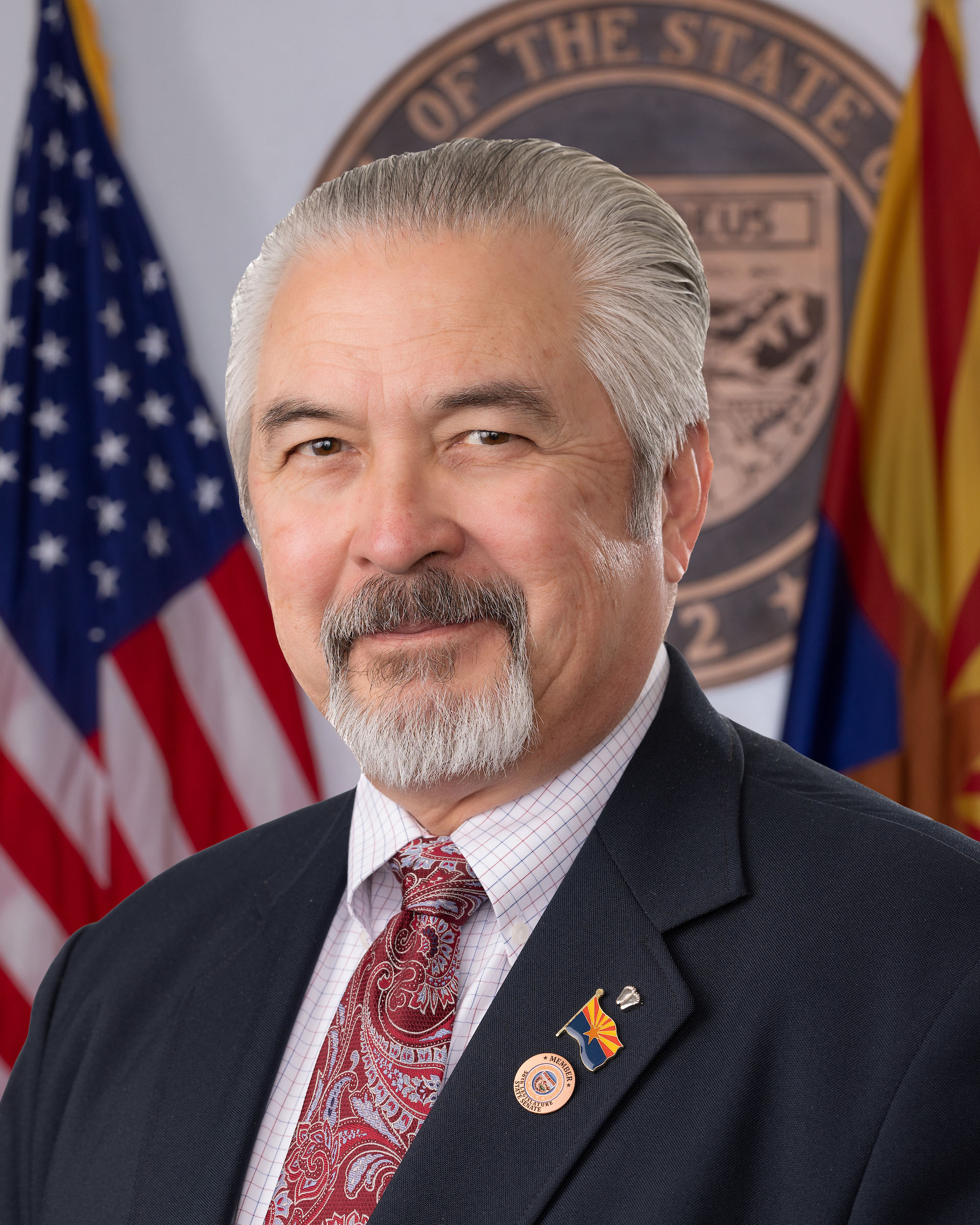
Photo of Frank Carroll
R Arizona Senate · District 28 On the 2026 ballot

Sen. Frank Carroll

Compare
Total votes
5,269
all sessions
Attendance
99%
50 missed
Near the chamber average
With party
96%
of cast votes
Near the chamber average
Bipartisan score
3%
crosses aisle rarely
Near the chamber average
Sponsored
552
bills & resolutions
Lower than 87% of chamber peers
Committees
6
assignments
552 bills and resolutions

Sponsored bills

Total
552
Primary
155
Co-sponsor
397
This page
552
matching current filters
Primary SB 1757
Introduced · Arizona Senate · Lead sponsor
foreign principals; lobbyists; registration; fund

Maddy summarySB 1757 requires foreign governments, political parties, and foreign-owned businesses (called "foreign principals") to register with Arizona's Department of Homeland Security and publicly disclose their lobbyists. Foreign principals must submit initial registrations, update information within five business days of changes, and reregister annually by January 2027 (and on December 1 of even years). Lobbyists for these entities must disclose their foreign principal affiliation to legislators and public officials during lobbying efforts. Violations, such as false registration details, are punishable as class 1 misdemeanors, and registration fees fund a new "foreign principal lobbyist registration fund."

Introduced Feb 9, 2026 0 co-sponsors
Primary SB 1744
Introduced · Arizona Senate · Lead sponsor
TPT; exemption; fire trucks; ambulance

Maddy summarySB 1744 amends Arizona's sales tax code (ARS § 42-5061) to add a new exemption for "durable medical equipment" under specific conditions. This provision exempts from sales tax medical devices like hospital beds or mobility aids that meet Medicare coding requirements, are prescribed by licensed health professionals, and are designed for home use during illness or injury. The exemption directly affects medical equipment sellers, healthcare providers, and patients purchasing these items. The bill does not alter existing exemptions for items like insulin, prescription eyewear, or food, but clarifies the scope of the durable medical equipment category. (Citation: ARS § 42-5061, subsection 13)

Introduced Feb 9, 2026 0 co-sponsors
Co-sponsor HB 2952
Introduced · Arizona House · Co-sponsor
deeds; identification; forgery; notice; notaries.

Maddy summaryHB 2952 requires property buyers and sellers to provide photo ID when recording deeds at county offices (with exemptions for title agents, banks, attorneys, and government entities), as outlined in new Section 11-472. It mandates detailed affidavits for all property sales, including sale price, property description, and ownership details, to be appended at recording (Section 11-1133). The bill also creates a voluntary system for property owners to receive electronic notifications about ownership or address changes (Section 11-544) and increases penalties for forging or falsely recording property documents (Section 33-420). These changes directly affect property buyers, sellers, title companies, and county recorders by standardizing documentation and improving record accuracy.

Introduced Feb 5, 2026 1 co-sponsor
Primary SCR 1021
Introduced · Arizona Senate · Lead sponsor
pickleball; official state sport

Maddy summaryThis resolution (SCR 1021) declares pickleball the official state sport of Arizona. It recognizes pickleball's cultural, health, and community contributions across the state, including its status as Arizona's highest per-capita court count and its role in promoting accessibility and intergenerational engagement. The resolution does not create new laws or regulations but formally designates pickleball as the state sport through legislative recognition. It affects Arizona as a whole, affirming the sport's significance to the state's identity.

Introduced Feb 2, 2026 0 co-sponsors
Primary SB 1481
Introduced · Arizona Senate · Lead sponsor
elevator contractors; mechanics; certification

Maddy summaryThis bill clarifies licensing and safety requirements for elevator systems in Arizona. It defines key terms like "elevator contractor" (a licensed business employing certified mechanics) and "elevator mechanic" (a state-certified worker), and requires building owners/operators to ensure all elevator systems are inspected and maintained by these licensed professionals. The bill amends existing statutes to specify that inspections must occur before initial operation, after modifications, and annually, with work limited to certified contractors or mechanics. It directly affects building owners, elevator contractors, and mechanics who install, service, or maintain elevators, escalators, and similar systems in non-mining facilities.

Introduced Feb 2, 2026 0 co-sponsors
Primary SB 1420
Introduced · Arizona Senate · Lead sponsor
public nuisance; pigeons

Maddy summaryArizona's SB 1420 prohibits feeding pigeons in counties with over 280,000 residents (like Maricopa County), directly affecting residents who feed pigeons in public or private spaces. The bill allows exceptions for pigeon owners with properly enclosed coops (meeting size, location, and odor standards), for using bird feeders that exclude pigeons, and for government wildlife management plans. Violations carry escalating penalties: a warning for a first offense, $100 for a second, and a petty offense charge for third or subsequent violations. Residents may also file private lawsuits to enforce the law, and "feeding" is defined to include providing food scraps or uncontained garbage.

Introduced Jan 29, 2026 0 co-sponsors
Primary SB 1379
Introduced · Arizona Senate · Lead sponsor
study committee; scrap metal theft.

Maddy summarySB 1379 establishes a temporary study committee to examine Arizona's scrap metal theft laws. The committee, composed of law enforcement officers, scrap metal dealers, impacted community members, telecom representatives, and a county attorney, will assess whether current laws deter theft, evaluate industry compliance costs, and review penalties by December 1, 2026. The committee’s report will inform potential future legislative changes but does not enact new laws. This bill directly affects state legislators (through committee appointments) and the scrap metal industry (through the study of their regulations). The committee expires December 31, 2026.

Introduced Jan 27, 2026 0 co-sponsors
Co-sponsor SB 1255
Introduced · Arizona Senate · Co-sponsor
Arizona jazz day; observed

Maddy summarySB 1255 designates April 30 each year as "Arizona Jazz Day" to recognize the cultural significance of jazz in the state. The bill does not create a legal holiday or alter existing work schedules. It directly affects Arizonans by establishing an annual state observance to honor jazz heritage. The provision is purely ceremonial, with no funding, regulatory changes, or new obligations attached. This is a standard recognition bill with no substantive policy impact beyond the designated date.

Introduced Jan 22, 2026 1 co-sponsor
Co-sponsor SB 1222
Introduced · Arizona Senate · Co-sponsor
light rail; public monies; prohibition

Maddy summarySB 1222 prohibits using public funds to extend Phoenix's light rail service to a specific area bounded by 17th Avenue (east), Adams and Van Buren Streets (north), 18th Avenue (west), and Jefferson and Jackson Streets (south). It also bans such extensions within 50 linear yards of this defined zone. The bill directly affects the Phoenix light rail system and any public entity seeking to fund new service in these areas. This policy change restricts where public transportation dollars can be allocated for light rail expansion.

Introduced Jan 21, 2026 1 co-sponsor
Primary SB 1537
Signed into law · Arizona Senate · Lead sponsor
transitional housing; reentry programs; licensure

Maddy summarySB 1537 creates a new licensing system for transitional housing facilities in Arizona that help individuals transition from incarceration to independent living. The bill requires these facilities to obtain a license from the Department of Health Services, with specific standards including promoting abstinence from drugs/alcohol, allowing medication-assisted treatment, maintaining safety protocols (like smoke detectors), and prohibiting staff from requiring residents to give up public benefits. It directly affects facilities serving formerly incarcerated individuals and their residents, who must follow facility rules and participate in reentry programs like job training. Facilities operating without a license face civil penalties up to $1,000. The law also establishes rules for staff training and complaint procedures to ensure facility operations protect public safety and resident rights.

Signed into law Jul 1, 2025 0 co-sponsors
Showing 41 to 50 of 552 bills
Previous 1 … 4 5 6 … 56 Next