

Maddy summarySB 1430 repeals a law requiring abortion providers in Arizona to submit certain reports to the state. The bill removes this reporting obligation, directly affecting healthcare providers who previously had to comply with these requirements. It does not add new provisions or mechanisms; the sole action is eliminating the existing legal requirement under Arizona Revised Statutes Title 36, Chapter 20, Article 2. The bill is currently in early legislative stages (Senate First/Second Reading).
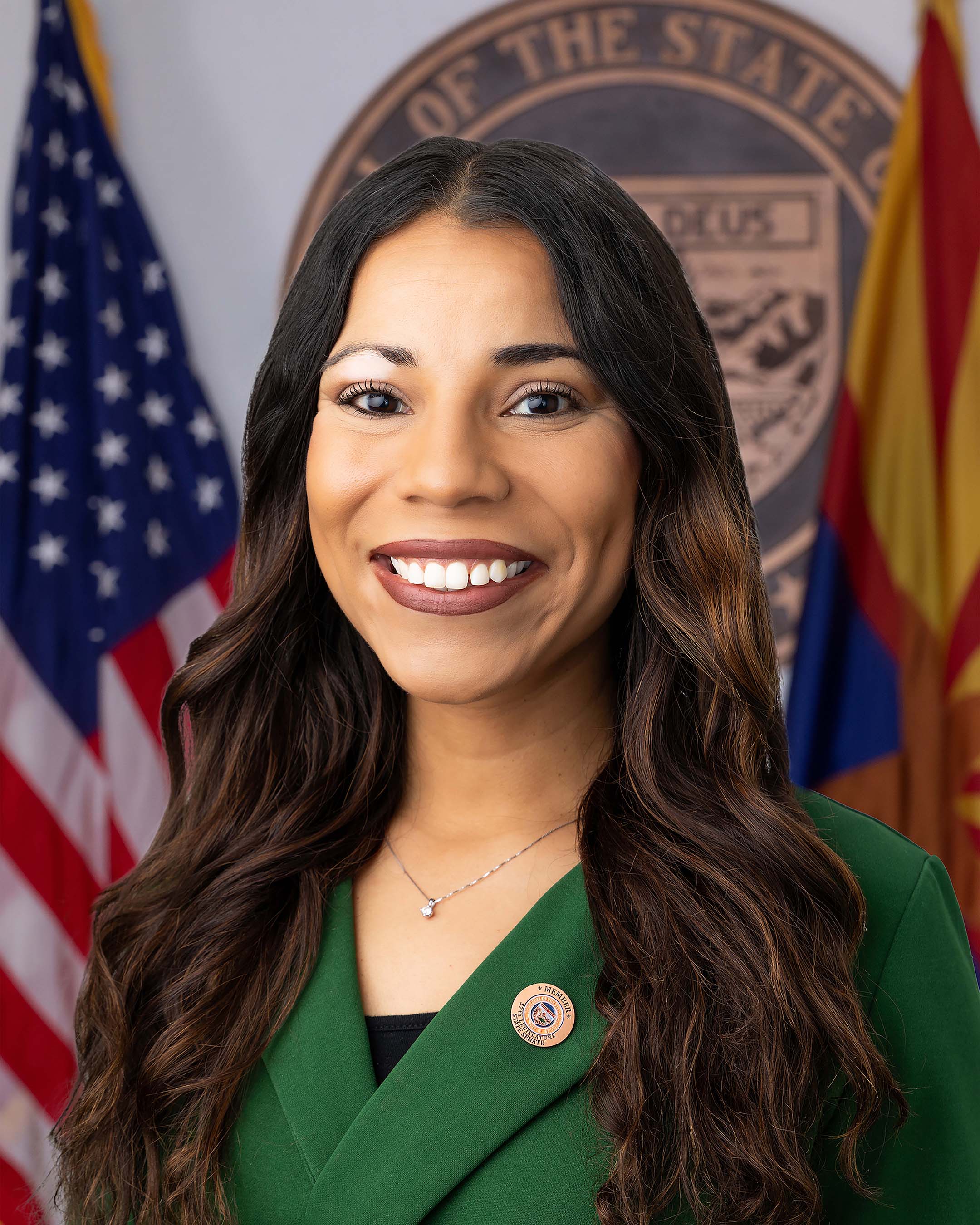
Sen. Analise Ortiz
Sponsored bills
Maddy summarySB 1431 defines "fertility treatment" in Arizona law to include services like IVF, egg/sperm preservation, artificial insemination, and related medications. It establishes three key rights: individuals can access these treatments without unreasonable barriers, healthcare providers can perform them within their scope, and insurers may cover them. The bill requires the Department of Health Services and health profession boards to create implementing rules within one year, exempting them from standard rulemaking procedures for that initial year. This law directly affects patients seeking fertility care, healthcare providers offering such services, and insurance companies covering these treatments.
Maddy summarySB 1314 terminates the governing board of the Arizona State Schools for the Deaf and the Blind (ASDB) on July 1, 2033, and repeals related statutes on January 1, 2034. The bill directly affects the ASDB board of directors and its administrative structure, though it maintains the schools' purpose of providing educational services for sensory-impaired children. Key provisions include setting specific termination dates for the board and related legal sections, ensuring a transition period before full implementation. The legislature states this continuation aims to "promote and maintain educational opportunities of adequate scope and quality" for sensory-impaired students until the board's end date.
Maddy summaryArizona's Senate resolution SR 1001 designates February 2025 as a "month of remembrance and solidarity" to honor lives lost and advocate for peace in Palestine, Lebanon, Sudan, and Congo. It directs the state to recognize the humanitarian crises in these regions, acknowledge the resilience of survivors, and support efforts promoting healing and justice. The resolution emphasizes community solidarity, the work of advocacy groups, and the importance of education in fostering empathy for global humanitarian issues. This is a symbolic declaration with no new funding or legal requirements.
Maddy summarySB 1338 would allow Arizona to join the National Popular Vote Interstate Compact (NPVIC), an agreement among states to award all electoral votes to the candidate who wins the national popular vote. If enacted and if enough states join to control 270+ electoral votes, Arizona would no longer award votes based on its own state election results but instead assign all electoral votes to the candidate with the most votes nationwide. This bill does not change how Arizona voters cast ballots but alters how the state’s presidential electors are selected, requiring the chief election official to calculate national vote totals and certify electors based on the national popular vote winner. The compact takes effect only when member states collectively hold a majority of electoral votes, and Arizona would remain subject to this system only if the agreement is active.
Maddy summaryThis resolution (HR 2002) declares gun violence a public health crisis in Arizona. It cites Arizona's 2020 firearm death toll of 1,265, 2022 data showing firearms as the top cause of death for teens aged 15-17, and statistics linking gun access to increased suicides and homicides. The resolution makes no new laws or funding provisions - it is a symbolic declaration by Arizona's House of Representatives. It focuses on acknowledging the severity of gun violence as a public health issue, based on state-specific data.
Maddy summaryHB 2496 modifies Arizona's licensing rules by prohibiting state agencies from requiring applicants to provide citizenship or alien status documentation when applying for a professional license. It also mandates that agencies accept a federal tax identification number in place of a Social Security number for licensing purposes. This applies to all licenses issued by state or local agencies for businesses or services (like CPAs, contractors, or healthcare providers). The bill directly affects individuals seeking professional licenses who may lack traditional citizenship documentation, such as immigrants or non-citizens. The key change replaces prior requirements in Section 41-1080 with these new documentation standards.
Maddy summaryHB 2317 prohibits Arizona municipalities from banning approved building materials in single-family home construction or imposing extra restrictions on prefabricated homes compared to traditional homes. It also limits aesthetic regulations to designated historic districts, while allowing existing building, fire, and safety codes to remain in effect. The bill directly affects homeowners, builders, and local governments by preventing new restrictions on material choices and ensuring prefabricated homes face the same requirements as site-built homes. The bill failed during committee review on January 29, 2025.
Maddy summaryHB 2287 strengthens protections for mobile home residents in Arizona by amending landlord-tenant laws. It requires landlords to provide written disclosures about management, ownership, and service contacts before leases begin (Section 33-1432), bans excessive fees (like multiple application fees or charges for background checks), and limits rent collection (Section 33-1413.04). The bill also modifies eviction procedures, mandating a 7-day waiting period before enforcing a writ of restitution and requiring clear notice to tenants about criminal trespass penalties for remaining in mobile home spaces after eviction (Section 12-1178). These changes directly affect mobile home residents and their landlords across Arizona.
Maddy summaryHB 2358 prohibits defendants from claiming "justification" for violence based on a victim's sexual orientation, gender identity, or gender expression, including situations where the victim made an unwanted romantic advance or the parties were dating. It specifically removes these factors from the legal definition of "adequate provocation" in Arizona law. The bill directly affects criminal cases where defendants might otherwise argue such discoveries as a reason for violent acts. This is a policy change clarifying that LGBTQ+ identity cannot be used to excuse violence in court.