

Maddy summarySB 1360 repeals several Arizona laws related to immigration enforcement and law enforcement funding mechanisms. It removes provisions that directed traffic fine assessments toward border security teams and modifies smuggling penalties (classifying human smuggling as a felony with enhanced penalties for minors or weapon use). The bill also repeals sections governing employer sanctions for hiring unauthorized workers and updates arrest procedures for immigration-related offenses. These changes directly affect law enforcement agencies, employers, and individuals involved in immigration-related violations.
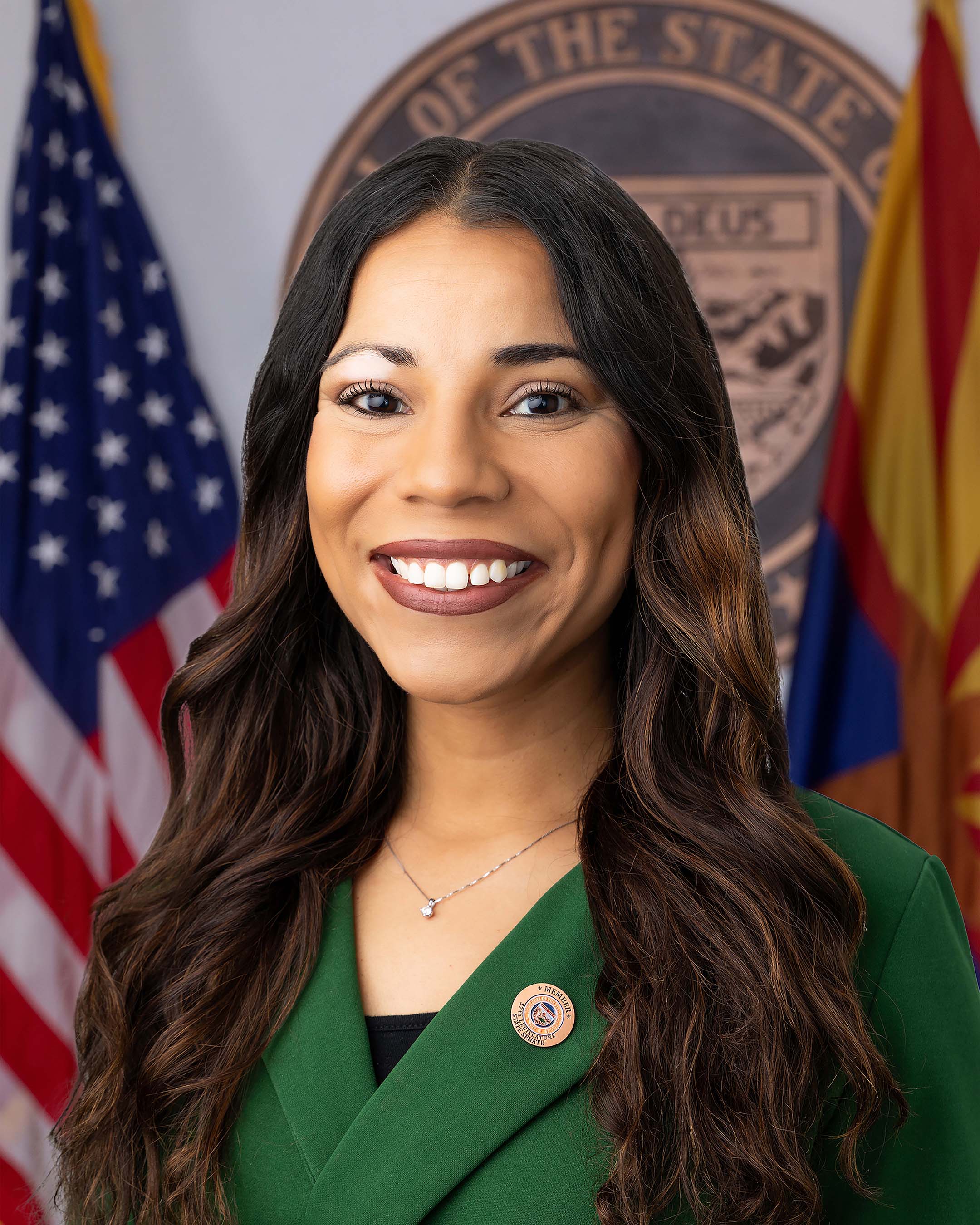
Sen. Analise Ortiz
Sponsored bills
Maddy summarySB 1361 (Arizona) establishes a "bill of rights" for victims of peace officer violence and their families. It guarantees direct access to unredacted evidence (like body camera footage and incident reports) within 72 hours, free language assistance, protection from intimidation during investigations, and the right to review materials before public release. The bill requires municipalities to create independent victim advocates who connect families with services and ensures victims are notified before public details are shared. It also mandates that police reports refer to victims as "victims" (not suspects) and prohibits releasing misleading information about incidents. This bill directly affects individuals injured or killed in police interactions and their families.
Maddy summarySB 1413 amends Arizona law to clarify state authority over firearms regulations and unclaimed property handling. It updates Section 12-945 to specify that unclaimed firearms may be sold to licensed businesses (not just destroyed) and allows law enforcement to trade firearms for equipment. Crucially, it strengthens Section 13-3108 to preempt local ordinances, prohibiting cities from requiring firearm registration, keeping ownership records, or enacting stricter gun rules than state law. The bill directly affects Arizona cities and counties by limiting their ability to regulate firearms locally, while allowing limited exceptions for minor restrictions and commercial shooting ranges.
Maddy summarySB 1428 requires Arizona school districts to implement "Stop the Bleed" programs starting in the 2025-2026 school year, directly affecting schools, nurses, and students. It mandates schools to place at least one federally endorsed bleed control kit (containing tourniquets, bandages, gloves, and instructional materials) in accessible locations, include kits in safety plans, and inspect them annually. The state will fund the initiative with $180,000 for kit purchases and distribution through the Department of Health Services, with the program ending December 31, 2028. The bill focuses on equipping schools to manage severe bleeding emergencies through standardized first-aid resources and training.
Maddy summarySB 1423 repeals two existing Arizona statutes: Section 9-500.36 (related to energy measuring) and Section 11-269.14 (related to energy reporting). This bill removes specific legal requirements for energy measurement and reporting that were previously in place. It does not create new rules or directly affect any entities, as it only eliminates outdated provisions. The bill is procedural and has no new policy mechanisms.
Maddy summarySB 1412 amends Arizona's domestic violence definition to explicitly include animal abuse within the legal framework. It expands the definition to cover acts harming animals when the relationship between the victim and perpetrator meets existing domestic violence criteria (e.g., marriage, household, shared children, or romantic relationship). This change means animal abuse in domestic settings is now treated as domestic violence under Arizona law, allowing law enforcement to apply existing protections like firearm seizures and court orders. The bill directly affects victims of domestic violence and their pets by ensuring animal abuse is addressed through the same legal mechanisms as physical or sexual violence.
Maddy summarySB 1415 requires Arizona counties to designate at least one polling place on the main campus of each state university and provide at least one early ballot dropbox at every state university satellite location and community college campus/satellite location. It also mandates that counties establish voting centers (allowing voters to cast ballots at any location in the county) and defines rules for emergency voting centers during elections. The bill directly affects county election officials, state universities, and community colleges by requiring specific polling locations and ballot drop options for campus voters. These changes aim to improve access to voting for students and staff at educational institutions, with implementation required for upcoming elections.
Maddy summarySB 1359 modifies Arizona election procedures by requiring county election officials to mail sample ballots to households containing registered voters *not* on the "active permanent early voting list" (as defined in Section 16-544, A.R.S.). This bill directly affects registered voters who are not enrolled in Arizona's permanent early voting list, as they will receive sample ballots by mail, while those on the list will not. The key provision updates ballot mailing rules under Section 16-245(D) but does not define the list's criteria or mechanics. The bill is procedural, focusing on ballot distribution, and references an existing list (Section 16-544) without detailing its structure.
Maddy summarySB 1420 requires Arizona school districts and charter schools to adopt green cleaning policies by December 2026, using environmentally sensitive products unless it would raise cleaning costs. It also mandates state agencies, universities, and school districts to reduce energy use in public buildings by 20% by 2031, meet LEED standards for new/renovated buildings, and source 10% of energy from renewable sources by 2030. The bill establishes an Energy and Water Efficiency Fund to provide low-interest loans for energy-saving upgrades, repayable through energy cost savings. These requirements directly affect all public schools, state buildings, and government agencies managing facilities.
Maddy summarySB 1408 prohibits utility companies (public service corporations) and their key executives, family members, and related entities from contributing to Arizona Corporation Commission candidates or accepting their contributions. It defines "coordinated expenditures" as payments for candidate-created campaign materials or joint activities with candidates, treating these as indirect contributions. The bill specifically bans utility companies from funding candidate debates or forums without strict separation, and clarifies that coordinated spending with candidates - such as sharing campaign strategy - counts as a contribution. This directly affects utility companies, their executives, and Corporation Commission candidates, aiming to prevent undue influence in elections for utility regulators.