

Maddy summaryThis bill requires courts to destroy firearms forfeited after certain felony convictions involving firearm use, rather than allowing sale. It directly affects individuals convicted of specific firearm-related offenses, such as using a gun in a violent crime under Arizona law. The key provision mandates destruction unless the victim (or their family if the victim is deceased) chooses to have the firearm sold. This changes existing rules by prioritizing destruction over sale for firearms, while maintaining the option for victims' families to request a sale.
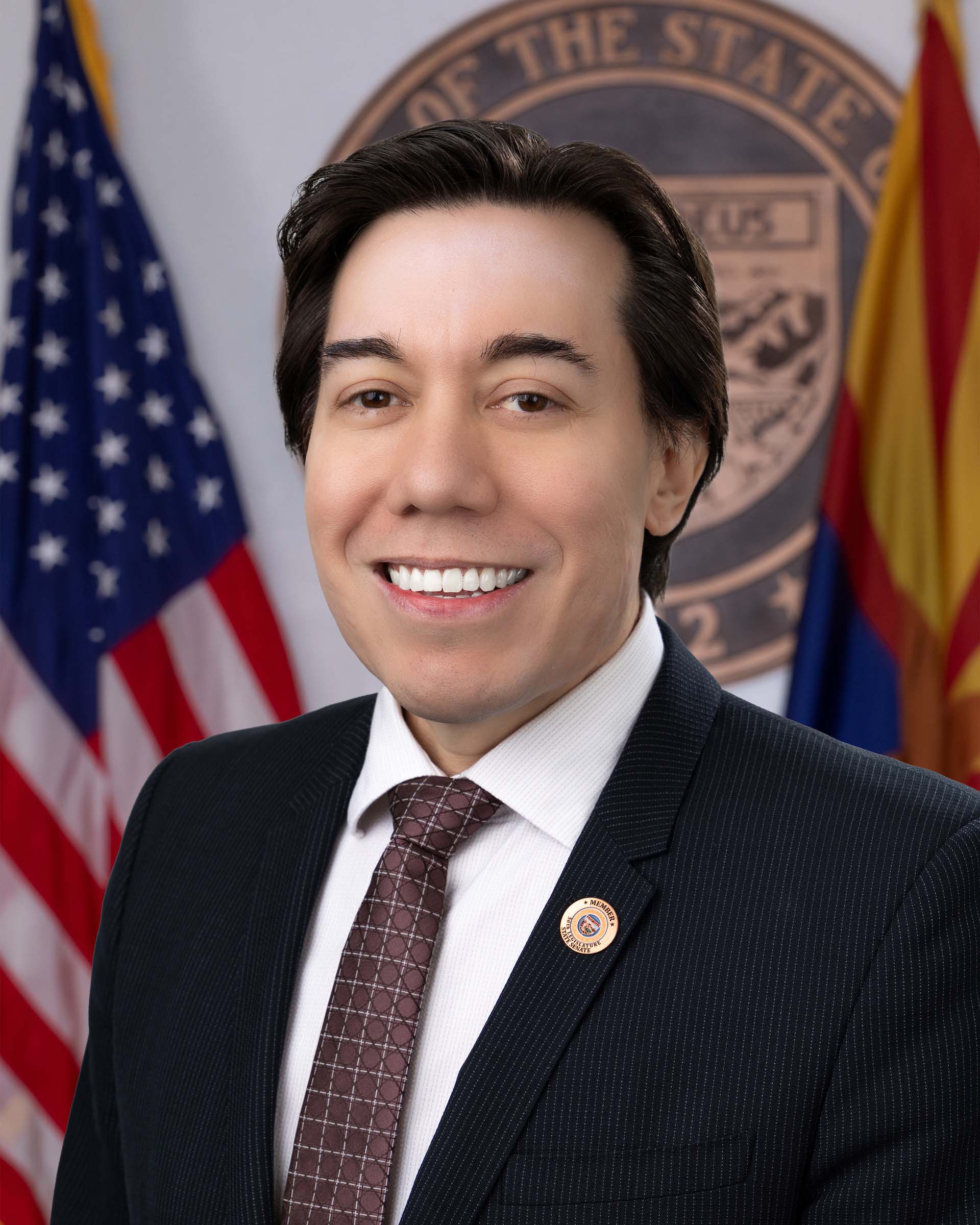
Sen. Brian Fernandez
Sponsored bills
Maddy summarySB 1224 establishes the Tri-Share Child Care Pilot Program within Arizona's Department of Economic Security to help eligible working parents cover child care costs. The program operates on a cost-sharing model where employees, employers, and the state each pay one-third of child care expenses for qualifying employees earning between 165% and 325% of the federal poverty level who do not receive other child care subsidies. It requires three regional hubs (including at least one in a rural county) to administer the program and allocates $10 million from the state general fund for fiscal year 2026-2027. The Department of Economic Security must report on the program's effectiveness - including employee retention and children served - by December 31, 2028.
Maddy summarySB 1101 establishes a pilot program providing paid summer internships and professional development for STEM and vocational teachers in specific Arizona high school districts. Eligible districts must serve grades 9-12 with at least 25,000 students (75% qualifying for free/reduced lunch, 80% Hispanic), operate 24+ sites in high-population counties, and offer bioscience/coding programs. Participating schools must partner with nonprofits to provide teachers with $6,000 summer stipends, industry internships, and professional development over three years. The program requires districts to submit quarterly and annual reports tracking teacher retention, student performance in STEM courses, business partnerships, and budget usage.
Maddy summarySB 1102 creates a new grant program to provide supplemental funding for early childhood education providers serving low-income families in Arizona. Eligible providers include Head Start recipients, Title I preschool programs, and school districts with federal early childhood funding, requiring them to demonstrate community need and capacity to expand services. The grants must supplement, not replace, existing state or federal funding and mandate specific quality standards, such as mixed-income classrooms (at least one teacher/assistant per 20 children), research-based curriculum, and services for children with disabilities (requiring at least 10% of participants to have disabilities in the least restrictive environment). Providers must also implement developmental screenings, nutritious meals, parent involvement, and health screenings to ensure comprehensive early learning support.
Maddy summaryHB 2704 redirects 82% of certain tax revenues to county stadium districts starting in 2026. Specifically, it directs the state treasurer to transfer these funds annually from tax revenues reported under Section 43-209, subsection D to the county stadium district fund established under Section 48-4231. This allocation applies to tax revenues collected under Title 42, Chapter 5 (transaction privilege tax) and runs from January 1, 2026, through December 31, 2056. The bill directly affects county stadium districts by creating a dedicated, long-term funding source for stadium-related projects and operations.
Maddy summaryHB 2679 establishes a new framework for Arizona public power entities (like municipal utilities) to finance infrastructure upgrades by issuing "Transition Bonds." These bonds are secured by future customer payments called "Financing Charges," which become nonbypassable fees added to all customers' utility bills until the costs are fully recovered. The bill creates specific definitions for terms like "Financing Charges," "Qualified Special Purpose Entity," and "Transition Bonds," ensuring these payments cannot be avoided regardless of the customer's service provider or asset ownership. This mechanism allows public power entities to shift financing costs to customers over time rather than relying solely on traditional rate increases.
Maddy summarySB 1383 requires Arizona public school districts and charter schools to provide parents or guardians with two specific pieces of information upon request: (1) the health care credentials (like licenses or certifications) of staff providing routine health care services, and (2) details about required emergency response training (such as CPR) for school employees. The law directly affects parents seeking transparency about school health staff qualifications and the schools that must comply with these disclosure requests. It explicitly excludes sharing personal employee details like addresses, salaries, or social security numbers. This bill, signed into law on May 13, 2025, aims to increase parental awareness of school health services without compromising employee privacy.
Maddy summaryThis bill allows trained school staff to administer epinephrine auto-injectors to students or adults showing signs of a severe allergic reaction during school hours or school events. Schools must stock at least two juvenile and two adult doses of epinephrine auto-injectors, obtain medical standing orders from qualified providers, and establish clear emergency protocols. It provides legal immunity for school personnel acting in good faith under these provisions, except in cases of gross negligence. The law applies to all Arizona public and charter schools.
Maddy summarySB 1604 amends Arizona law to ensure time spent in a licensed secure health facility by defendants found incompetent to stand trial counts toward their criminal sentence for the original charges. It directly affects defendants in Arizona who are deemed incompetent and committed to such facilities under Section 13-4521. Key provisions require courts to credit all time served in these facilities against the sentence for the underlying offense (Section 13-712), limit commitment periods to the presumptive sentence for the original charge (Section 13-4521), and mandate specific hearings to determine dangerousness within 120 days (Section 13-4521). The bill streamlines how custody time is calculated for this population, ensuring it reduces the total prison time they would otherwise serve. This law was signed by the governor in May 2025.
Maddy summarySB 1443 establishes a "parental bill of rights" in Arizona law, directly affecting parents of minor children and government entities like schools, healthcare providers, and child welfare agencies. It codifies specific parental rights - including control over education, health care decisions, access to medical records, and notification of suspected child-related incidents - and prohibits government interference without meeting a strict legal standard. The bill adds a new provision allowing parents to sue for compensatory damages of at least $2,500 per violation if government entities unlawfully interfere with these rights. Despite passing the legislature in April 2025, it was vetoed by the Governor on May 2, 2025, and did not become law.