

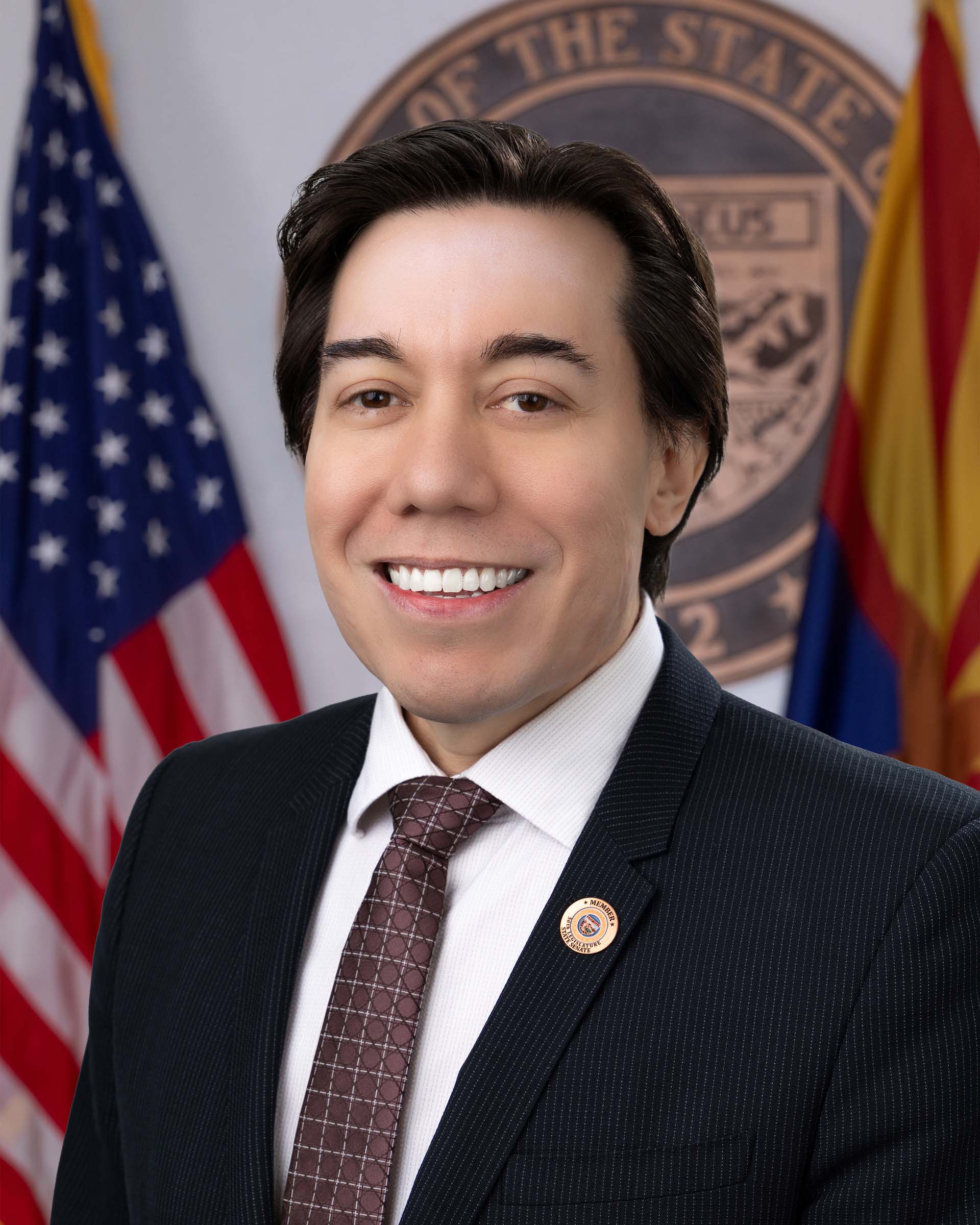
Photo of Brian Fernandez
D Arizona Senate · District 23 On the 2026 ballot

Sen. Brian Fernandez

Compare
Total votes
3,526
all sessions
Attendance
87%
454 missed
Lower than 87% of chamber peers
With party
93%
of cast votes
Lower than 87% of chamber peers
Bipartisan score
5%
crosses aisle rarely
Higher than 83% of chamber peers
Sponsored
401
bills & resolutions
Near the chamber average
Committees
5
assignments
401 bills and resolutions

Sponsored bills

Total
401
Primary
48
Co-sponsor
353
This page
401
matching current filters
Co-sponsor HB 2840
Introduced · Arizona House · Co-sponsor
schools; nutrition education; physical activity

Maddy summaryHB 2840 requires Arizona public schools and charter schools to provide annual nutrition education for all students from kindergarten through 12th grade. This includes teaching practical healthy eating habits, scientific evidence on diet/exercise, disease prevention, and meal planning skills, with a focus on nutrient-dense foods and the impacts of ultraprocessed foods. The bill also mandates 30 minutes of daily physical activity for all students, allowing options like physical education classes, scheduled breaks, or active classroom time, while permitting medical exemptions. These requirements directly affect all Arizona K-12 schools and their students, aiming to integrate health education into daily school routines.

Introduced Jan 26, 2026 1 co-sponsor
Co-sponsor SB 1300
Introduced · Arizona Senate · Co-sponsor
interstate agreement; national popular vote.

Maddy summaryArizona's SB 1300 would adopt the National Popular Vote Interstate Compact, requiring the state to award all presidential electors to the candidate winning the national popular vote *if* participating states collectively hold 270+ electoral votes. The bill amends Arizona law to align with the compact's rules: when in effect, Arizona's electors would cast votes for the national popular vote winner, not the state's winner. This directly affects Arizona's electoral process and presidential election outcomes, shifting from winner-takes-all state results to a national vote tally. The change would take effect only after enough states join the compact to control a majority of electoral votes (270+), as specified in the compact's Article I.

Introduced Jan 26, 2026 1 co-sponsor
Co-sponsor SB 1262
Introduced · Arizona Senate · Co-sponsor
voting centers; early voting; security.

Maddy summarySB 1262 amends Arizona voter registration procedures to improve address verification and citizenship documentation. County recorders must send follow-up notices if mail is returned, giving voters 35 days to update addresses or citizenship proof before registration becomes inactive. It specifies acceptable citizenship evidence (e.g., driver’s licenses showing citizenship, birth certificates, passports) and requires counties to participate in a multistate voter registration database. The bill directly affects voters with changed addresses or those needing to verify citizenship, streamlining registration maintenance while requiring counties to update records using postal service data and electronic systems.

Introduced Jan 26, 2026 1 co-sponsor
Primary SB 1228
Introduced · Arizona Senate · Lead sponsor
health insurers; provisional provider credentialing

Maddy summarySB 1228 requires Arizona health insurers to grant provisional credentialing to eligible healthcare providers starting when they receive a complete application. Providers must be state-licensed, already credentialed by a healthcare institution or verification organization, and part of a group with an existing insurer contract. During the 60-day provisional period, insurers must pay claims at the group practice's contracted rates. If credentialing is denied, insurers aren't liable for claims provided during provisional status (except for fraud), and the law applies to applications submitted after December 31, 2026.

Introduced Jan 21, 2026 0 co-sponsors
Primary SB 1227
Introduced · Arizona Senate · Lead sponsor
prior authorization; gold card exemption

Maddy summarySB 1227 creates a "gold card exemption" for healthcare providers in Arizona who consistently meet prior authorization requirements. Specifically, providers submitting at least five prior authorization requests for a specific service in six months with a 90% approval rate qualify for exemption from future approvals for that service. The exemption lasts six months and requires renewal, with insurers allowed to review and rescind it after verifying eligibility through random claim samples. Insurers must provide 30 days' written notice and appeal options if rescinding, directly affecting healthcare providers and insurers managing patient care approvals starting January 1, 2027.

Introduced Jan 21, 2026 0 co-sponsors
Primary SB 1230
Introduced · Arizona Senate · Lead sponsor
motor vehicle dealer; advertising; restriction

Maddy summaryThis bill restricts how motor vehicle dealers and brokers advertise specific vehicles in Arizona. Dealers must disclose their physical location for vehicle inspection if advertising a specific car, and the total purchase price (including all fees) must be the largest text in ads - no larger font for payment terms or incentives. Brokers cannot advertise vehicle prices at all, only their service of arranging purchases, and must state that prices depend on the dealer. Rebates or discounts limited to specific groups (like military or students) must be listed separately, not included in the advertised price.

Introduced Jan 21, 2026 0 co-sponsors
Primary SB 1225
Introduced · Arizona Senate · Lead sponsor
pharmacies; cost sharing requirement; rebates

Maddy summarySB 1225 requires pharmacy benefit managers (PBMs) and third-party payors to calculate patient cost-sharing (like copays or deductibles) at the point of sale using a price reduced by at least 100% of all rebates received for a prescription drug. This means patients must pay the lowest possible price after all rebates are applied, and PBMs cannot keep any portion of rebates as revenue. The law directly affects patients enrolled in health plans covered by these PBMs, ensuring they benefit fully from negotiated drug discounts. It applies to new or renewed health plans after December 31, 2026.

Introduced Jan 21, 2026 0 co-sponsors
Primary SB 1226
Introduced · Arizona Senate · Lead sponsor
pricing; covered goods; requirements.

Maddy summarySB 1226 requires large food suppliers to offer identical pricing terms for covered goods (food for home use and garden seeds/plants) to all retailers purchasing at the same volume level. It directly affects major food suppliers (annual sales >$6 billion) and dominant retailers (annual sales >$18 billion), including large chains and online platforms. The bill mandates that covered suppliers provide anonymized sales data within 14 business days of a written request from retailers. This aims to prevent price discrimination by ensuring uniform terms for the same volume of goods across all retailers. The law excludes gasoline, prescription drugs, tobacco, and alcohol from these requirements.

Introduced Jan 21, 2026 0 co-sponsors
Primary SB 1229
Introduced · Arizona Senate · Lead sponsor
early voting; identification; emergency voting

Maddy summarySB 1229 amends Arizona's early voting rules to require voters requesting an early ballot for a presidential primary election to provide identification (such as date and place of birth) to confirm their identity. It creates a new emergency voting option for voters facing unexpected crises between 5:00 p.m. Friday and 5:00 p.m. Monday before an election, requiring them to sign a sworn statement about the emergency. The bill also allows voters to update their registration information at early voting locations. These changes directly affect Arizona voters participating in early or emergency voting for presidential primary elections.

Introduced Jan 21, 2026 0 co-sponsors
Primary SB 1223
Introduced · Arizona Senate · Lead sponsor
authorized transporters; minimum standards; registration

Maddy summarySB 1223 defines "authorized transporter" for behavioral health transportation in Arizona. It specifies two categories: (1) contracted ambulance services with a valid certificate of necessity or other state-authorized transportation providers, and (2) secure behavioral health transport providers. The bill directly affects transportation companies seeking to provide mental health transportation services under state law. This definition sets the legal criteria for who can legally transport individuals requiring behavioral health services in Arizona.

Introduced Jan 21, 2026 0 co-sponsors
Showing 61 to 70 of 401 bills
Previous 1 … 6 7 8 … 41 Next