

Maddy summarySB 1442 requires corporations and limited liability companies (LLCs) to register with Arizona’s Corporation Commission before purchasing single-family homes, condos, or townhomes. It mandates registration with the Securities Division (including a fee), creates a public online registry, and imposes a $20,000 civil penalty for non-compliance. The bill also prohibits corporate purchases unless the property has been on the market for over 90 days or the asking price changed. Exemptions include small owners (under 10 properties), government entities, nonprofits, land trusts, group homes, and employers renting to staff. The Commission must annually report all corporate purchases/sales by zip code starting in 2027.
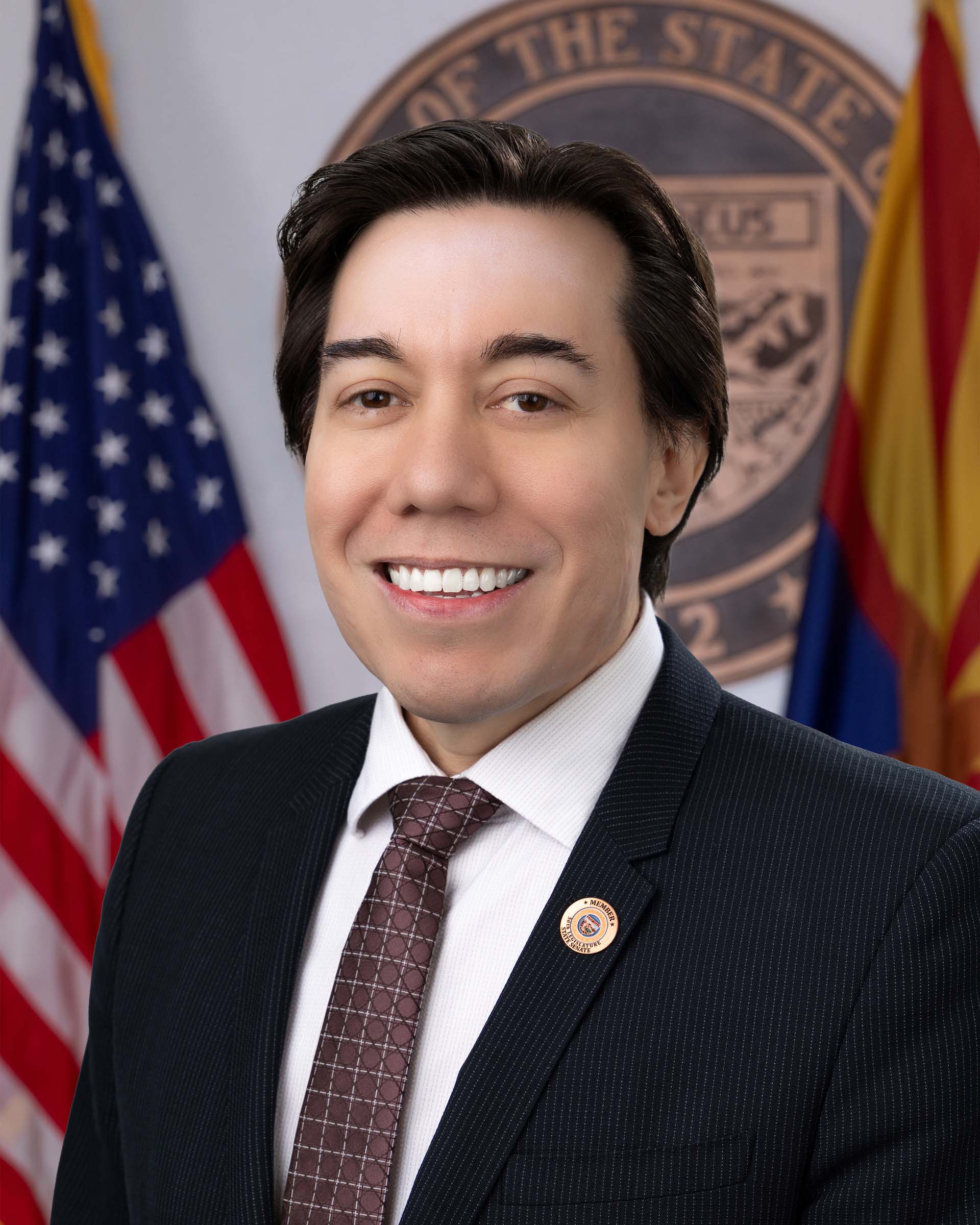
Sen. Brian Fernandez
Sponsored bills
Maddy summarySB 1394 establishes legal rights for individuals to access fertility treatments without unreasonable barriers, including preserving reproductive materials, artificial insemination, IVF, and related services. It directly affects patients seeking fertility care, healthcare providers offering these services, and health insurers required to cover them. Key provisions guarantee individuals’ rights to continue ongoing treatments, retain control over their reproductive materials, and ensure providers can offer evidence-based care within their scope. The bill also exempts the Department of Health Services and health boards from standard rulemaking requirements for one year to implement these provisions. This legislation aims to clarify access and rights but is pending final passage.
Maddy summarySB 1381 requires farmers or ranchers leasing state agricultural land (outside specific groundwater management areas) to pay an annual fee based on their groundwater use. They must report well locations, water volume, and usage annually by March 31. Fees collected go to the state land trust fund, with the legislature stating fees should reflect groundwater's fair market value. This bill directly affects agricultural lessees on state land in areas not covered by active groundwater management zones.
Maddy summarySB 1395 repeals Arizona's existing requirement for abortion providers to report certain data to the state. It directly affects abortion providers who previously had to submit these reports under Title 36, Chapter 20, Article 2 of the Arizona Revised Statutes. The bill removes this reporting obligation without creating new requirements or mechanisms. As a procedural repeal, it eliminates a specific administrative rule rather than changing abortion access or policy. This action was introduced in the Arizona Senate on January 26, 2026.
Maddy summarySB 1382 requires most groundwater users in Arizona’s designated management areas to install approved measuring devices and submit annual reports on their water withdrawals. It primarily affects agricultural users, landowners, and water districts withdrawing groundwater for irrigation or non-irrigation uses in active management zones or the Santa Cruz area. Key exemptions include small users (10 or fewer acre-feet yearly), farms using water on ≤10 contiguous irrigated acres without integrated operations, and certain grandfathered rights. The bill mandates the director to set device specifications and reporting rules, while clarifying which users are exempt from these requirements.
Maddy summarySB 1380 requires large electricity consumers in Arizona to pay directly for the energy costs (including fuel, generation, and transmission) tied to their own usage, rather than having those costs shared with other customers. It defines "large load customers" as entities using at least 50 megawatts during peak demand, specifically including data centers, cryptocurrency mining operations, industrial facilities, manufacturing plants, hydrogen production sites, and large buildings. The bill prohibits these large customers from passing their energy costs to other public power or public service corporation customers. This applies to both public power entities (like municipal utilities) and public service corporations (like investor-owned utilities). The law aims to allocate energy costs more directly to the users responsible for high demand.
Maddy summarySB 1383 repeals Arizona's existing greenhouse gas program framework, specifically removing Title 49, Chapter 1, Article 6 of the Arizona Revised Statutes. This bill directly affects any current or future state programs operating under that repealed legal authority. The bill contains no new provisions or mechanisms - it solely eliminates the existing statutory structure for greenhouse gas programs. No new requirements or prohibitions are created; the action is purely a repeal of prior law.
Maddy summaryArizona's SB 1396, the "Arizona Right to Contraception Act," establishes a legal right for individuals to access contraceptives and engage in contraception, and for health professionals to provide them. The bill prohibits state or local government actions that single out contraceptive services or impede access, such as restricting providers or facilities offering these services. It specifically clarifies that the law does not override requirements for voluntary, informed consent in sterilization procedures. The act directly affects patients seeking contraception and healthcare providers who prescribe or distribute contraceptive methods like birth control pills, IUDs, or condoms.
Maddy summarySB 1373 allocates $250,000 from Arizona's state general fund for the 2026-2027 fiscal year to Pima County to support its summer youth employment program. This funding directly supports Pima County's existing initiative that provides temporary jobs for local youth during the summer months. The bill does not create new requirements or alter program rules - it solely provides the financial resources needed to operate the program. As a purely funding measure, it affects only Pima County's administration of this specific youth employment effort.
Maddy summaryThis bill allows private employers and individuals not employed by the state to join Arizona's state health care plans. It directly affects private businesses and self-employed individuals seeking state-sponsored health coverage. The key provision authorizes the Department of Administration to create rules for implementing the program, though the bill itself doesn't specify plan details or costs. The legislation focuses on expanding access to state health plans without mandating employer participation.