

Maddy summarySCR 1043 is a proposed constitutional amendment that would establish a statewide spending cap for all Arizona public school districts. It requires the state to calculate an annual limit based on 1979-1980 local spending adjusted for student population changes and inflation, then multiplied by 1.10. School districts would generally be prohibited from exceeding this cap for local revenue expenditures, though the legislature could override it with a two-thirds vote. The cap excludes specific funding sources like bond proceeds, federal grants, and certain local taxes, focusing only on other local revenue streams.
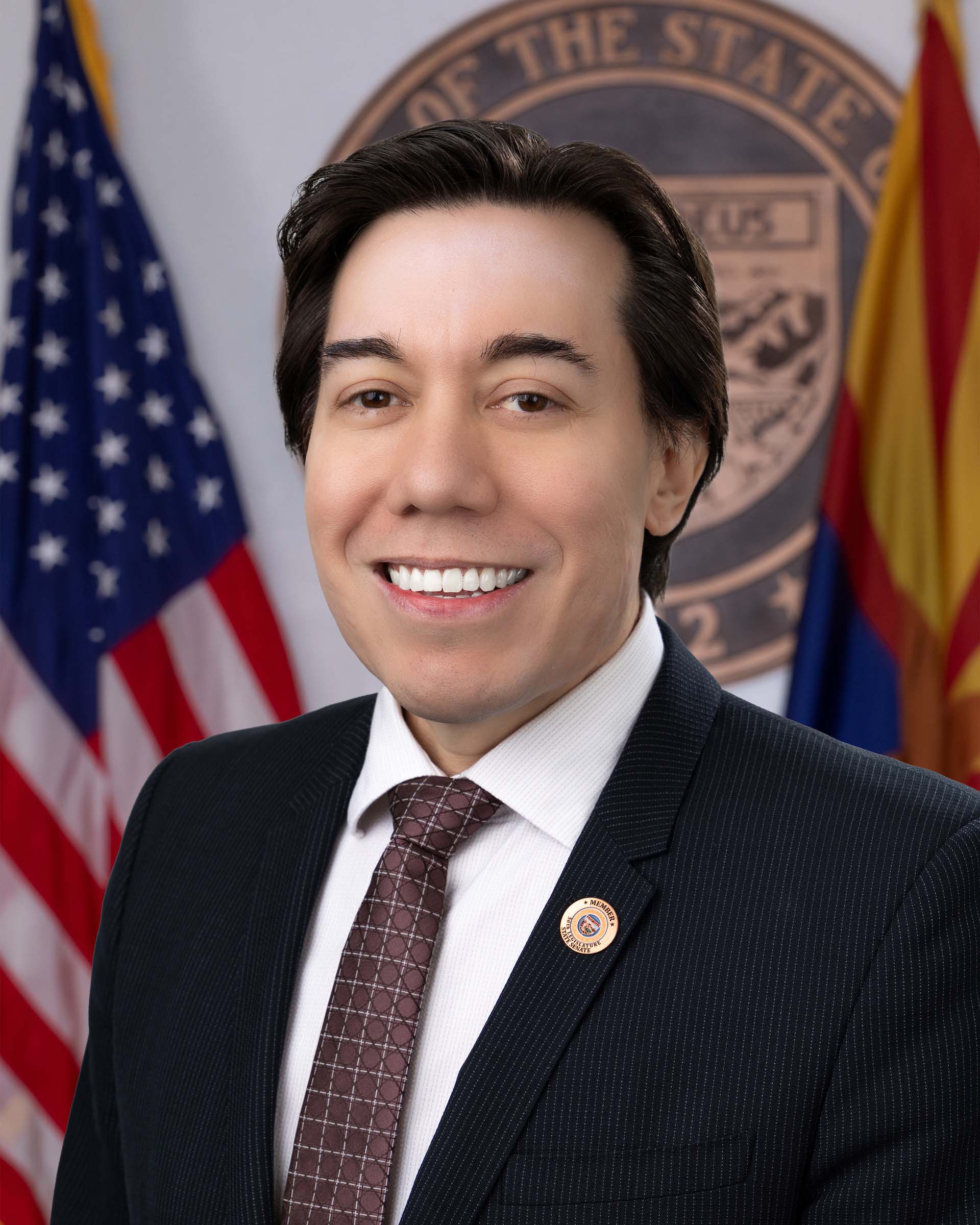
Sen. Brian Fernandez
Sponsored bills
Maddy summarySB 1660, the "Immigration Safe Zones Act," requires Arizona's Attorney General to create policies within 60 days that limit state agency cooperation with federal immigration enforcement. These policies must protect specific public facilities - including public schools, community colleges, universities, libraries, courts, and publicly funded healthcare centers - from being used for immigration enforcement actions. The bill also mandates that state agencies remove all questions about immigration status from applications, questionnaires, or forms related to public services or education within 60 days. It defines "immigration enforcement" broadly to include federal efforts targeting individuals' presence, entry, or employment in the U.S. The law directly affects state agencies, public institutions, and residents seeking services at protected facilities.
Maddy summarySB 1577 amends Arizona law to explicitly exempt websites operating as private clubs or religious organizations from certain anti-discrimination requirements. The bill adds "websites" to the existing list of entities (like physical private clubs and religious organizations) already exempt under federal civil rights law. This means websites functioning as private clubs or religious entities would no longer be subject to the same coverage under Arizona's relevant statute. The change applies specifically to websites structured like private clubs or religious entities, not all websites.
Maddy summarySB 1578 sets new standard deduction amounts for Arizona income tax filers for the 2025 tax year. It allows taxpayers to choose this standard deduction instead of itemizing deductions, with specific amounts based on filing status: $15,750 for single filers or married filing separately, $23,625 for heads of household, and $31,500 for married couples filing jointly. The bill directly affects Arizona residents who file individual income tax returns for 2025. These deduction levels apply only to the 2025 tax year, beginning after December 31, 2024. The change simplifies tax filing for eligible individuals by establishing fixed deduction amounts.
Maddy summarySB 1615 establishes a state property review board to audit underused state-owned real estate starting in 2027. The board will identify properties using less than 60% of their intended capacity as "Surplus Property" and place them on a Mandatory Disposal List. These properties must be sold at public auction within 12 months, with proceeds deposited into the state general fund. The bill directly affects state agencies holding non-land-trust property, aiming to reduce taxpayer costs from vacant facilities by converting them into liquid capital.
Maddy summarySB 1522 requires Arizona's legislative council to display the official flags of all 22 federally recognized tribes in the state at Wesley Bolin plaza. This bill mandates the placement of these tribal flags as part of the governmental mall's official display, directly affecting the tribes whose flags are featured. The law specifies that the legislative council must arrange this display, with no additional funding or procedural requirements beyond standard flag placement protocols.
Maddy summarySB 1532 sets a termination date for the governing board of the Arizona State Schools for the Deaf and the Blind (ASDB). The board of directors will end on July 1, 2034, and related statutes will be repealed on January 1, 2035. The bill does not change the schools' operations or services but defines the end of the current governance structure. It ensures the schools' educational mission for sensory-impaired children continues until the board's termination date. The bill is procedural, establishing a sunset for the board's authority without altering the schools' purpose or funding.
Maddy summaryArizona's SB 1506 exempts county recorders from charging fees when processing documents that remove unlawful restrictions from property records. Specifically, it eliminates fees for amendments to governing instruments (like condominium or planned community declarations) that remove restrictions based on race, religion, national origin, sex, familial status, or disability - violating fair housing laws. This directly affects property owners, communities, and developers seeking to comply with civil rights laws by removing discriminatory clauses from property documents. The bill modifies existing fee structures to ensure no cost barrier exists for correcting such unlawful restrictions.
Maddy summarySB 1467 repeals a provision (Section 41-1519) that previously provided tax relief for data centers in Arizona. This bill directly affects data centers that previously qualified for these tax incentives. The repeal removes the specific tax break program, ending eligibility for this form of tax relief for qualifying data center facilities. The bill does not create new rules but eliminates an existing tax incentive.
Maddy summarySB 1441 regulates corporate purchases of single-family homes in Arizona. It requires corporations or limited liability companies (LLCs) buying such homes to register with the Corporation Commission and include specific ownership details on deeds, which must also state the property is not the owner’s primary residence. The bill limits corporate ownership to no more than 5% of single-family homes in any census tract and mandates county recorders to report monthly purchase data to the Corporation Commission. It exempts entities owning fewer than ten homes statewide. The law defines "single-family residence" as a detached home not sharing walls with another dwelling.