

Maddy summarySB 1306 allocates $2,594,840 from Arizona's general fund for the fiscal year 2025-2026 to the existing Law Enforcement Crime Victim Notification Fund. This fund, established under Arizona Revised Statutes § 41-2414, directly supports crime victim notification services provided by law enforcement. The bill provides dedicated funding to ensure consistent support for notifying victims of criminal cases, without creating new programs or altering eligibility. The appropriation is exempt from standard state budget lapse rules, guaranteeing the funds remain available for the specified purpose.
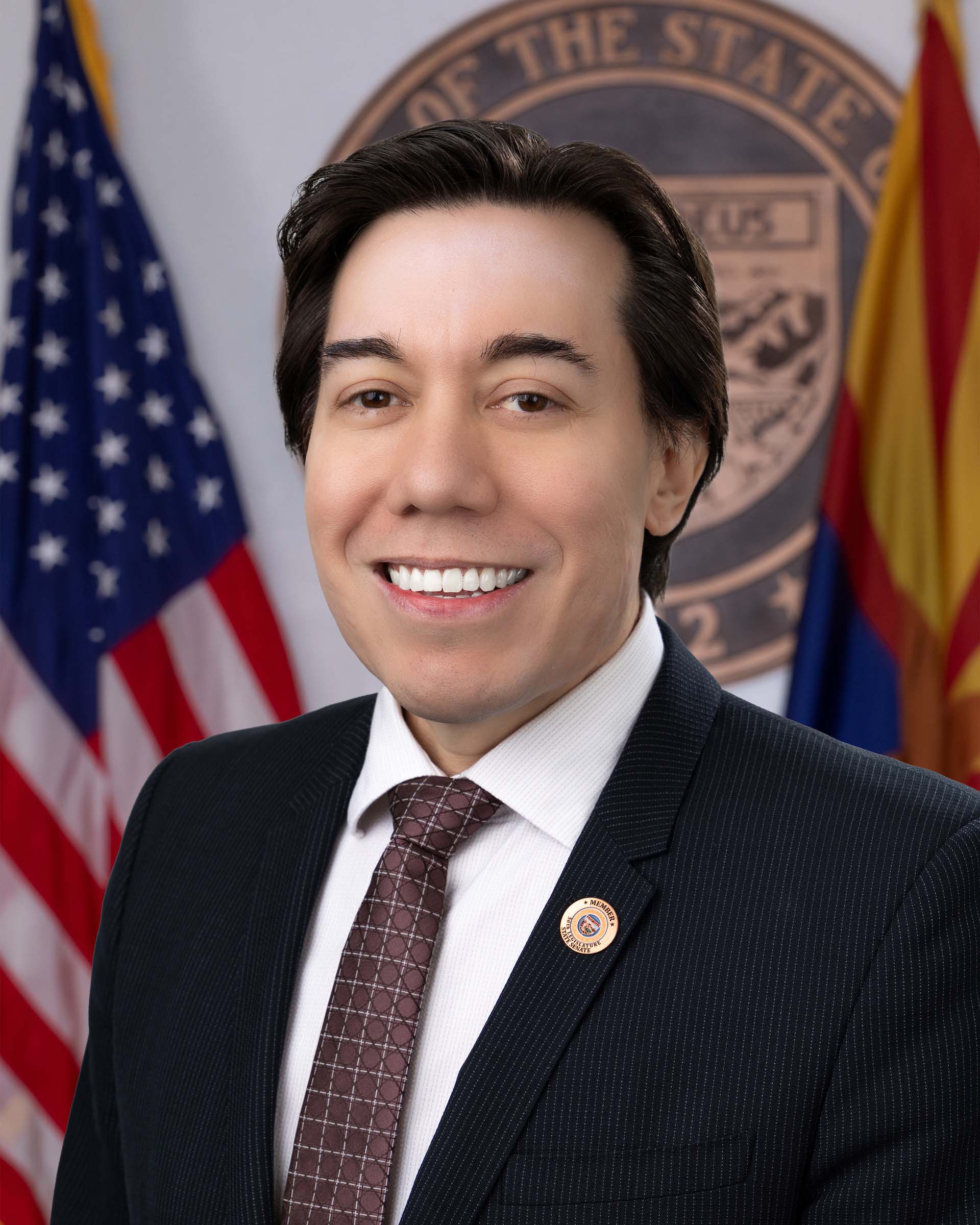
Sen. Brian Fernandez
Sponsored bills
Maddy summarySB 1439 allocates $400,000 annually from Arizona's general fund to the state Department of Corrections for its braille transcription program, doubling the current $200,000 yearly budget. This funding directly supports incarcerated individuals who rely on braille materials for access to reading and educational resources. The bill establishes this increased amount as ongoing funding for future fiscal years, ensuring sustained support beyond the current allocation. It does not create new requirements but secures stable financial resources for an existing program serving inmates with visual impairments.
Maddy summarySB 1234 amends Arizona's animal cruelty law to explicitly prohibit failing to provide necessary medical care to prevent unreasonable suffering in domestic animals under a person's custody. It directly affects pet owners, breeders, and anyone responsible for domestic animals. The key change adds a specific violation for "intentionally, knowingly or recklessly fails to provide medical attention necessary to prevent unreasonable suffering." Violations range from class 1 misdemeanors (for neglect) to class 5 or 6 felonies (for severe harm or killing), with penalties including compensation for service animal replacement costs.
Maddy summarySB 1301 requires Arizona public schools to include instruction on the history and contributions of Asian Americans, Native Hawaiians, and Pacific Islanders starting in the 2028-2029 school year. The law mandates that school districts develop curriculum covering this history within Arizona, the U.S., and globally, including civil rights advancements, contributions to arts/science/government, and economic/cultural impacts. School districts must annually attest by June 14 each year (beginning in 2029) that this instruction is planned and implemented systemically. The bill directly affects all Arizona public school districts and charter schools through state curriculum requirements.
Maddy summarySB 1228 imposes a temporary moratorium on new housing regulations in Arizona, preventing municipalities from adopting or enforcing new rules for single-family homes, subdivisions, or planned developments from its effective date through June 30, 2028. The law only allows new regulations that protect public health/safety or reduce construction costs. It directly affects local governments (cities and towns) by restricting their ability to create new housing development standards during this period. The bill expires on June 30, 2028, and stems from legislative findings that non-essential regulations are worsening Arizona's housing shortage and affordability crisis.
Maddy summaryThe bill title "HB 2747: weapons; permit; firearms safety training" does not match the provided text, which is exclusively about alcohol regulations under Arizona Revised Statutes §4-244. The actual bill text regulates liquor licensing, sales restrictions (e.g., prohibiting sales to minors, requiring specific signage for transport), and employment rules for alcohol retailers. It does not address weapons, firearm permits, or safety training. This appears to be an error in the bill title or description provided.
Maddy summarySB 1606 updates definitions for emergency medical services terminology in Arizona law, clarifying terms like "ambulance," "advanced life support," "emergency medical technician," and "interfacility transport." It standardizes language for ambulance services, medical personnel roles, and hospital transport protocols without changing service requirements or creating new regulations. This procedural bill ensures consistent terminology across existing emergency medical services rules. (2 sentences)
Maddy summarySB 1646 allocates $112.45 million from Arizona's general fund and $78.65 million in federal child care funds for the Department of Economic Security to provide child care assistance. The funding supports low-income families who qualify for state child care assistance programs. It directly affects eligible families by ensuring continued access to subsidized child care services. The bill specifies the exact funding amounts and sources for the 2025-2026 fiscal year without changing eligibility rules or program structure.
Maddy summaryArizona's SB 1653 modifies early voting procedures for state elections. It requires voters requesting early ballots to provide birth date and birthplace (or equivalent ID details) to confirm their identity, and mandates that all early voting locations (including county offices) operate until 7:00 p.m. on the weekend before elections and until 3:00 p.m. on the Monday before. The bill also creates emergency voting for voters facing unexpected emergencies between Friday 5:00 p.m. and Monday 5:00 p.m. before an election, requiring them to present ID and sign a sworn statement about the emergency. These changes directly affect Arizona voters seeking early or emergency ballots in state elections.
Maddy summarySB 1650 establishes Arizona's Quality Early Childhood Education Supplemental Assistance Grant Program, appropriating $175 million for the 2025-2026 school year to fund early childhood learning services for children from low-income families (at or below 100% of the federal poverty level). The program prioritizes providers serving these families, including Head Start recipients and Title I preschool programs, requiring them to supplement rather than replace existing funding. Key provisions mandate providers to offer mixed-income classrooms, research-based curricula, disability-inclusive services (ensuring at least 10% of participants have disabilities), and coordinated health screenings while meeting Head Start quality standards. This directly affects early childhood providers, low-income families, and children with disabilities through concrete service and funding requirements.