

Maddy summarySB 1630 establishes a study committee to examine issues affecting Arizona inmates aged 55+ who are aging within the state correctional system. The committee, composed of legislative members, corrections and healthcare officials, and community representatives (including a former inmate or family member), will research release programs, healthcare access, and transitions to long-term care. It must develop recommendations for a step-by-step release plan and a healthcare roadmap, submitting a final report to state leaders by December 31, 2025. This is a procedural bill creating a study body - not a policy change - and directly affects aging incarcerated individuals in Arizona.
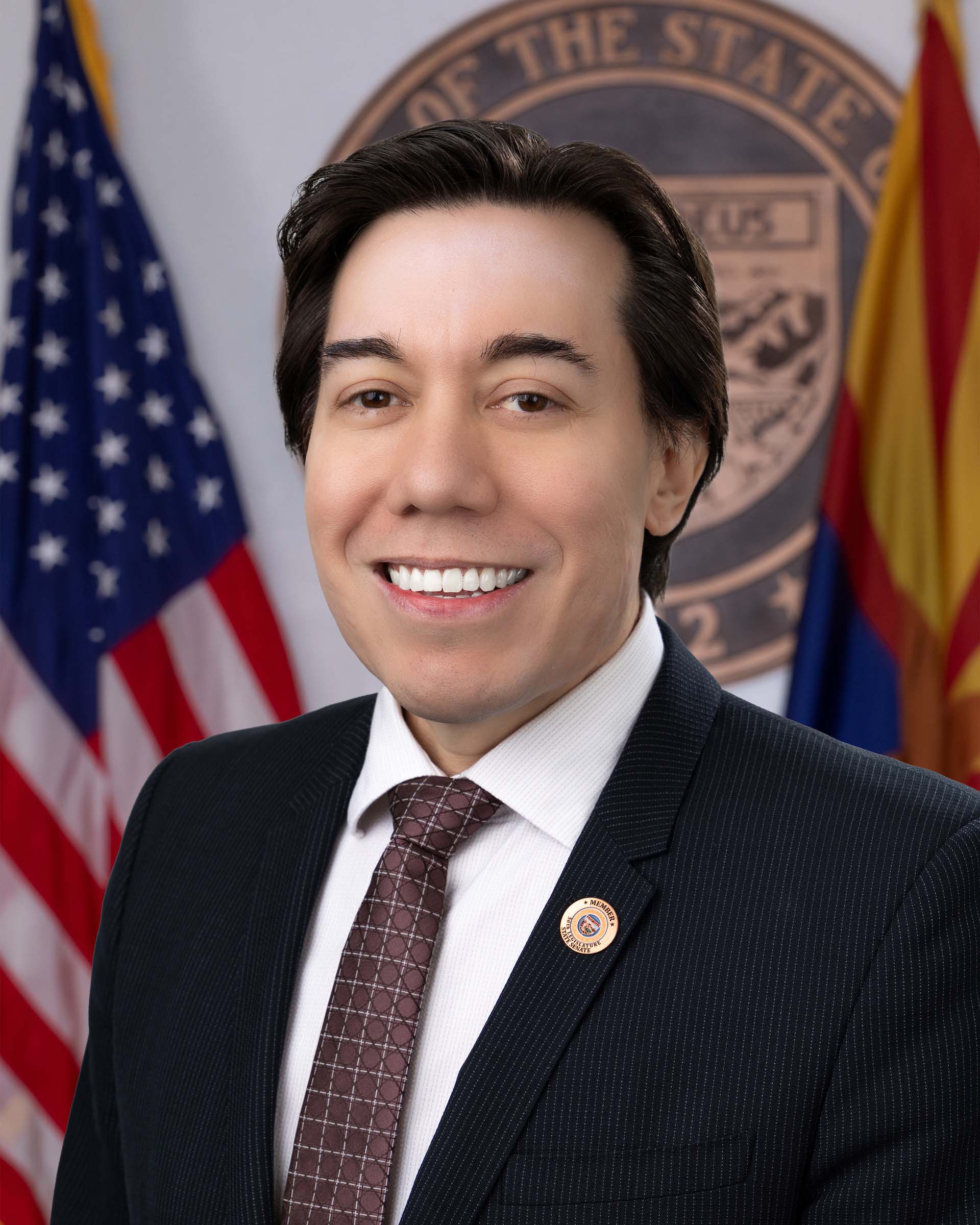
Sen. Brian Fernandez
Sponsored bills
Maddy summaryThis bill requires health professionals in Arizona to clearly disclose their actual license type and current board certification status in all advertisements. It mandates that they name the certifying agency when claiming certification, and prohibits false claims about certification. The rule applies to all promotional materials like billboards, websites, and brochures - but not to standard network provider listings. Violations would be considered unprofessional conduct under state law.
Maddy summaryThis constitutional amendment establishes permanent funds for revenue from Arizona's land grants, requiring strict separation of funds based on the original land grant purpose. It mandates that funds be invested in safe securities (capping equities at 60% and single-company holdings at 5%) and sets specific annual distribution rates: 2.5% until 2024-2025, 6.9% from 2025-2026 through 2034-2035, then returning to 2.5%. Distributions fund basic state aid and school funding, with automatic reductions during market downturns to preserve capital. The bill directly affects how Arizona manages and distributes long-term land trust revenue to public education and state aid programs.
Maddy summarySB 1605 amends Arizona's retail tax statute (ARS 42-5061) to add a new exemption for tangible personal property sold to qualifying hospitals and health care organizations. This exemption applies to property used solely for providing health and medical educational and charitable services. The bill's title mentions "firearm storage devices," but the provided text contains no provisions related to firearms or storage devices. The bill is currently pending in the Senate following first and second readings.
Maddy summarySB 1629 allows Arizona prison directors to release inmates with terminal illnesses or conditions requiring end-of-life care to state-contracted nursing care facilities. It applies only to inmates who are so debilitated they pose no danger to themselves or others, excluding those convicted of first-degree murder. The bill requires prison officials to periodically review medical records to confirm ongoing eligibility, and if an inmate no longer meets criteria, they must be returned to custody. This policy change directly affects terminally ill inmates in Arizona prisons who qualify under these specific medical and safety conditions.
Maddy summarySB 1631 establishes a pilot program in Arizona for STEM and vocational teachers in qualifying high school districts. It provides eligible teachers with $6,000 summer stipends for three years (2025-2026 through 2027-2028) to participate in paid internships at local companies, professional development, and peer learning, all facilitated through nonprofit partnerships. The program targets districts meeting strict criteria: serving grades 9-12, having at least 25,000 students (75% eligible for free/reduced lunch and 80% Hispanic), operating 24+ sites in high-population counties, and offering bioscience/coding programs. Participating districts must submit detailed quarterly and annual reports on teacher retention, student performance, business partnerships, and program costs to the state education department.
Maddy summarySB 1456 requires commercial dog breeders in Arizona to obtain a county-issued permit before operating. It defines "commercial dog breeder" as any person maintaining female dogs primarily to sell their puppies as companion animals. Counties must establish their own application process and may set an application fee, though the bill doesn't mandate a specific fee amount. This applies directly to breeders selling puppies for companionship, not hobby breeders or those focused on other purposes. The bill does not override federal animal welfare regulations.
Maddy summarySB 1458 allocates state general fund money to the University of Arizona for constructing a regional medical center in Yuma during fiscal year 2025-2026. The bill provides specific funding for this facility's construction, which would primarily serve residents of the Yuma area. This is a straightforward funding appropriation, not a policy change affecting regulations or broader healthcare programs.
Maddy summaryThis bill creates an Office of Domestic Companion Animal Health and Welfare within Arizona’s state veterinarian’s office to regulate pet breeders. It requires backyard breeders (those breeding for sale) and hobby breeders (those producing two or more litters yearly) to obtain permits, pay fees, and follow specific care standards including proper housing, food, water, space, exercise, and veterinary care for their animals. Breeders must provide veterinary inspection certificates when selling pets and face fines of up to $1,000 for non-compliance. Permit fees fund Arizona’s spay/neuter program, with half retained by the state and half deposited into the existing animal welfare fund.
Maddy summarySB 1459 requires the Arizona Historical Society to transfer ownership of two Yuma properties - the Sanguinetti House Museum and Gardens, and the Molina Block - to the city of Yuma within 15 days of the bill's effective date (September 14, 2024). The city must use these properties for public purposes forever and cannot sell or trade them. The bill also mandates that historical documents, artifacts, or items donated to the Historical Society before or after 1972 (that benefited Yuma County, were created there, or relate to Yuma's history) be returned to the city. The Arizona Historical Society must inventory items still held by Yuma County to verify they meet these return criteria.