

Maddy summarySB 1599 requires developers to prove water supply availability before selling land or obtaining building permits for new residential, commercial, or industrial projects in Arizona's designated water-stressed areas. It mandates a "certificate of assured water supply" from the state or a written commitment from a designated city, town, or private water company for subdivision plats and building permits. Cities, towns, and counties must verify this documentation before approving plats or permits, and the state will designate qualifying water providers. Exemptions apply for mineral extraction projects, and the bill offers water demand reductions for developments using approved gray water systems. This directly affects developers, local governments, and water providers in active management areas.
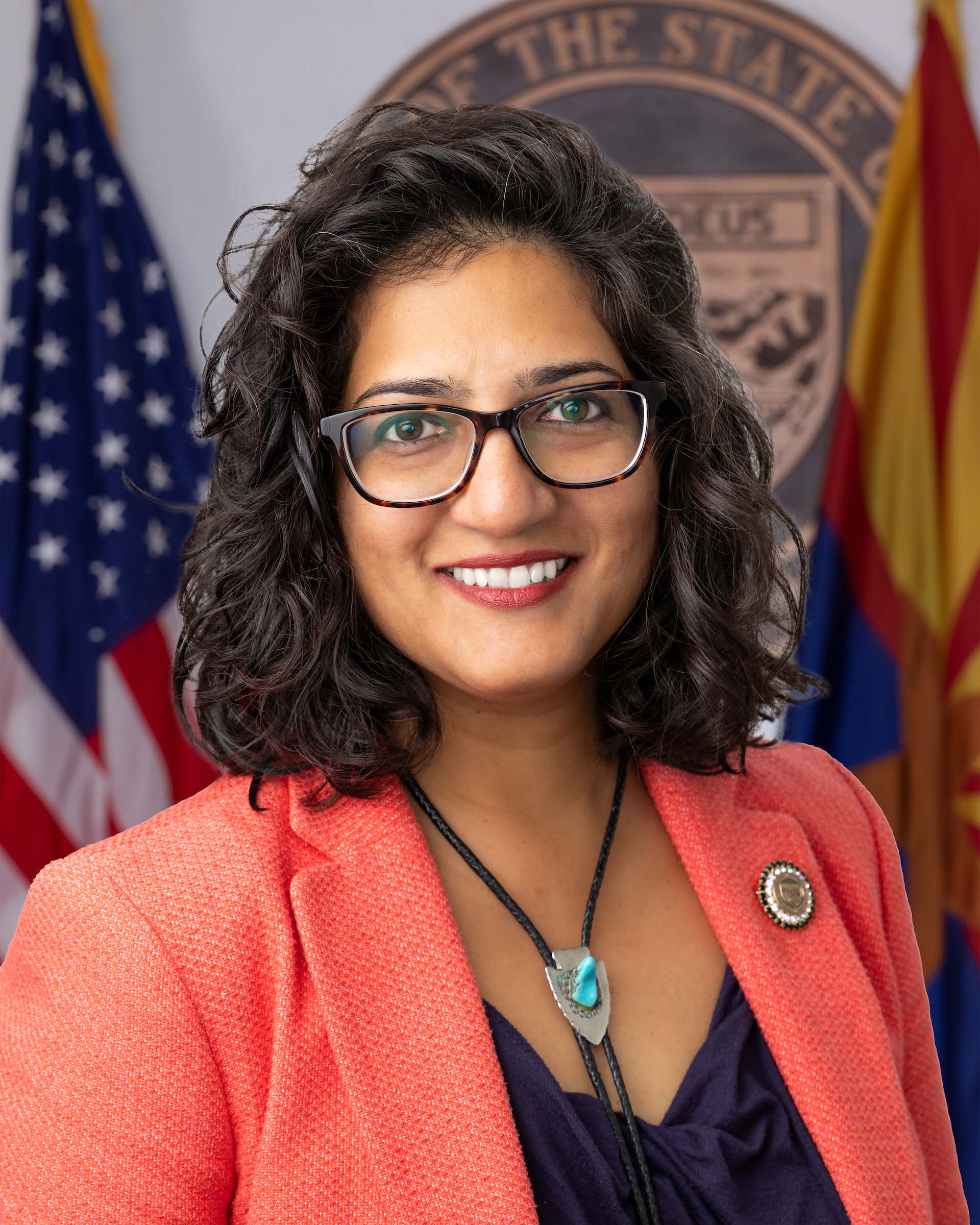
Sen. Priya Sundareshan
Sponsored bills
Maddy summarySCR 1038 proposes amending the Arizona Constitution to establish a fundamental right to privacy. It would prohibit government intrusion into private affairs or homes without legal authority, declare privacy essential for a free society, require a "compelling state interest" to infringe privacy, and prevent state interference with privacy in benefits, facilities, services, or information. This constitutional amendment must be approved by Arizona voters in the next general election after passing both legislative chambers. If adopted, it would directly affect all Arizonans by embedding privacy protections into the state's foundational law.
Maddy summarySB 1695 allows eligible individuals (including public officials, peace officers, domestic violence victims with protection orders, and others in danger) to request privacy for their personal information in public county property records. To qualify, applicants must file a legal form with specific details and proof of safety risks, which a court reviews to determine if restricting public access to their address, name, or property records is necessary for safety. If approved, the county recorder must hide this information for five years, preventing the public from accessing it online or in indexes. The bill directly affects people who file such requests, not election officers as the title incorrectly states - the focus is on property record privacy for safety reasons.
Maddy summaryArizona's SB 1647 establishes specific class size limits for public schools, requiring all schools to adopt policies by the 2030-2031 school year. It sets maximum average class sizes (e.g., 18 students for K-3, 25 for 9-12) and prohibits exceeding these limits, with limited exceptions for specialized classes. The bill creates a dedicated "Classroom Site Fund" to support implementation, requiring schools to use these funds primarily for class size reduction, teacher compensation (including performance-based components), and related programs like teacher development. This directly affects all Arizona public schools, K-12, by mandating smaller class sizes and linking funding to compliance.
Maddy summarySB 1638 establishes standards for Arizona public and charter schools offering online instruction. It requires new online schools to operate on probation for up to three years, demonstrating improved student academic performance before becoming permanent. The bill mandates annual reporting on key metrics like course completions, end-of-course test participation, pass rates in English and math, and student enrollment patterns. Additionally, participating schools must maintain daily logs tracking students' time spent on academic tasks for attendance calculations. These provisions directly affect Arizona online schools, their students, and school districts managing these programs.
Maddy summarySCR 1034 proposes a constitutional amendment to establish a yearly spending limit for Arizona school districts on local revenues. The limit would be calculated by adjusting the 1979-1980 local revenue expenditures for all districts, accounting for changes in student population and cost of living, then multiplied by 1.10 (a 10% factor). School districts must stay under this limit unless the legislature passes a two-thirds vote in both chambers to authorize an exception for a single fiscal year. This amendment requires voter approval to take effect and would affect all public school districts in Arizona.
Maddy summaryThis bill (SB 1648) updates Arizona's online instruction standards and funding rules, primarily affecting online schools, students enrolled in them, and school districts. It requires online schools to meet specific standards (like curriculum depth, internet safety, and teacher qualifications) and mandates probationary status for new providers until they prove academic improvement. Crucially, it changes funding: full-time online students receive 95% of standard funding, while part-time students receive 85%, with daily attendance logs used to calculate these figures. The bill does not address kindergarten specifically, despite its title, focusing instead on statewide online education accountability and financial rules.
Maddy summarySCR 1033 proposes to repeal Arizona's constitutional spending limits for school districts. Currently, these limits tie annual spending to 1979-80 levels adjusted for student population and inflation, with a 10% multiplier for aggregate district spending. The bill would remove these restrictions, allowing school districts greater flexibility in budgeting without the need for special legislative approval to exceed previous spending caps. This change would directly affect all Arizona public school districts by eliminating a long-standing constitutional spending framework. The proposal is a constitutional amendment requiring voter approval after legislative passage.
Maddy summarySB 1596 updates Arizona's fingerprinting requirements for school personnel and modifies the Arizona empowerment scholarship account (ESA) program. The bill requires identity-verified fingerprints for teachers, student teachers, and tutors to obtain a fingerprint clearance card, with digital storage to eliminate re-fingerprinting for renewals. For ESAs, it mandates that parents sign an agreement not to enroll their child in public schools and to use funds for core subjects like reading, math, and science. This bill directly affects school staff seeking certification and families using ESA scholarships.
Maddy summarySCR 1037, if approved by Arizona voters, would revise rules for English language education in public schools. It requires schools to identify students' primary language, assess English proficiency, and enroll non-proficient students in structured English immersion programs (120 minutes daily for K-5, 100 minutes for grades 6-12). Parents would gain the right to sue schools for failing to meet these requirements and recover attorney fees and damages. The State Board of Education would adopt research-based teaching models focused on oral/written skills, grade-level content access, and parental engagement, with annual reviews.