

Maddy summarySenate Concurrent Resolution 1055 is a commemorative measure that honors the life and service of Major General Glen W. 'Bill' Van Dyke, a retired Arizona National Guard leader who passed away in April 2026. The resolution formally recognizes his nearly 38 years of military and public service, including his roles as a pilot, commander of the 162nd Fighter Group, and Adjutant General of Arizona. It expresses the legislature's condolences to Van Dyke's family and friends while acknowledging his contributions to the state and nation.

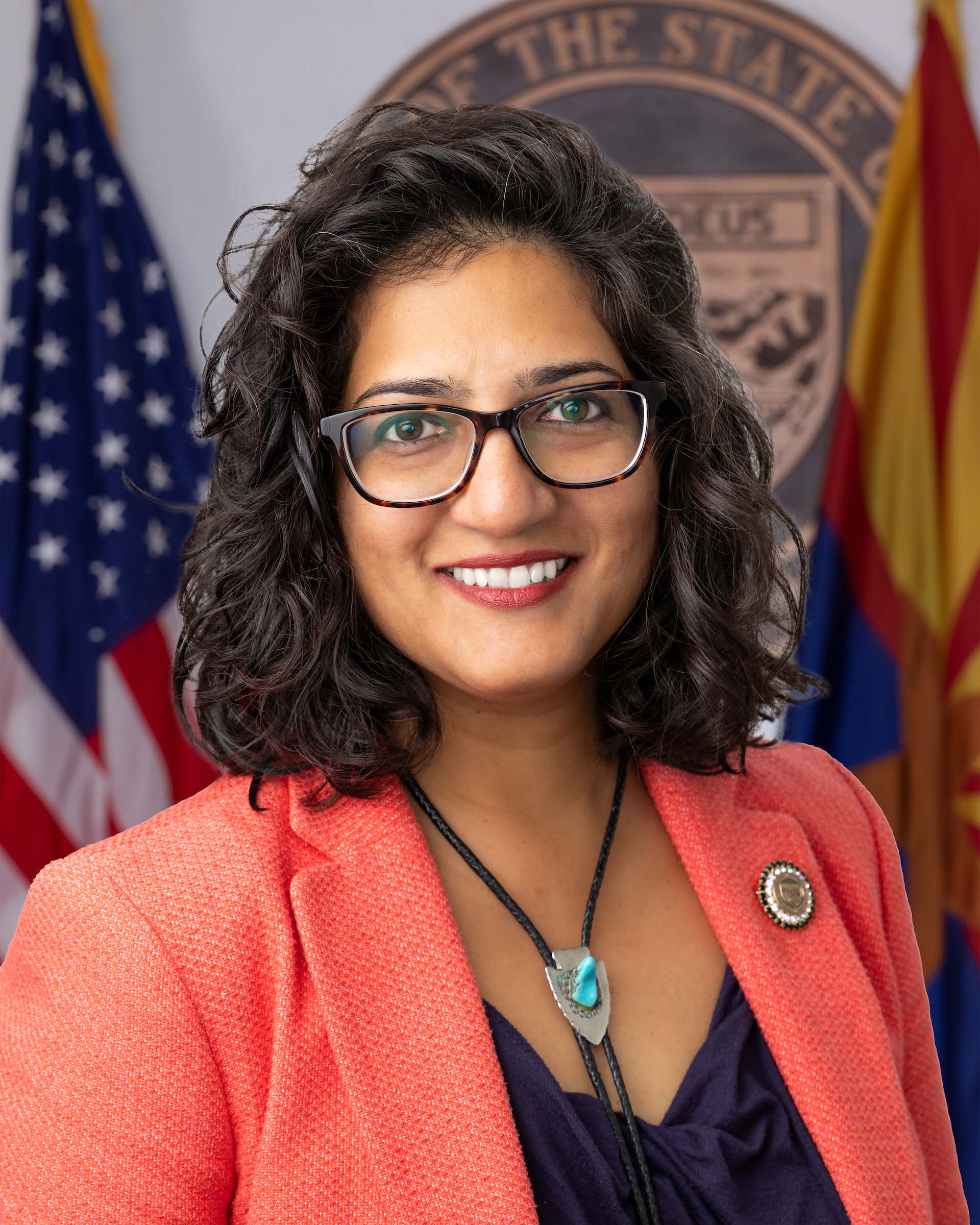
Sen. Priya Sundareshan
Sponsored bills
Maddy summaryArizona's HB 2990 requires counties to verify adequate water supply before approving new subdivisions in designated rural groundwater management areas. Developers must either provide a water resources director's adequacy report or secure a written commitment from a city, town, or private water provider with an approved water supply. The bill allows limited exemptions for subdivisions relying on water transported by vehicle or train, but only if counties confirm no feasible alternatives exist and transportation meets safety conditions. Counties must document approval conditions on subdivision plats and report exemptions to state water and environmental agencies. This directly affects new residential developments in rural Arizona areas where groundwater management is prioritized.
Maddy summarySB 1752 prohibits harvesting, processing, or selling mescaline for commercial purposes or research in Arizona, with a specific exception for religious use integral to bona fide religious practices that don’t endanger public health or safety. It defines "commercial use" as any profit-seeking activity and limits "research" to medical or pharmaceutical applications. Violating the law is a class 4 felony offense. The bill does not affect personal possession or non-commercial religious use.
Maddy summarySB 1488 establishes a committee to study the economic and social impacts on communities dependent on the coal industry, particularly those facing job losses due to coal plant closures. The committee includes bipartisan legislators from rural or tribal areas, nonprofit representatives focused on food security and water protection, Navajo Nation officials, and a Coconino County supervisor. It also appropriates $600,000 for the Office of Economic Opportunity to conduct a workforce development study specifically in Coconino County, where the Navajo Generating Station closed. The committee must submit findings and recommendations to state leaders by December 31, 2026, with the study committee dissolving after September 30, 2027.
Maddy summarySCR 1019 is Arizona's resolution formally approving the Equal Rights Amendment (ERA), a constitutional amendment proposed by Congress in 1972. The ERA would require that the U.S. Constitution guarantee equal rights under the law regardless of sex. Arizona's legislature is voting to ratify this amendment, meaning it supports adding it to the Constitution. The state will transmit this resolution to federal officials as part of the process for the amendment to become binding nationwide.
Maddy summaryThis resolution expresses the Arizona Legislature's sincere regret and deepest condolences regarding the death of former Senate Majority Leader Alfredo Gutierrez. It formally acknowledges his life of public service, highlighting his advocacy for civil rights, education, and immigrant communities, as well as his significant legislative achievements such as establishing the Arizona Department of Transportation and expanding Medicaid. The bill does not enact new laws or policies but serves as a commemorative gesture to honor his legacy and offer support to his surviving family members.
Maddy summarySB 1461 allocates $15 million from Arizona's general fund for a new allied health workforce development program targeting roles like medical technicians and therapists (requiring specialized training beyond high school but less than a bachelor's degree). The program will fund a nonprofit meeting strict criteria, including prior training of 7,000+ students, partnerships with employers and schools, and operating in at least eight states. The nonprofit must commit to graduating 1,000 students annually through this initiative. This direct funding aims to expand training capacity for non-physician, non-nurse healthcare roles across Arizona.
Maddy summarySB 1776 adds "traditional healing services" to the list of covered health services under Arizona's AHCCCS (Medicaid) program. It specifically covers these services only for AHCCCS members who qualify through the Indian Health Service or tribal facilities, as defined by federal regulations. The services must be delivered by or through an Indian Health Service, urban Indian organization, or tribal facility. This is a targeted addition to existing coverage, not a broad expansion, and does not change funding or eligibility outside these specific tribal partnerships.
Maddy summaryArizona's SB 1602 increases monthly stipends for kinship foster parents caring for children in state custody. The bill raises the stipend to $400 per child monthly for 2026-2027, $500 for 2027-2028, and $600 starting in 2029. This directly affects relatives or individuals with significant relationships who provide foster care for children removed from their homes. The increase applies to the existing stipend program under Arizona law, supplementing other financial benefits like full foster care payments or Temporary Assistance for Needy Families. The bill amends Section 8-514.03 of Arizona Revised Statutes to implement these specific, time-bound payment amounts.
Maddy summarySB 1740 establishes Arizona's "turquoise alert" system to quickly notify the public about missing persons under 65 years old in suspected danger. Law enforcement agencies must meet specific criteria - like using all local resources, confirming suspicious circumstances, and having recovery-assisting information - before requesting an alert. The bill requires all law enforcement agencies to train relevant staff (including dispatchers and supervisors) on the alert system at hire and biannually, focusing on legal criteria and procedures for issuing alerts. This directly affects law enforcement personnel handling missing person cases across Arizona.