

Maddy summarySB 1760 authorizes the Arizona State Schools for the Deaf and Blind (ASDB) board to secure third-party financing for capital projects like building improvements, using lease-purchase agreements with specific spending limits. It establishes a dedicated "capital improvement and school facilities fund" to manage proceeds from property sales, grants, and donations, which can cover lease payments and capital projects without counting as state debt. The bill caps total lease-purchase agreements at $16 million (with $8 million annually for fiscal years 2026-27 and 2027-28), ensuring payments remain current expenses rather than general state obligations. This directly affects ASDB by providing financial flexibility for facility upgrades while protecting state budgets from long-term debt commitments.
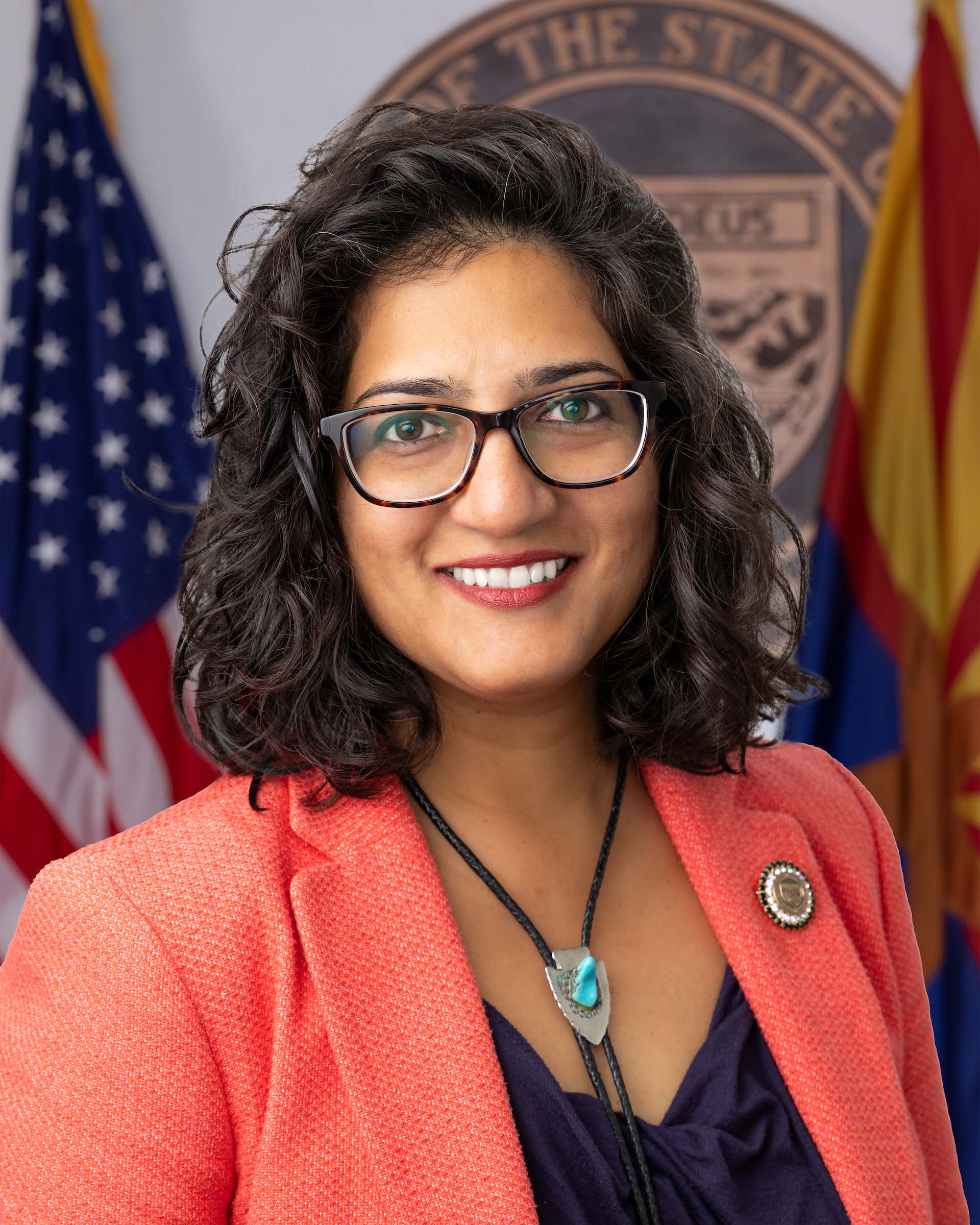
Sen. Priya Sundareshan
Sponsored bills
Maddy summarySB 1701 clarifies rules for Arizona's Attorney General's office regarding hiring outside counsel and handling legal fees. It specifically outlines conditions under which assistant attorneys general may provide free legal services (pro bono) to individuals or nonprofits, requiring off-hours work, no compensation, and no conflicts with state duties. The bill also permits fixed-fee hiring for specific cases and allows contingency fees (capped at $50/hour) in antitrust enforcement cases, with recovered funds deposited into state or local accounts as specified. This affects the Attorney General's office staff, their ability to engage in outside legal work, and how fees are handled in state enforcement actions. The changes are procedural clarifications with no substantive policy shifts, as stated in the bill's legislative intent.
Maddy summarySB 1782 requires Arizona's child welfare agency (the Department of Child Safety) to notify law enforcement and specific databases within 24 hours when a child in state care or under court supervision goes missing, is abducted, or runs away. It mandates reporting to the National Center for Missing and Exploited Children, contacting family members, caregivers, and school staff, and sharing detailed information (like photos, clothing, and last locations) with media and social media within 48 hours. The bill also requires ongoing weekly updates to law enforcement, age-progression images for children missing over two years, and staff training on search protocols. This directly affects children in foster care or under court supervision, their families, law enforcement, and the National Center for Missing and Exploited Children.
Maddy summarySB 1794 allows eligible individuals, including certain public officials and people under protection orders, to request privacy protections for their personal information in county property records. To qualify, applicants must submit an affidavit detailing safety concerns and specific property details to a court, which then reviews and may order the county recorder to block public access to their identifying information for up to five years. The bill specifically restricts access to unique identifiers and recording dates in property indexes, not the underlying documents themselves. This applies to records maintained by county recorders, assessors, and treasurers, with requests requiring court approval based on demonstrated safety risks.
Maddy summarySB 1717 prohibits businesses from collecting or using individuals' biometric data (like fingerprints, facial scans, or voiceprints) for commercial purposes without first obtaining clear consent and informing them. It requires businesses to securely store this data, not sell or share it without specific exceptions (such as completing a financial transaction), and destroy it within a year after the purpose ends or when legally required documents expire. The law directly affects companies using biometric technology for services, marketing, or other commercial applications. Violations carry civil penalties up to $25,000 per incident, enforceable by the Arizona Attorney General.
Maddy summarySB 1730 designates Leupp Road in Arizona as "Kachina Point Road" for all official state purposes. The bill requires all state records, documents, and official acts related to the road to use this new name after the law takes effect. This is a procedural renaming bill with no substantive policy changes, affecting only the road's official designation. It is currently in early Senate stages (first and second readings).
Maddy summaryThis bill (SB 1753) expands Arizona’s anti-discrimination law to explicitly prohibit discrimination based on sexual orientation and gender identity in public education, housing, and public accommodations. It defines "gender identity" as a person’s gender-related expression regardless of sex assigned at birth and requires public entities to provide gender-neutral restrooms in new public building constructions or major renovations. The law bans businesses from denying services, such as in restaurants or hotels, based on these protected characteristics, while allowing sex-segregated facilities for restrooms/locker rooms and permitting exclusions for safety reasons like intoxication or violence. It also mandates the state division to monitor discrimination and report annually to the legislature on enforcement.
Maddy summarySB 1759 sets minimum civil fines for illegally taking, wounding, killing, or possessing wildlife in Arizona. It establishes tiered penalties based on the animal, such as $50 for small game and $8,000 for bighorn sheep or endangered species. Repeat violations face doubled or tripled fines, and recovered funds go to a wildlife theft prevention fund. The bill directly affects individuals who illegally hunt or handle protected wildlife, imposing financial consequences without altering hunting regulations.
Maddy summaryThis bill (SB 1793) establishes security requirements for Arizona's electronic voting systems and election equipment. It directly affects county election officials by requiring controlled access to voting system components (using key cards and logs), continuous video monitoring at secure locations (with 24-month record retention), and prohibiting unauthorized access or tampering. The law makes it a class 1 misdemeanor to access voting systems without authorization, publish passwords, or facilitate unauthorized access, while allowing election officials to revoke access rights immediately. It exempts systems deployed at voting locations and includes exceptions for authorized security testing programs.
Maddy summaryThis bill prohibits price gouging on essential goods and services during a declared state of emergency in Arizona. It makes it unlawful to sell items like food, water, electricity, medical supplies, or rent at prices 10% higher than the highest price charged 30 days before the emergency was declared. Violations are classified as felonies: selling for $500+ in 24 hours is a class 5 felony, while smaller amounts are class 6 felonies. The attorney general enforces these rules under existing consumer protection laws. The bill directly affects businesses selling essential items during emergencies.