

Maddy summarySB 1637 prevents Arizona public schools from shaming, treating differently, or serving different meals to students whose parents haven’t paid school meal fees. It requires schools to provide all students with the same meals meeting federal nutrition standards, regardless of fee status, and prohibits staff from taking disciplinary action (like denying or delaying meals) for unpaid fees. The law explicitly allows schools to serve alternative meals for dietary or religious needs, separate from the fee policy. This directly affects students in Arizona public schools and ensures meal access remains equitable.
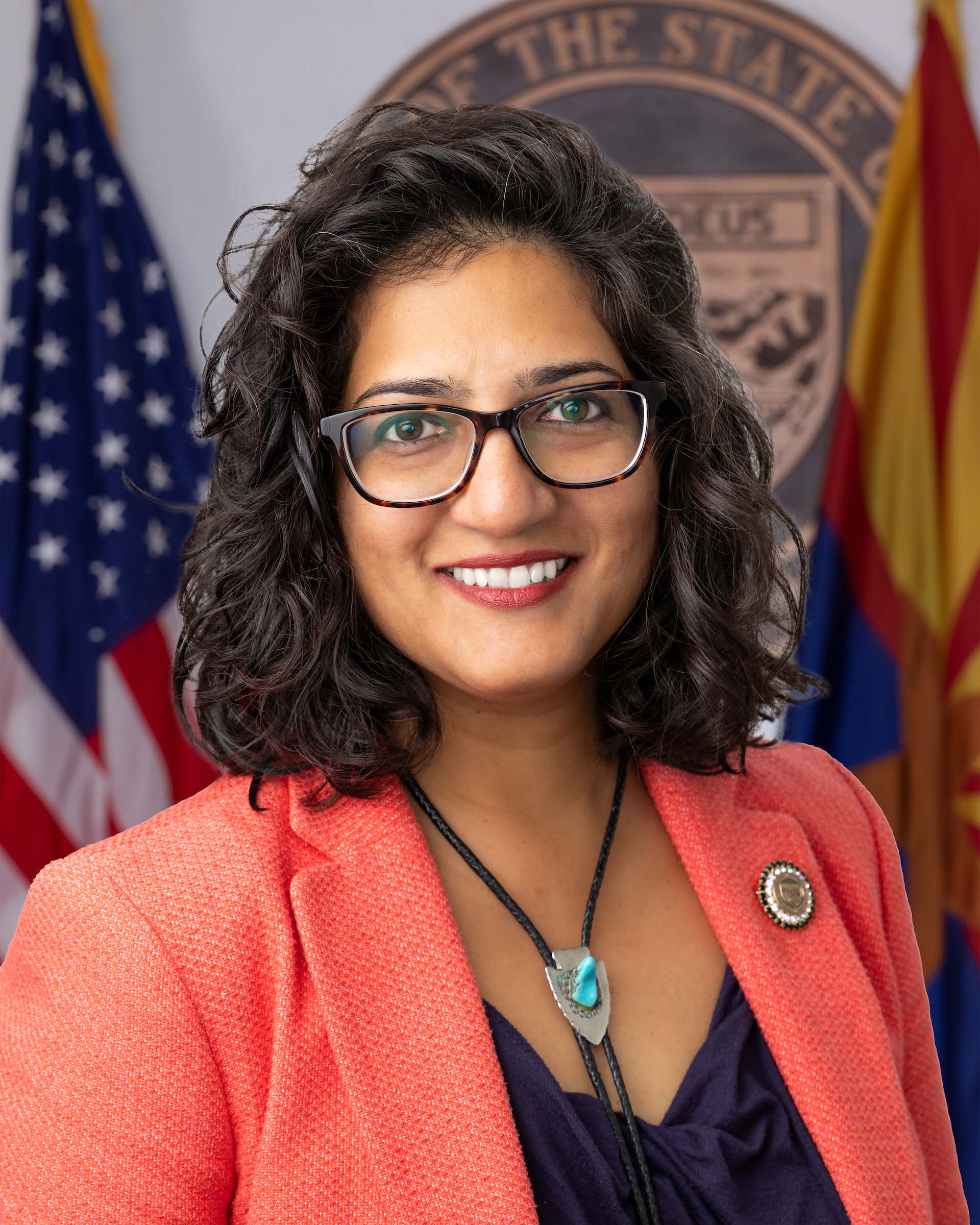
Sen. Priya Sundareshan
Sponsored bills
Maddy summarySB 1639 expands Arizona's Education Savings Account (ESA) program to cover disability-related services for eligible students. It specifically allows ESA funds to pay for educational and psychological evaluations, licensed therapies, paraprofessionals, vocational training, and assistive technology for students meeting disability criteria under §15-2401. The bill also requires annual education plans conducted by independent evaluation teams to determine continued ESA eligibility through age 22, with reports due by July 31 each year. This directly affects Arizona students with disabilities using ESAs, enabling broader support for their educational needs beyond traditional school settings.
Maddy summarySCR 1035 proposes a constitutional amendment to establish annual spending limits for Arizona school and community college districts based on 1979-80 spending adjusted for student population growth and inflation. School districts would face a limit set at 110% of the adjusted base amount, while community college districts would have individual limits based on their own historical spending. The bill defines "local revenues" broadly but excludes specific sources like bond proceeds, federal grants, tuition fees, and certain capital funds. Exceptions allowing spending above the limit would require a two-thirds vote in both legislative chambers via concurrent resolution. This proposal must be approved by voters and the Governor to take effect.
Maddy summarySB 1595 amends Arizona's water quality regulations to establish state rules for discharging pollutants into protected waters. It creates permit programs for point-source discharges (including into federally protected waters and non-WOTUS waters), requires monitoring for pollutants, and exempts certain activities like routine farming, ranching, and drainage maintenance. The bill also sets fees for permits and requires dischargers to collect samples and maintain records, with fees deposited into a dedicated water quality fund. These rules apply directly to facilities, landowners, and agencies managing water quality, while aligning with federal Clean Water Act requirements.
Maddy summarySB 1640 establishes Arizona Empowerment Scholarship Accounts (ESAs) to provide state-funded education options for qualifying students. It requires parents to sign agreements committing to use funds exclusively for approved education expenses - including tuition at qualified schools, textbooks, specialized therapies for students with disabilities, tutoring, online programs, and educational technology - while prohibiting concurrent use of other scholarships. The bill restricts ESA funds from covering homeschooling expenses or public school enrollment, and mandates annual reviews for students nearing age 22 to continue eligibility. This directly affects Arizona parents and students who qualify for the program, shifting education funding from public schools to private/alternative educational choices under specific guidelines.
Maddy summaryHB 2714 requires counties to verify adequate water supply before approving new subdivisions in rural groundwater areas. Developers must provide either a state water adequacy report or a written commitment from a city/town water provider designated as having sufficient supply. An exception allows water transport by vehicle/train if counties confirm no alternative water exists and transportation meets safety rules, with strict documentation requirements. This applies to areas outside existing "active management areas" and affects developers, counties, and water providers in rural Arizona. Counties must note water supply status directly on subdivision plats.
Maddy summarySB 1651 makes it a crime for anyone to tamper with or open containers holding early voted ballots, except when election officials are performing their official duties. Violating this law is classified as a class 1 misdemeanor. The bill directly affects individuals who might interfere with ballot containers during early voting, excluding election workers. It focuses on preventing unauthorized access to ballot receptacles to protect voting integrity.
Maddy summarySB 1594 repeals Section 34-321 of Arizona law, which previously required applicants for environmental compatibility certificates (for projects like energy facilities) to comply with certain labor agreements, such as neutrality agreements or project labor agreements. The bill removes this requirement, meaning project applicants no longer need to negotiate or enter into such labor agreements as a condition for approval. This directly affects developers of energy projects seeking environmental permits in Arizona. The repeal focuses solely on eliminating this specific labor agreement mandate from the environmental review process.
Maddy summarySB 1652 makes it a crime to threaten, intimidate, or physically obstruct election officials in Arizona while they perform their duties. The bill prohibits verbal, written, or physical threats aimed at impeding election work or retaliating against officials (Section A), using threats of force or economic harm to influence them (Section B), or blocking access to voting locations or election facilities (Section C). Violations are classified as class 1 misdemeanors (Section E), and officials can file civil lawsuits seeking restraining orders or damages without proving the threat was intended to cause fear (Section D). This bill directly affects election workers, including board members, and aims to protect them from harassment during election administration.
Maddy summarySB 1598 requires developers to obtain a certificate of assured water supply or a written commitment from a designated city, town, or private water company before selling or leasing subdivided lots in Arizona's active management areas. This applies to all new subdivisions where plat approval is needed or land is offered for sale/lease, ensuring water availability for future residents. The bill exempts mineral extraction developments and properties already served by designated water providers, while directing the water director to designate qualifying entities and update rules for gray water systems. It directly affects land developers, local governments approving plats, and water providers in water-scarce regions.