

Maddy summarySB 1265 amends Arizona's weights and measures laws to clarify and update the duties of the state division responsible for enforcing measurement standards. It requires the division to maintain secure state reference standards, keep detailed records, inspect commercial scales and measuring devices (including for food, fuel, and packaged goods), and test motor fuel for compliance with established standards. This directly affects businesses selling goods by weight or measure (like grocery stores, gas stations, and manufacturers) by strengthening enforcement mechanisms and requiring updated labeling for packaged commodities.
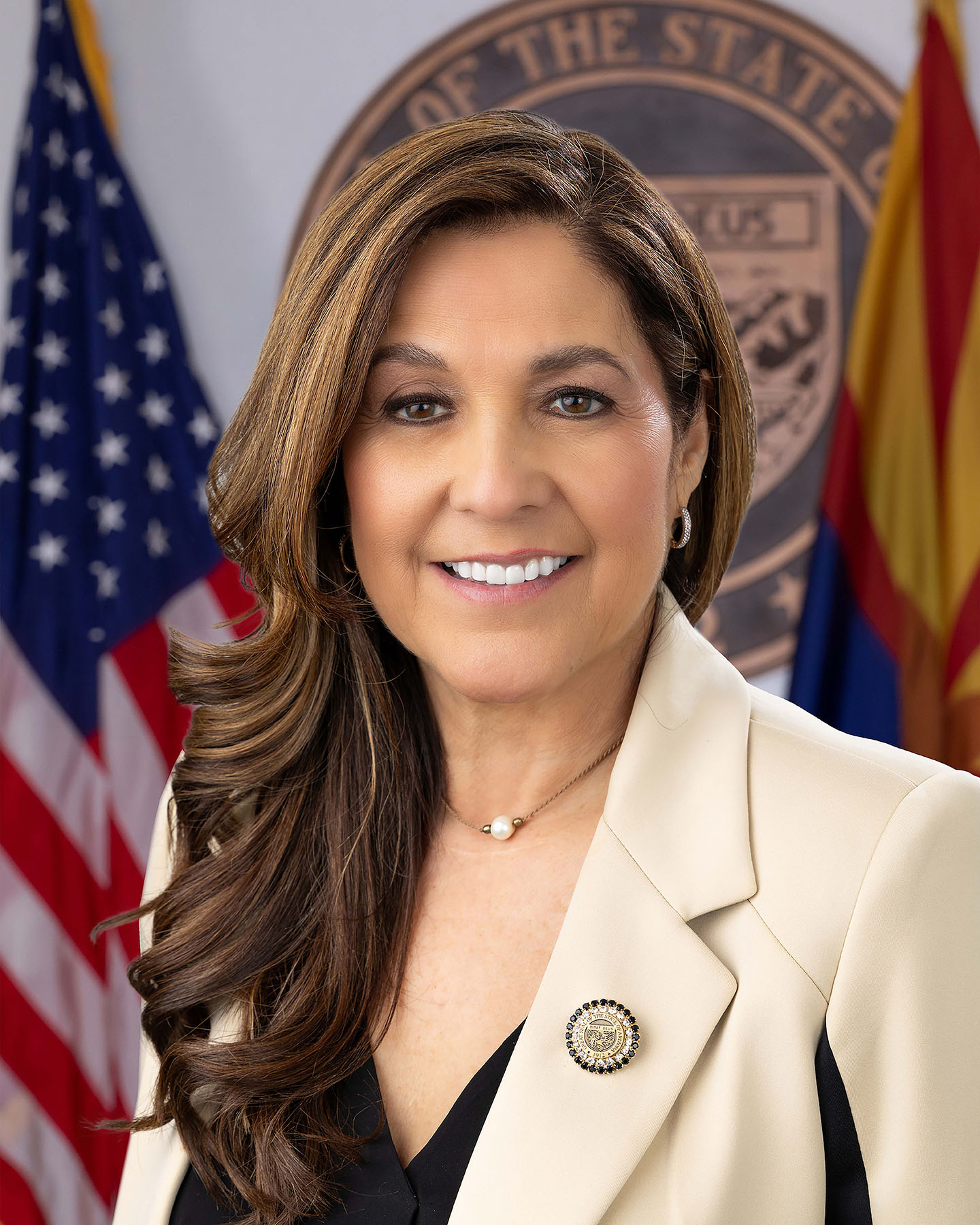
Sen. Catherine Miranda
Sponsored bills
Maddy summarySB 1263 requires Arizona law enforcement agencies to adopt written policies mandating that peace officers visibly display their name or badge number during most law enforcement duties, with limited exceptions for undercover operations, tactical gear, or imminent safety threats. It also prohibits officers from wearing facial coverings that conceal their identity while performing duties, except during undercover work or tactical operations requiring protective gear. The bill directly affects all state and local law enforcement agencies and their officers, imposing civil liability ($10,000 or actual damages) if an officer violates the policy and causes harm. These provisions aim to increase officer transparency and accountability during public interactions.
Maddy summarySB 1266 adds two new official state holidays in Arizona: March 31 as "Cesar Chavez Day" and April 1 as "Dolores Huerta Day." The bill amends Arizona's holiday statute to include these dates, directly affecting state employees, schools, and government offices that observe state holidays. Key provisions specify the exact dates and adjust observance rules for holidays falling on weekends, consistent with existing holiday scheduling practices. This is a straightforward policy change to recognize these figures' contributions through official state observance.
Maddy summaryHB 2316 allows Arizona middle schools (grades 6-8) to offer career technical education (CTE) courses that count toward both 8th-grade promotion and high school graduation. Schools must partner with approved CTE providers like community colleges or state-approved programs, and students must pass courses to earn credit. The bill requires schools to report course offerings and completions annually, with a final report due by 2029, and expires in 2037. It permits CTE districts to fund middle school CTE courses without raising property taxes but prohibits counting middle school students in district enrollment totals.
Maddy summaryHB 2317 amends Arizona law to prohibit cities and towns from banning "cruising," defined as repetitive driving past the same location without a destination within a specific time period. The bill directly affects local governments by preventing them from enacting or enforcing ordinances that target this type of driving behavior. It updates Section 28-626 of the Arizona Revised Statutes to explicitly state that local authorities "shall not enact or enforce an ordinance... that prohibits cruising." This change ensures uniform traffic laws statewide, allowing cities to create other non-conflicting traffic regulations but not to ban cruising through local ordinances. The bill does not create new penalties or alter other traffic enforcement mechanisms.
Maddy summarySB 1247 establishes Arizona's Teachers Academy, a scholarship program for students pursuing teaching careers at eligible community colleges and universities. It provides up to four years of tuition and fee coverage for undergraduate students (or two years for community college students) after other financial aid, in exchange for a commitment to teach one year in an Arizona public school for each year of scholarship received. The program prioritizes high-demand areas like special education, STEM, rural schools, and schools serving students with disabilities. Funds for the academy come from state appropriations and existing scholarship mechanisms, administered by the Arizona Board of Regents to support recruitment, scholarships, and teacher induction services.
Maddy summaryHB 2505 repeals specific Arizona law enforcement funding mechanisms and related provisions. It eliminates a $13 assessment on fines and penalties that previously funded the "gang and immigration intelligence team enforcement mission" (repealing Section 12-116.04) and removes sections defining smuggling penalties (repealing Sections 13-2928 and 13-2929). The bill also amends the smuggling statute to clarify definitions, including "family member" and "procurement of transportation," while maintaining penalties for smuggling humans under 18 or involving weapons. These changes directly affect law enforcement funding streams and the legal framework for prosecuting human smuggling cases.
Maddy summaryHCR 2029 proposes repealing Arizona's constitutional "right to work" provision (Article XXV), which currently prohibits requiring employees to pay union dues as a condition of employment. If approved by voters, this change would remove a constitutional barrier that prevents employers and unions from mandating union membership or dues. The bill would require voter approval at the next general election, as specified in Arizona's Constitution. This proposal directly affects workers and unions in Arizona by potentially altering labor agreements regarding dues payment. The measure is currently in its first reading stage in the Arizona House of Representatives.
Maddy summaryHB 2493 requires private education providers that accept Arizona empowerment scholarship funds to follow the same financial reporting and audit rules as public schools. These providers must submit financial data using the state's standard system, comply with annual achievement profile reporting, and undergo performance audits conducted by the auditor general. The bill directly affects private schools, tutoring services, or other educational entities receiving scholarship funds, mandating transparency in their financial operations. Key provisions include standardized financial recordkeeping, inclusion in state achievement reports, and specific audit requirements tailored for private businesses. This bill focuses on oversight rather than changing scholarship eligibility or funding amounts.
Maddy summaryArizona's HCR 2041 is a state resolution requesting Congress to call a constitutional convention under Article V to propose term limits for U.S. House and Senate members. It asks other states with similar applications to combine their efforts to meet the two-thirds state requirement for such a convention. If Congress fails to act, Arizona and other participating states would proceed with their own convention to draft term limits. This resolution does not create new law but seeks to restart a state-led process for constitutional change, targeting federal congressional representation.