

Maddy summaryArizona's SB 1495 requires the state's National Guard to stay within Arizona unless Congress formally declares war or takes specific action under the U.S. Constitution (Article I, Section 8, Clause 15) to call the Guard for specific purposes like enforcing federal law or repelling invasion. The bill defines "active duty combat" as participating in armed conflict, performing hazardous duties related to conflict abroad, or using "instrumentality of war." It mandates the governor to ensure compliance with these requirements before deploying the Guard. This bill directly affects Arizona's National Guard deployment decisions and the governor's authority to release troops. The measure is procedural, focusing on constitutional requirements for Guard mobilization.
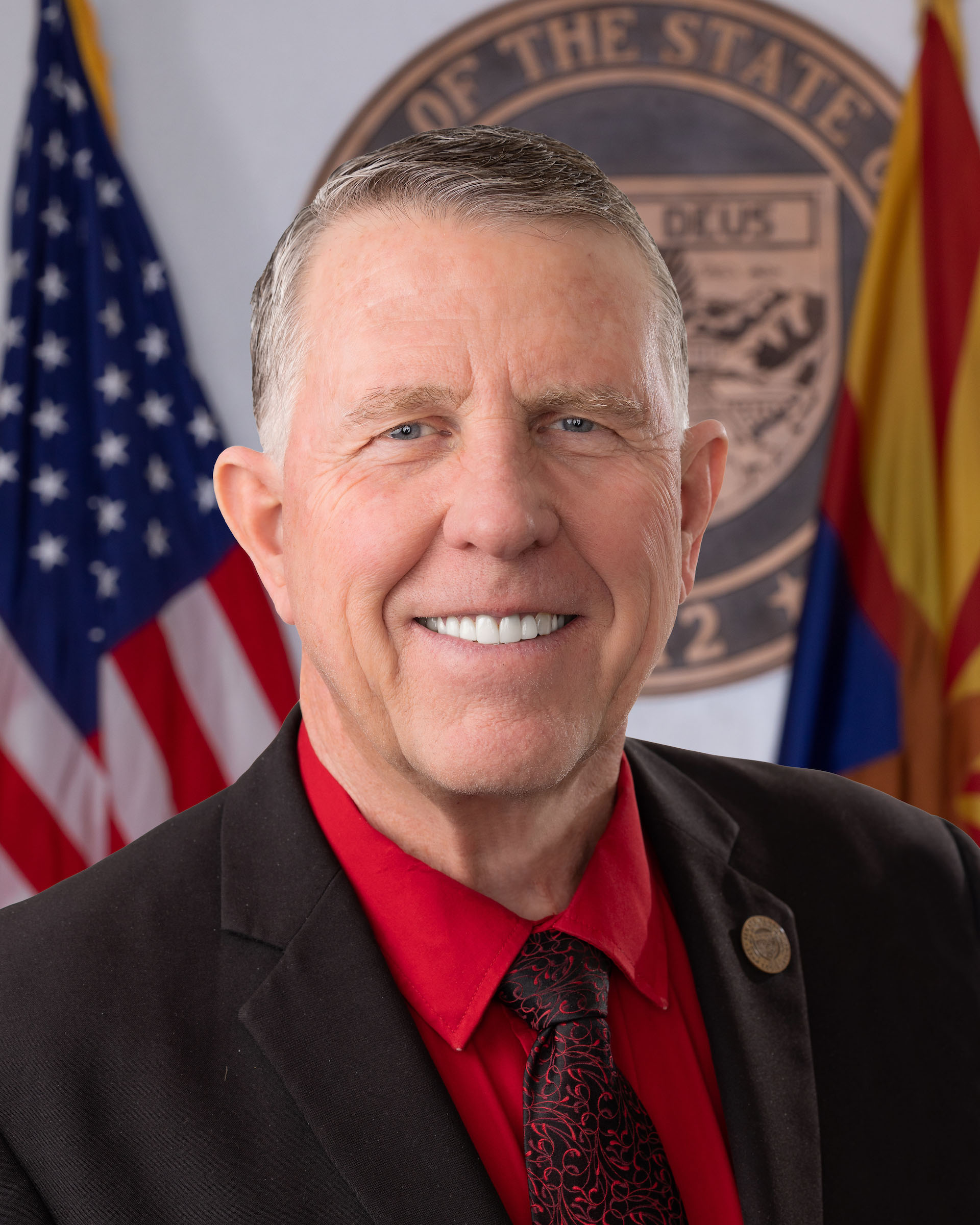
Sen. Dave Farnsworth
Sponsored bills
Maddy summarySB 1142 prohibits foreign corporations, persons, or foreign nongovernmental entities from contributing money or in-kind goods/services to influence Arizona ballot measure elections. It directly affects campaign committees, entities, and individuals filing campaign finance reports under Arizona law. The bill requires these filers to certify under penalty of perjury that they haven't accepted such foreign contributions. Tribal nations are explicitly exempt from these provisions, as stated in Section C of the bill.
Maddy summarySB 1455 prohibits public officers or employees whose duties involve election administration from running for office in the same election, except for precinct committeeman. It directly affects election workers, such as poll workers or election administrators, who would be barred from seeking elected office during the election cycle they are administering. The bill creates a clear conflict-of-interest rule by requiring these officials to step aside from their election duties if they become candidates. This is a procedural policy change focused on maintaining impartiality in election operations.
Maddy summarySB 1503 terminates Arizona's School Facilities Oversight Board on July 1, 2030. It requires related laws to be repealed by January 1, 2031, if all outstanding school facility bonds and lease-to-own transactions are paid off, or by 30 days after all such debts are retired. The bill does not create new policies but sets a clear end date for the oversight board and its governing statutes. School districts must continue annual reporting on facility conditions and repairs under existing requirements until the board's termination.
Maddy summarySB 1062 defines cryptocurrency as legal tender in Arizona, meaning it can be used to pay debts, taxes, and public charges. The bill amends Arizona law to include digital currencies like Bitcoin, Ethereum, and XRP in the definition of "legal tender," alongside traditional forms such as cash and precious metal coins. This change specifically applies to video service providers, who must now pay local government license fees for highway use in legal tender (including cryptocurrency), though they may still use other accepted forms like cash. The bill does not require cryptocurrency use but expands payment options for these fees without mandating its adoption.
Maddy summarySB 1432 prohibits intentional activities within Arizona that aim to manage solar radiation, such as injecting chemicals or deploying devices to increase atmospheric reflectivity and alter sunlight intensity, temperature, or weather. It specifically bans actions like releasing stratospheric aerosols for these purposes, except where permitted under existing state programs (Title 45, Chapter 9). The law directly affects entities or individuals conducting such geoengineering experiments in Arizona, making these actions unlawful under state law. It focuses solely on preventing specific solar radiation management techniques, not broader climate interventions.
Maddy summaryArizona's SB 1473 revises funding rules for charter schools sponsored by state entities like universities or community colleges. It requires these schools to use the state's standard student funding formula, with specific adjustments for small school weights and initial enrollment estimates that must be revised after 40, 100, or 200 days. The bill prevents double-funding for students attending both a charter school and a traditional public school by capping combined enrollment at 1.0 and apportioning funds based on time spent. Charter schools may accept grants but must reduce state funding by the amount of federal or state grants covering basic operations. This directly affects charter schools operating under state sponsorship and their funding calculations.
Maddy summaryThe bill title "empowerment scholarship accounts; debit cards" does not match the actual content of SB 1454, which is focused on teacher certification requirements under Arizona Revised Statutes. The bill amends rules for teacher certification, requiring literacy endorsements for K-5 teachers by 2025-2028, mandating science-of-reading training, and establishing alternative certification pathways. It affects teachers, school districts, and educator preparation programs by setting new standards for literacy instruction and certification. The title appears to be mislabeled, as the bill text contains no provisions about scholarship accounts or debit cards.
Maddy summarySB 1427 requires full-time administrative employees in Arizona schools (like principals, superintendents, and business managers) to substitute teach in a classroom at least once per school year. It exempts these employees from needing a state substitute teaching certificate to fulfill this requirement. The law excludes regular classroom teachers and staff providing direct student services (like transportation or counseling) from this mandate. Schools may also exempt employees who lack background clearance or face discipline for misconduct. This policy aims to ensure school leaders maintain classroom engagement without adding certification barriers.
Maddy summarySB 1625 requires Arizona schools and districts to publicly share detailed financial data through a new transparency portal and annual website postings. Starting in 2021-2022, charter schools, individual school districts, and district schools must post their previous year's general ledger online by October 1 each year, showing exactly how money is spent (including teacher pay, supplies, and vendor payments) and where it came from (federal, state, local). The portal, developed by a third-party contractor with education finance expertise, will display school-level revenue, spending comparisons, and demographic data to help parents and communities understand funding. This law directly affects all Arizona public schools by mandating clear, standardized financial reporting to improve accountability.