

Maddy summarySB 1504 requires Arizona community colleges seeking to offer bachelor's degree programs to meet specific standards and submit detailed reports before approval. It mandates that colleges demonstrate regional workforce needs, student demand, and financial sustainability - including funding sources and resource plans - before the district board authorizes new programs. The bill also requires colleges to notify nearby public universities 60 days prior to submitting reports and include any university responses in their applications. Additionally, colleges must submit annual reports on enrollment, costs, and outcomes, plus a comprehensive five-year review to the legislative audit committee, focusing on program effectiveness, student success, and alignment with workforce needs.
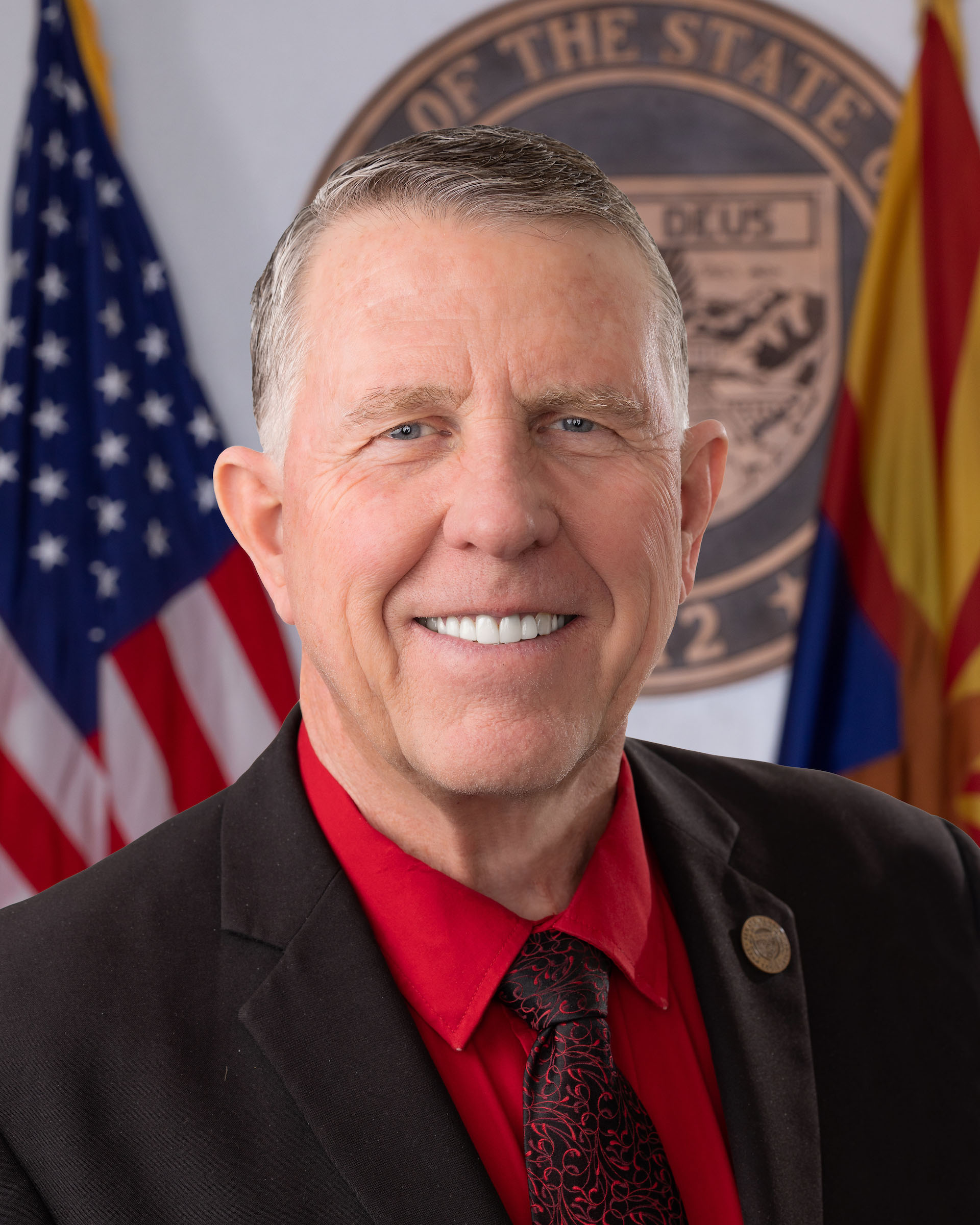
Sen. Dave Farnsworth
Sponsored bills
Maddy summarySB 1689 establishes a process for Arizona school districts that exceed their budget limits. If a district spends more than its approved budget, county school superintendents must notify the Arizona Department of Education (ADE) within two business days, triggering ADE oversight. The ADE can then assign a "fiscal crisis team" (Level 1 for up to 12 months or Level 2 for up to 24 months with authority to override district financial decisions) to monitor finances, provide technical assistance, and require a detailed fiscal management plan. School districts must submit quarterly progress reports and a comprehensive fiscal management plan within 120 days of crisis team assignment, with all crisis team costs paid by the district.
Maddy summaryThis bill requires Arizona schools to ensure blind students receive individualized braille literacy assessments and instruction as part of their education plans. It mandates that teachers certified to teach visually impaired students after 2016 must demonstrate braille competency through approved tests or training, with existing teachers having until 2028 to comply. Textbook publishers must provide electronic versions in standardized formats to enable braille production. The law establishes specific details for braille instruction in IEPs, including assessment results, implementation methods, and competency goals, while allowing alternatives if the education team unanimously agrees braille isn't appropriate for a student.
Maddy summarySB 1604 amends Arizona law to ensure time spent in a licensed secure health facility by defendants found incompetent to stand trial counts toward their criminal sentence for the original charges. It directly affects defendants in Arizona who are deemed incompetent and committed to such facilities under Section 13-4521. Key provisions require courts to credit all time served in these facilities against the sentence for the underlying offense (Section 13-712), limit commitment periods to the presumptive sentence for the original charge (Section 13-4521), and mandate specific hearings to determine dangerousness within 120 days (Section 13-4521). The bill streamlines how custody time is calculated for this population, ensuring it reduces the total prison time they would otherwise serve. This law was signed by the governor in May 2025.
Maddy summarySB 1443 establishes a "parental bill of rights" in Arizona law, directly affecting parents of minor children and government entities like schools, healthcare providers, and child welfare agencies. It codifies specific parental rights - including control over education, health care decisions, access to medical records, and notification of suspected child-related incidents - and prohibits government interference without meeting a strict legal standard. The bill adds a new provision allowing parents to sue for compensatory damages of at least $2,500 per violation if government entities unlawfully interfere with these rights. Despite passing the legislature in April 2025, it was vetoed by the Governor on May 2, 2025, and did not become law.
Maddy summaryHB 2765 establishes the Arizona Teachers Academy, providing scholarships to cover tuition and fees for students pursuing teaching careers at eligible Arizona community colleges and universities. It directly affects education students, particularly those training in high-demand fields like special education, STEM, and rural/low-income schools, requiring them to teach one year in an Arizona public school for each year of scholarship received. The program uses existing state funds to cover scholarship gaps after other aid, with repayment required if students fail to fulfill teaching commitments. It also mandates partnerships between institutions and schools to align teacher placements with community needs. The bill was signed into law in April 2025.
Maddy summarySB 1584, now vetoed by the Governor, requires Arizona state and local government agencies to hire public employees based solely on merit - defined as objective qualifications like skills, experience, and job performance - rather than factors like race, ethnicity, sex, or national origin. The bill prohibits policies that manipulate workforce composition based on protected characteristics, except to maintain color-blind, race-neutral hiring compliant with existing antidiscrimination laws. It allows legal action for violations, with prevailing parties entitled to attorney fees and costs. The bill would have directly affected all state and local government hiring practices in Arizona.
Maddy summarySB 1501 requires Arizona's regulatory commission to conduct annual reviews of grid security and cybersecurity. The bill directs the commission to evaluate technologies for modern grid operations, assess electromagnetic pulse (EMP) threats, and ensure continuous electricity supply, while also mandating biennial reviews of cybersecurity protocols. Investor-owned utilities must address identified grid security deficiencies and develop cost-effective implementation plans, though electric cooperatives and public power entities are exempt. The bill, which was vetoed by the governor in April 2025, aims to strengthen grid resilience against physical and cyber threats.
Maddy summarySB 1106, titled "Ava's Law," modifies Arizona's public entity liability rules regarding sexual offenses. It clarifies that public entities (like schools or government agencies) generally cannot be held liable for sexual offenses committed by employees against minors or children with disabilities, **unless** the entity violated a duty to check employee backgrounds or failed to report known risks. The law applies only to offenses occurring on or after December 31, 2027, and does not affect liability for vehicle-related incidents or emergency care. This bill focuses on defining specific circumstances where public entities may face liability, not broader policy changes.
Maddy summarySB 1244 amends Arizona's child abduction law to reclassify certain cases involving parents or family members who keep children who have voluntarily left state custody. It specifies that if a child's natural/adoptive parent or adult with a biological family relationship keeps the child to protect or care for them - without consent and after the child left the placement location - the act becomes a class 1 misdemeanor instead of a felony. This applies only when the child left the state agency placement voluntarily, the keeper is a close family member, and the motive is protective care. The bill does not change penalties for abductions involving non-family members or cases where the child was taken outside Arizona.