

Maddy summarySB 1609 repeals two Arizona tax code sections (9-500.39 and 11-269.17) and amends Section 42-2003 to update rules about disclosing taxpayer information. The bill affects taxpayers and government agencies that handle tax data by clarifying who may access confidential tax records, such as corporate officers, trustees, or government officials with proper authorization. Key provisions define specific scenarios where tax information can be shared (e.g., with a taxpayer’s designee, during administrative meetings, or for tax enforcement), while maintaining core confidentiality protections. The bill’s title mentions "online home sharing," but the actual text contains no provisions related to that topic, focusing solely on tax disclosure rules. This is a procedural tax code update with no new policy changes for the public.
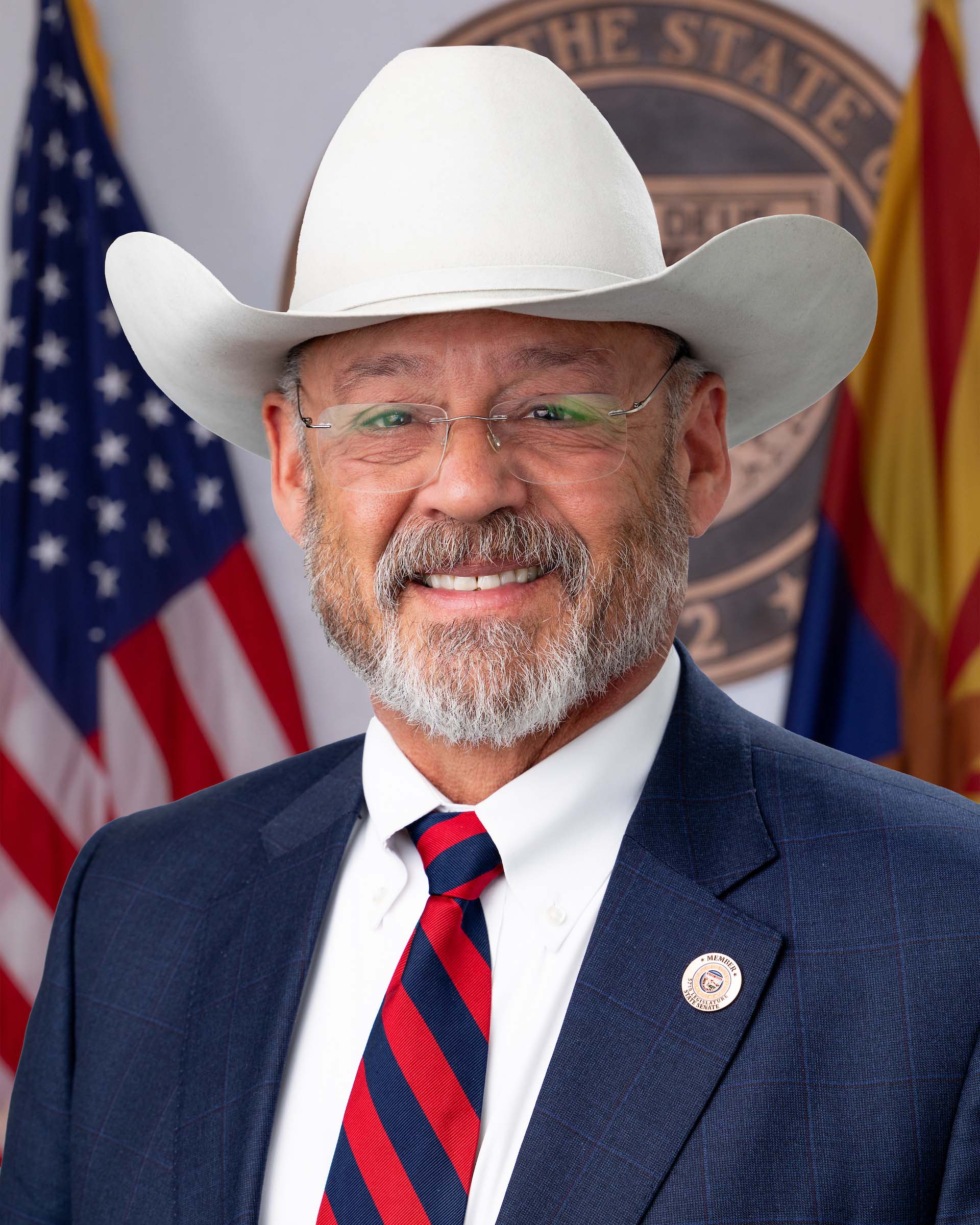
Sen. Mark Finchem
Sponsored bills
Maddy summarySB 1686 clarifies that the county recorder is the "officer in charge of elections" for Arizona counties, directly affecting county election officials. It updates rules for establishing election precinct boundaries and designating polling places, requiring county recorders to set boundaries by October 1 before elections and follow specific guidelines for combining precincts or using voting centers. The bill also mandates that public schools must provide space for polling places unless principals deny requests with written reasons like lack of space or safety concerns. These changes aim to standardize election administration procedures for county recorders managing polling locations.
Maddy summarySB 1629 allows Arizona prison directors to release inmates with terminal illnesses or conditions requiring end-of-life care to state-contracted nursing care facilities. It applies only to inmates who are so debilitated they pose no danger to themselves or others, excluding those convicted of first-degree murder. The bill requires prison officials to periodically review medical records to confirm ongoing eligibility, and if an inmate no longer meets criteria, they must be returned to custody. This policy change directly affects terminally ill inmates in Arizona prisons who qualify under these specific medical and safety conditions.
Maddy summarySCR 1012 proposes a constitutional amendment to Arizona's Article X, Section 5, changing minimum sale prices for state trust lands. It sets a $3 per acre minimum for non-irrigable lands and a $25 per acre minimum (based on irrigation potential) for lands suitable for irrigation. The amendment also preserves the existing provision requiring Arizona to relinquish lands to the U.S. for irrigation projects when requested. This change would directly affect the sale of state trust lands and requires voter approval at the next general election.
Maddy summaryThis bill prohibits foreign corporations, individuals, or foreign non-governmental organizations from contributing money or goods/services to influence the outcome of ballot measures in Arizona elections. It requires campaign committees filing financial reports to certify under penalty of perjury that they haven't accepted such foreign contributions. Federally recognized tribal nations are exempt from this prohibition. The measure must be approved by voters at the next general election to become law.
Maddy summarySCR 1020 proposes a constitutional amendment to move Arizona judicial elections from even-numbered years to odd-numbered years. It would directly affect judicial candidates and voters by changing the timing of elections for state judges. The bill amends constitutional provisions governing judicial elections (Article VI, Sections 12, 28, 30, 35, and 39) and repeals related sections (36-38, 40-42) that currently govern election timing. This change would require voter approval before taking effect, as it modifies Arizona's constitution. The amendment aims to align judicial elections with other statewide races held in odd-numbered years.
Maddy summarySCR 1019 is a proposed constitutional amendment to change how Arizona judges are elected and appointed. It would make supreme court justices elected statewide in nonpartisan elections (6-year terms) and require superior court judges in counties under 250,000 population to be elected countywide in odd-year November elections (4-year terms), while judges in larger counties would serve 4-year terms without specific election timing. The amendment also restricts judges from practicing law, holding other public offices, or actively participating in political campaigns (except their own retention elections). These changes would affect all Arizona supreme court justices and superior court judges, requiring voter approval before taking effect.
Maddy summarySB 1436 prohibits campaign committees from accepting or purchasing gift cards and bans contributors from giving them, classifying gift cards as unlawful campaign contributions. It directly affects Arizona campaign committees and political contributors by banning gift cards as a form of financial support. The bill's key mechanism explicitly states that committees cannot use campaign funds to buy gift cards, and such purchases would be considered unlawful expenditures. This policy change aims to prevent gift cards from being used as a covert way to provide campaign contributions.
Maddy summarySB 1065 reduces state general fund appropriations by approximately $10 million across 44 Arizona state agencies and institutions for fiscal year 2024-2025, including courts, universities, health services, and departments like agriculture and veterans' services. The bill directly affects these entities by cutting specific line-item funding, such as $1.2 million from the Arizona Health Care Cost Containment System and $11 million from Arizona universities. Key provisions include a total $10.995 million cut for Arizona State University and specific protections preventing deeper cuts (beyond 3.45%) to three university programs: ASU's School of Civic and Economic Thought, NAU's Economic Policy Institute, and U of A's Center for Philosophy of Freedom. The bill makes concrete fiscal adjustments without changing program structures or creating new policies.
Maddy summarySB 1341 requires commercial websites publishing a "substantial portion" (over 33%) of material harmful to minors to verify users are 18+ using a "reasonable age verification method" before access. It directly affects commercial websites (like social media or adult content platforms) that host such material, imposing civil liability for failing to verify age or retaining user data after access. Key provisions include banning retention of identifying information post-access, exempting bona fide news organizations, and defining "material harmful to minors" as content designed to appeal to sexual interests, depicting explicit acts, or lacking value for minors. The bill focuses on civil penalties (damages, attorney fees) for noncompliance, not criminal enforcement.