

Maddy summarySB 1339 expands the Arizona Auditor General's oversight of community college districts by requiring annual financial audits (including federal compliance checks where applicable) and performance audits. It directly affects community college districts, counties, and school districts by mandating audits to verify proper use of funds (like transportation revenues) and requiring districts to report on implementing audit recommendations within two years. The bill establishes new rules for approving audit contracts, enforcing uniform accounting standards, and reporting failures to comply with audit requirements to legislative committees and the governor. These changes aim to strengthen financial accountability without specifying policy outcomes.
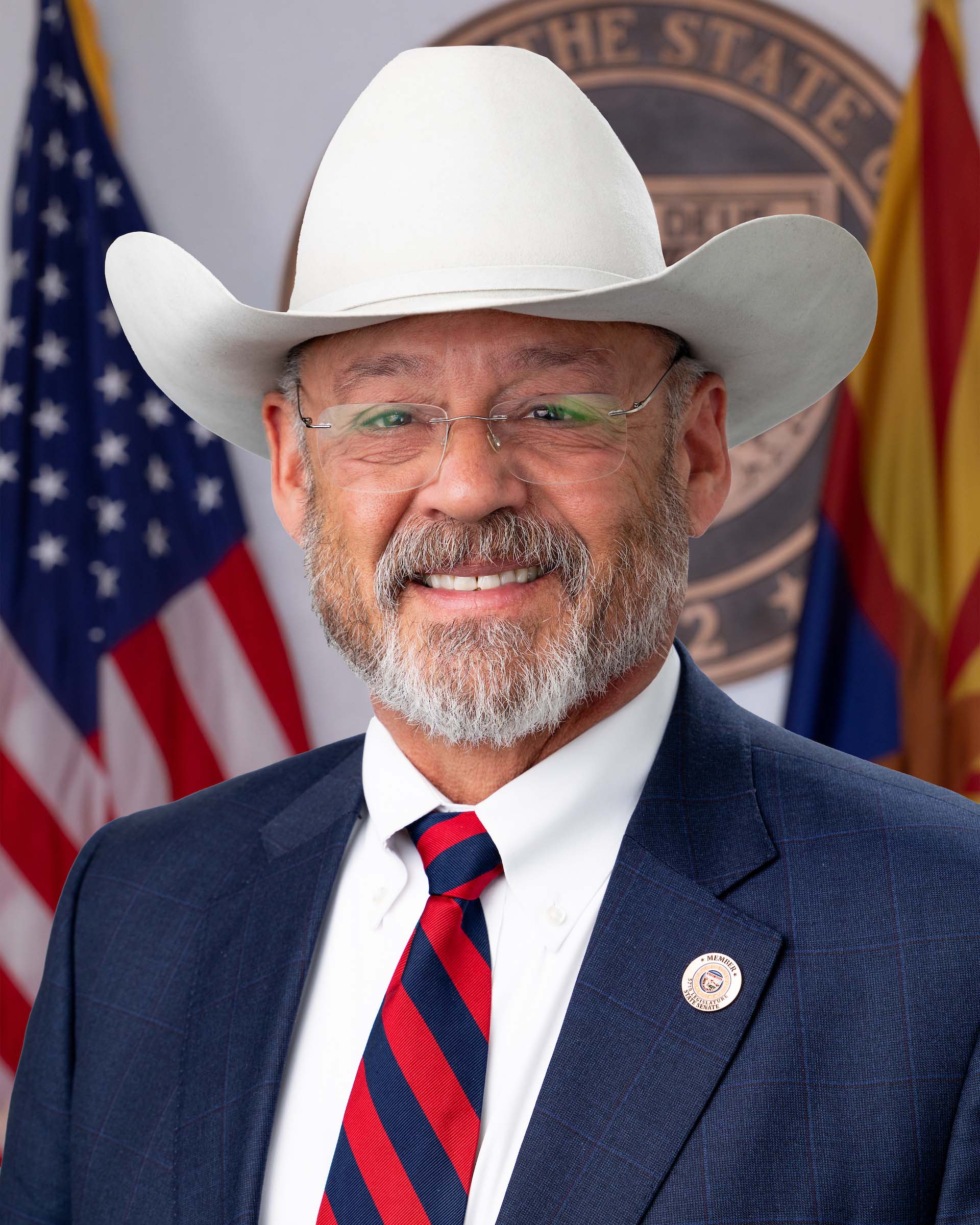
Sen. Mark Finchem
Sponsored bills
Maddy summarySB 1259 amends Arizona Revised Statutes § 15-342 to clarify school districts' authority to lease or sell property. It specifically allows school districts to enter leases or lease-purchase agreements for school buildings for 20-99 years *without voter approval* under four conditions: (1) property value under $50,000, (2) transactions funded by state school facilities divisions, (3) sales tied to replacement property via a formal plan, or (4) sales for bonded debt reduction or tax levy cuts. The bill does not address housing policy, despite its title; it solely modifies existing school district real estate procedures. This change affects school districts’ ability to manage property sales/leases while reducing voter approval requirements in specified scenarios.
Maddy summarySB 1267 would create a free lifetime state park pass for Arizona veterans. It directly affects Arizona residents who served in the U.S. military and have lived in the state for at least one year. The pass grants lifelong free entrance to all Arizona state parks: for the veteran’s vehicle (if parks charge per vehicle) or for the veteran plus up to three additional people (if parks charge per person). The Arizona State Parks Board would issue the pass without cost upon verification of residency and military service.
Maddy summaryThis bill (SCR 1010) proposes a technical correction to the Arizona Constitution's language regarding the state school fund. It fixes punctuation and phrasing errors in Article XI, Section 8, which describes how the fund is derived (from school land sales, unclaimed assets, and gifts for education). The correction does not change the fund's sources, allocation rules, or how funds are used for schools. The proposed amendment requires voter approval at the next general election.
Maddy summarySCR 1011 proposes a technical correction to Arizona's constitution regarding the sale of state trust lands. It would clarify that trust lands must first be appraised at true market value before sale, prohibit sales below that value or without proper security, and require full payment before legal title transfers. This amendment directly affects how Arizona manages its trust lands, which hold resources for public schools and other beneficiaries. The proposal requires voter approval at the next general election after being submitted by the Secretary of State. It does not create new policies but refines existing constitutional language governing trust land transactions.
Maddy summarySB 1068 requires Arizona's legislature and governor to formally approve any federal acquisition of privately owned real property that would remove the land from state property tax rolls. It affects private landowners selling to the federal government, mandating that escrow agents or owners notify state leaders and seek legislative consent via a joint resolution before such sales proceed. Key provisions include a $500-$1,000 civil penalty for non-compliance (ARS 37-821), a legislative committee review process for approval requests, and Arizona’s right to purchase the property first if federal acquisition is proposed (ARS 37-822). The bill explicitly excludes federal housing agencies and tribal land settlements from its requirements.
Maddy summaryHB 2102 establishes a dedicated anti-racketeering revolving fund in Arizona to manage money recovered from racketeering prosecutions. It requires all recovered funds - such as attorney fees from civil/criminal cases under AZ statutes 13-2301 or 13-2312, forfeiture proceeds, or federal/state cooperative investigation funds - to be deposited into this fund, prohibiting transfers to the general state fund. The fund may finance gang/victim prevention programs, racketeering investigations, officer relocation costs, and administrative reporting, but bans using it for Attorney General’s office salaries after August 2025. All agencies receiving fund monies must submit quarterly reports on sources and expenditures to the Attorney General and Arizona Criminal Justice Commission, with strict deadlines and penalties for noncompliance.