

Maddy summarySB 1133 requires Arizona high schools to include a comparative discussion of political ideologies - such as communism and totalitarianism - in social studies curriculum, emphasizing how these systems conflict with U.S. democratic principles. It also mandates that students pass a civics test based on the U.S. naturalization exam to graduate, starting with a 60% score for the 2025 class and increasing to 70% for 2026 and later graduates. Students may take the test in middle school to avoid retaking it in high school, with schools documenting only pass/fail results. This bill directly affects all Arizona public high school students and schools, requiring adjustments to curriculum standards and graduation testing procedures.
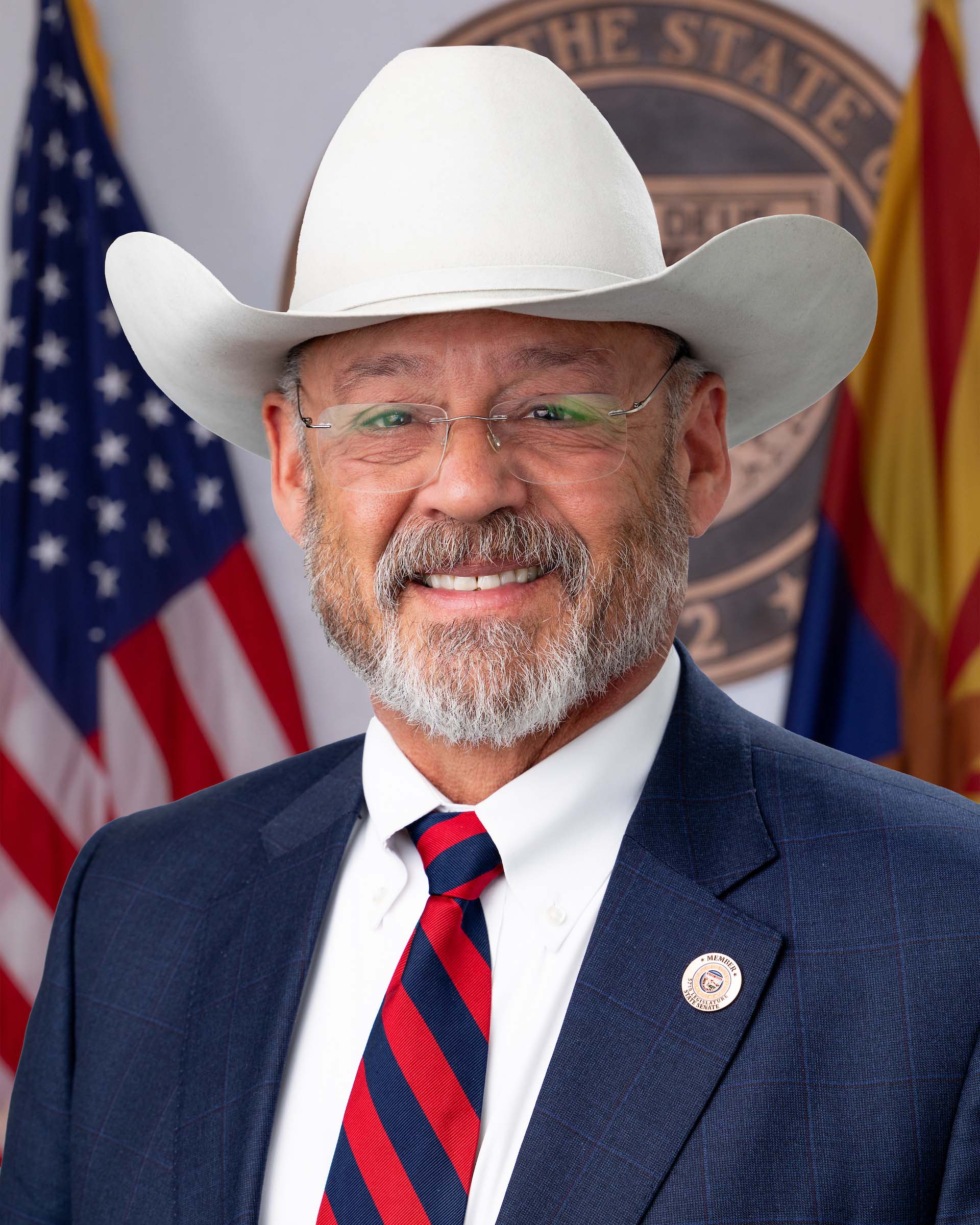
Sen. Mark Finchem
Sponsored bills
Maddy summarySB 1374 authorizes Arizona to conduct a statewide special census during the fifth year after the decennial U.S. Census. It allows cities, towns, and counties to use special census results for one year to determine funding allocations under state law, after which they must switch to standard U.S. Census population estimates. The bill appropriates $10 million from the state general fund for this special census in fiscal year 2025-2026, exempting it from standard appropriation lapsing rules. This directly affects local governments (cities, towns, counties) and the state budget by providing an alternative population count for funding distribution. The key provision is the one-year window for using special census data before reverting to federal estimates.
Maddy summarySB 1323 expands the Arizona Auditor General's authority to conduct performance audits, directly affecting state agencies, school districts, counties, and cities/towns receiving highway funds. Key provisions require annual financial audits of state agencies, mandatory performance audits of transportation excise tax spending by counties, and a new schoolwide audit team to track how much school district funding goes directly to classrooms. School districts must publicly post this classroom spending percentage on their websites and respond to audit findings within two years. The bill also mandates audits of counties and local governments using highway user revenues to ensure compliance with spending rules.
Maddy summarySB 1340 requires the Joint Legislative Audit Committee to conduct a regular audit of Arizona's Department of Law and Attorney General's Office by July 1, 2027. This bill modifies the existing 10-year audit schedule to add these agencies, covering their programs, activities, and funds. The audit will follow established legislative review factors, ensuring oversight of how these offices manage public resources. This procedural bill directly affects the Attorney General's Office and Department of Law, mandating a formal review of their operations.
Maddy summarySB 1321 requires Arizona school districts and charter schools to allow eligible patriotic youth organizations (like the Boy Scouts or Future Farmers of America) to recruit students during school hours. It permits these groups to speak in classrooms, distribute materials, and use school communication channels, provided they serve youth under 21, promote patriotism/civic education, and are listed in specific federal codes (e.g., 36 U.S.C. §§ 301, 309, 311). Schools must notify parents before any classroom presentations and allow opt-outs, but may not restrict eligible groups from using school facilities for recruitment outside school hours. The bill does not require schools to accommodate non-eligible organizations.
Maddy summaryThis bill amends Arizona law to allow city or town council members to run for mayor of the same municipality without resigning their council seat, provided their council term does not overlap with the mayor's term. It specifically creates an exception to the general rule that incumbents must resign before seeking other elected offices, applying only to council members seeking the mayoral position in their own city or town. The change directly affects local council members who wish to run for mayor without vacating their current council role during the unexpired portion of their term. This modifies existing provisions that otherwise required resignations for candidates seeking new offices.
Maddy summarySB 1434 adds a provision allowing attorneys in Arizona disciplinary proceedings to request a jury trial. This directly affects attorneys facing professional misconduct allegations from the State Bar. The key mechanism is a new section (12-1021) that gives these attorneys the option to seek a jury trial instead of having their case decided solely by a judge or disciplinary board. The bill does not change the grounds for discipline or penalties, only the process for hearing the case. It is a procedural change to the attorney discipline system.
Maddy summaryThis constitutional amendment proposal (SCR 1029) would establish a commission to recommend salary rates for Arizona's elected state officials, including legislators, governor, attorney general, and others. The commission - appointed by the governor and legislative leaders - would submit salary recommendations to the governor, who would then propose changes to the legislature for most offices. For legislative salaries specifically, recommendations would require voter approval through a referendum at the next general election. If approved, these recommendations would replace existing salary laws without needing new legislation.
Maddy summarySB 1511 amends Arizona law to adjust the annual salaries of five executive officers based on the state's median household income for a family of four, calculated annually using the American Community Survey. Starting January 1, 2027, the superintendent of public instruction will receive 1.10 times the median income, the governor 1.23 times, and the secretary of state, treasurer, and attorney general will receive 0.91, 0.91, and 1.17 times, respectively. These salary changes apply to the specified state officers and are recalculated each year. The bill directly affects the compensation of these five elected or appointed executive roles.
Maddy summarySB 1630 establishes a study committee to examine issues affecting Arizona inmates aged 55+ who are aging within the state correctional system. The committee, composed of legislative members, corrections and healthcare officials, and community representatives (including a former inmate or family member), will research release programs, healthcare access, and transitions to long-term care. It must develop recommendations for a step-by-step release plan and a healthcare roadmap, submitting a final report to state leaders by December 31, 2025. This is a procedural bill creating a study body - not a policy change - and directly affects aging incarcerated individuals in Arizona.