

Maddy summaryThis bill provides $15.3 million in state funding for the renovation and repair of rodeo grounds at Prescott's Yavapai County Fairgrounds, specifically for the nonprofit organization operating the local rodeo. It also allocates $10 million for a dark sky preservation center and $5.6 million for a public astronomy center in northern Arizona. The bill includes two key provisions: it exempts the rodeo funding from lapsing (expiration) rules, and if court challenges block the funds, the money reverts to the state general fund within 60 days. The direct beneficiaries are the Prescott rodeo nonprofit, the dark sky center, and the public astronomy facility.
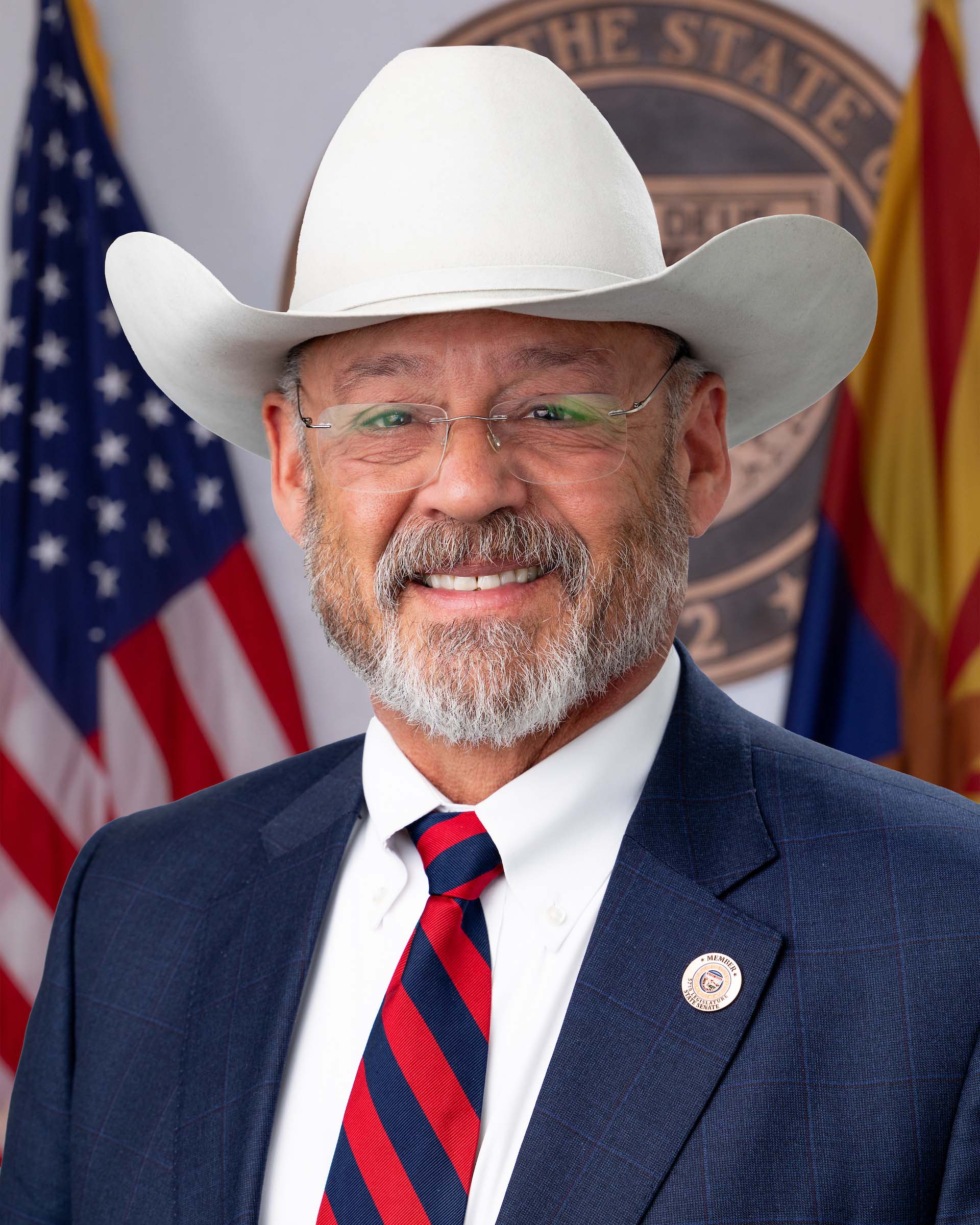
Sen. Mark Finchem
Sponsored bills
Maddy summarySB 1142 prohibits foreign corporations, persons, or foreign nongovernmental entities from contributing money or in-kind goods/services to influence Arizona ballot measure elections. It directly affects campaign committees, entities, and individuals filing campaign finance reports under Arizona law. The bill requires these filers to certify under penalty of perjury that they haven't accepted such foreign contributions. Tribal nations are explicitly exempt from these provisions, as stated in Section C of the bill.
Maddy summarySB 1063 allows Arizona counties to appoint prospective jurors as temporary election workers (such as inspectors or clerks) instead of requiring them for jury duty. It also creates a new exemption from jury service for individuals who served as election board workers within 180 days before receiving a jury summons. County election officers determine eligibility for this role, may offer online training, and must notify the jury commissioner after the election. This directly affects prospective jurors summoned for jury duty in Arizona who may opt for election work or qualify for automatic exemption.
Maddy summarySB 1497 appropriates $1 million from Arizona's general fund for fiscal year 2025-2026 to the Yavapai County Sheriff's Office. This funding establishes a criminal intelligence center focused on collecting, analyzing, and sharing real-time data to combat human trafficking and drug trafficking by international cartels. The center will directly support law enforcement efforts in Yavapai County through coordinated intelligence operations. The bill creates a specific funding mechanism for this operational purpose without altering existing laws.
Maddy summaryArizona's SCR 1018 is a non-binding legislative resolution expressing the state's position on federal land management. It urges the Bureau of Land Management to dispose of certain federally owned lands in Arizona (42% of the state's total land area) and opposes the federal 30x30 initiative, which aims to conserve 30% of U.S. land by 2030. The resolution states Arizona lawmakers believe federal land ownership restricts economic development, reduces school funding, and infringes on local control, arguing state management would better serve public access and economic needs. As a concurrent resolution, it does not create new law but formally communicates Arizona's stance to federal authorities.
Maddy summarySB 1302 increases reimbursement rates for home and community-based services (including room and board) provided to individuals with intellectual and developmental disabilities in Arizona. It appropriates $46 million annually from the state general fund and $84.2 million in Medicaid funds for these services through fiscal year 2029-2030, plus $4 million for room and board services each year. The bill requires the Department of Economic Security to engage community stakeholders before implementing rate changes, report annual provider rate increases to the legislature by September 1, and conduct a workforce survey on direct support professionals. If workforce metrics (like turnover rates) don’t improve after three years of data collection, future funding could be withheld.
Maddy summaryArizona's SB 1498 requires federal employees (who are not certified Arizona peace officers) to obtain written permission from a county sheriff or the state attorney general before making arrests, searches, or seizures in the state, unless specific exceptions apply (like federal enclaves, immediate pursuit, or border/immigration officers). The permission request must include the subject's name, probable cause, asset details, and timing, and must be countersigned by the sheriff or attorney general (valid for 48 hours). Violations trigger mandatory prosecution by the county attorney for offenses like trespass, theft, or kidnapping, with no option to refuse prosecution if a sheriff reports a violation. The bill directly affects federal law enforcement actions within Arizona counties and aims to establish clear procedural safeguards for local authority.
Maddy summarySB 1062 defines cryptocurrency as legal tender in Arizona, meaning it can be used to pay debts, taxes, and public charges. The bill amends Arizona law to include digital currencies like Bitcoin, Ethereum, and XRP in the definition of "legal tender," alongside traditional forms such as cash and precious metal coins. This change specifically applies to video service providers, who must now pay local government license fees for highway use in legal tender (including cryptocurrency), though they may still use other accepted forms like cash. The bill does not require cryptocurrency use but expands payment options for these fees without mandating its adoption.
Maddy summarySB 1279 corrects a technical error in Arizona law by changing a chapter heading from "Arizona CRIMINAL justice commission" to "SHERIFFS' CRIMINAL JUSTICE COMMISSION." It establishes the Sheriffs' Criminal Justice Enhancement Fund and the Drug and Gang Enforcement Fund, detailing how specific percentages of money are distributed to state agencies and local law enforcement. For example, 15% of funds go to county sheriffs for jail facilities, 12% supports county attorneys for prosecutions, and smaller portions fund drug treatment, gang prevention, and court processing. Some allocations are continuously appropriated (automatically available yearly), while others require annual legislative approval. This bill directly affects law enforcement, courts, and correctional programs by changing how Arizona funds criminal justice efforts.
Maddy summarySB 1067 allocates $2 million from the state general fund for the Auditor General to purchase software that audits state agencies and school districts. The bill specifically exempts this funding from standard appropriation deadlines under Arizona law. It directly affects the Auditor General's office and the entities they audit, including school districts. The bill passed the Senate on March 10, 2025, and was referred to the House for further consideration. (Note: The bill's title mentions "community college districts; tax rate," but the actual text concerns audit software funding, not tax rate changes.)