

Maddy summaryHB 2553 establishes an independent Office of the Corrections Ombudsman in Arizona to monitor prison conditions and address inmate concerns. The office directly affects inmates in state prisons (not county jails), their families, and prison staff by overseeing issues like sanitation, safety from abuse, access to medical care, and fair grievance processes. Key provisions require the ombudsman to conduct facility inspections (at least annually for high-security sites), collect standardized data on deaths, assaults, segregation, and staffing, and publish reports on findings. The ombudsman, appointed for six-year terms with strict independence requirements, also provides technical assistance to inmates and local governments on oversight systems.
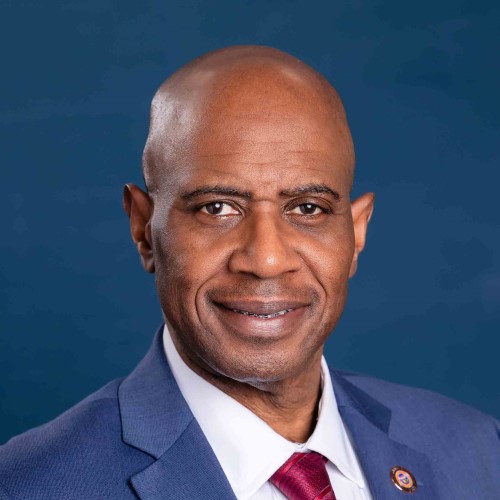
Rep. Walt Blackman
Sponsored bills
Maddy summaryHB 2793 requires Arizona's Secretary of State to create a uniform voter registration form for all counties, mandating specific fields like full name, date of birth, and a required residential address (with post office boxes allowed only as optional mailing addresses). The bill specifies that counties must adopt this standardized form within one year, with strict rules to prevent errors in address reporting - such as requiring alternative descriptions for those without traditional addresses - and mandates verification of residency. The Secretary of State must conduct compliance audits, provide training for election officials, and issue voter education materials on form completion. This directly affects all Arizona voters registering to vote and county election offices responsible for processing registrations.
Maddy summarySB 1686 clarifies that the county recorder is the "officer in charge of elections" for Arizona counties, directly affecting county election officials. It updates rules for establishing election precinct boundaries and designating polling places, requiring county recorders to set boundaries by October 1 before elections and follow specific guidelines for combining precincts or using voting centers. The bill also mandates that public schools must provide space for polling places unless principals deny requests with written reasons like lack of space or safety concerns. These changes aim to standardize election administration procedures for county recorders managing polling locations.
Maddy summaryHB 2766 requires Arizona cities and towns to apply municipal sales taxes uniformly to all food items (without differential rates), while exempting most food for home consumption, food packaging, and sales paid with SNAP benefits. It specifically excludes candy, confectionaries, soft drinks, and soda from the general food exemption, ensuring these remain taxable. The bill also exempts low-cost food sales to vulnerable groups (elderly, homeless, disabled) when purchased using SNAP benefits through approved programs. This amendment, effective January 1, 2026, modifies existing tax code to standardize food taxation and expand specific exemptions.
Maddy summaryHB 2396 appropriates $4,000,000 from Arizona’s opioid-related settlement fund to Navajo County’s sheriff’s office for a reentry facility. The funds, sourced from opioid claims litigation, are designated for fiscal year 2025-2026 to support the facility’s operations. This bill directly affects Navajo County by providing state funding for a facility aiding individuals transitioning from incarceration to community life. It is a funding measure with no new policy provisions, solely allocating existing settlement monies.
Maddy summaryHB 2399 allocates $2 million each to three specific Arizona child care centers (Snowflake-Taylor, Show Low, and Apache Junction) for fiscal year 2025-2026. The funds, distributed through the Department of Economic Security, are intended to enhance operations at these facilities. This is a procedural funding bill with no new policy provisions, directly affecting only the named centers.
Maddy summaryHB 2664 allocates $3,000,000 from the state general fund for the 2025-2026 fiscal year to the Gila County Sheriff's Office through the Department of Administration. This funding is specifically designated for the sheriff's office's routine maintenance and operations, such as staffing, equipment, and facility upkeep. The bill directly affects Gila County residents by supporting local law enforcement services through this state-funded appropriation. It does not create new policies or regulations, but provides essential financial support for the sheriff's office operations.
Maddy summaryHB 2707 prohibits health professionals and health care institutions in Arizona from denying care or providing substandard care based on a patient's vaccination status. The bill makes it unprofessional conduct for health professionals to discriminate in this way and bans health care institutions from adopting policies allowing such discrimination. It directly affects hospitals, clinics, and medical providers by requiring them to treat all patients equally regardless of vaccination status. The law changes existing professional standards to explicitly forbid this form of discrimination in healthcare settings.
Maddy summaryHB 2597 creates a new type of municipal improvement district in Arizona that allows cities or towns to form special areas providing enhanced public services - such as higher-level public safety, fire protection, waste collection, or street cleaning - beyond what’s offered in the broader community. To form such a district, property owners must sign a petition representing more than half the taxable property value in the proposed area, excluding exempt properties like government buildings. The district’s costs are assessed annually based on property benefits, with residential properties (four units or less per building) presumed not to receive specific benefits and thus exempt from assessment. The bill also prohibits these districts from issuing bonds or expanding services beyond the specified enhanced offerings.
Maddy summaryHB 2713 requires homeowners' associations (HOAs) to follow specific procedures before filing lawsuits against sellers or contractors for construction defects in residential properties. It mandates that HOAs provide written disclosure to all members and affected contractors detailing the nature of the claim, costs, and potential impacts before holding a meeting where defects are presented and remedies can be offered. HOAs must also secure approval from at least two-thirds of members through their community documents before proceeding. This bill directly affects HOAs, homeowners, and construction professionals by creating new transparency and approval requirements for dwelling-related legal actions. It does not change statute of limitations periods but adds procedural safeguards for HOA litigation.