

Maddy summaryHB 2281 establishes Arizona's "Turquoise Alert" system to quickly respond to missing persons cases. It requires the state department to issue alerts when law enforcement confirms a missing person under 65 is in danger due to suspicious circumstances, after exhausting local resources. The alert system shares critical recovery information with the public and other notification entities. This directly affects missing persons under 65 with unexplained or dangerous situations, including members of federally recognized tribes as defined by the bill.
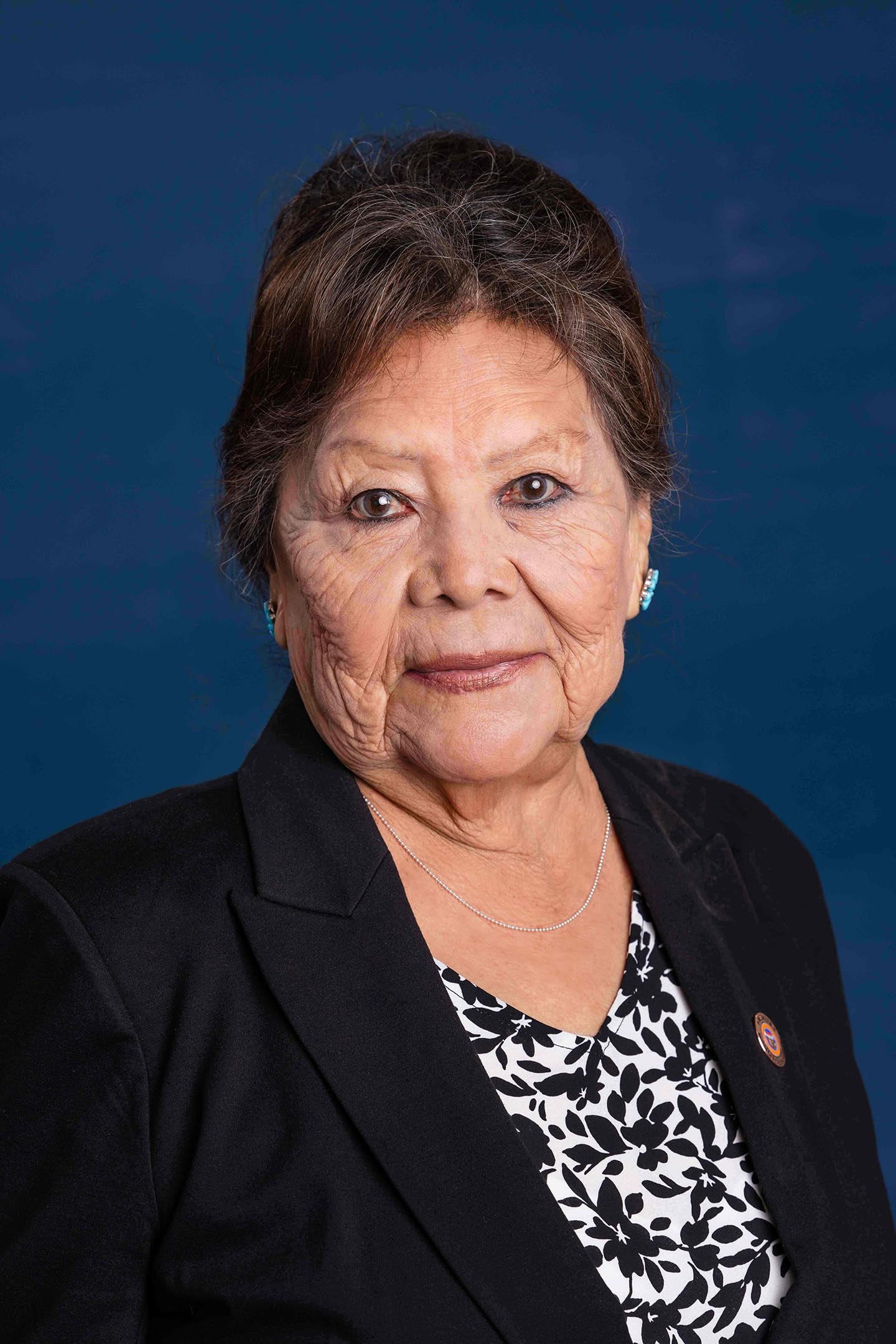
Rep. Mae Peshlakai
Sponsored bills
Maddy summaryHCM 2006 is a memorial resolution naming a truss bridge in Cameron, Arizona, the Jimmie Preston Memorial Bridge. It honors Jimmie Preston, a Navajo Code Talker who served with the U.S. Marine Corps during WWII and later contributed to his community in Arizona. The resolution directs Arizona's geographic naming boards and the Arizona Department of Transportation to officially adopt the name and install signage. This is a procedural naming action with no policy changes, passed by the Arizona legislature on May 6, 2025.
Maddy summaryHB 2852 allows enrolled members of federally recognized Indian tribes in Arizona to have a neutral distinguishing mark on their nonoperating identification license (not a driver's license) that identifies them as Native American. This mark cannot specify a particular tribe or include other personal details from their tribal documents. The bill ensures this identifier is consistent with existing provisions for veterans and other categories while maintaining clear labeling that the license is for identification only, not driving. It affects tribal members seeking state-issued nonoperating IDs, with no change to tribal sovereignty or voting rights.
Maddy summarySB 1671 adds traditional healing services as a covered benefit under Arizona's Medicaid program (AHCCCS). This coverage applies only to AHCCCS members who qualify under federal regulations (42 CFR § 136.12) and receive services delivered by or through the Indian Health Service or a tribal facility. The bill explicitly requires federal approval for this coverage and is subject to available funding. It does not alter other existing covered services listed in the statute.
Maddy summaryHB 2585 amends Arizona law to clarify open enrollment options for tribal students living on federally recognized tribal land. It defines "resident transfer pupil" to include tribal students who can enroll in one of the three closest school districts (based on shortest distance to district boundaries), rather than only their home district. This specifically affects tribal students residing on reservation lands who seek enrollment outside their home school district. The bill establishes a clear, distance-based mechanism for selecting eligible districts, without changing general open enrollment rules for other students.
Maddy summaryHCR 2030 requires Arizona public schools to identify the primary language of all new students and assess English proficiency using state-approved tests. It mandates that students not proficient in English be enrolled in structured English immersion programs with specific daily instructional time (120 minutes for K-5, 100 minutes for grades 6-12). The bill repeals older language education rules and creates a framework for the state board to approve research-based English instruction models, including annual reviews and budget procedures for schools. This directly affects English language learners (ELLs) and their schools, focusing on standardized assessment, program enrollment, and funding mechanisms. The bill establishes the Arizona English Language Learner Fund to support these programs.
Maddy summaryHB 2506 adds two new official state holidays to Arizona's calendar: "Cesar Chavez Day" on March 31 and "Dolores Huerta Day" on April 1. The bill amends Arizona's statutes to include these dates in the list of recognized holidays for state employees and institutions. It directly affects state operations by designating these specific dates as days when state offices and schools would typically close. The key provision is the formal inclusion of these observances into the state's holiday schedule, honoring these civil rights leaders through official recognition.
Maddy summaryHB 2853 establishes the Tribal Community College Operations Fund to provide dedicated state funding for tribal community colleges in Arizona. It appropriates $13.3 million annually from the state general fund for fiscal years 2025-2026 through 2027-2028, directly supporting operational costs like instructional programs and daily expenses for these institutions. The fund, managed by the Department of Administration, is exempt from standard appropriation lapse rules and can use investment earnings. This bill specifically targets tribal community colleges to strengthen their ongoing operations through guaranteed state funding.
Maddy summaryHB 2909 sets new salary requirements for workers classified as exempt from overtime pay under Arizona law. It requires exempt salaried employees (excluding teachers, licensed medical professionals, and attorneys) to earn at least the 40th percentile of weekly wages for full-time nonhourly workers in Arizona's lowest-wage region, adjusted every three years starting in 2028. The bill updates Arizona's exemption threshold to align with federal wage data, ensuring exempt workers meet a minimum compensation standard. This directly affects salaried professionals in administrative or professional roles who previously qualified for overtime exemptions under lower salary thresholds. The change aims to modernize Arizona's overtime rules without altering federal standards.
Maddy summaryHB 2890 requires Arizona employers with 15 or more employees to provide reasonable accommodations for pregnant workers, such as modified equipment, more frequent breaks, schedule changes for prenatal visits, or assistance with manual labor, unless it causes significant difficulty for the business. Employers cannot force pregnant employees to use vacation or sick leave when accommodations are possible and must post clear notices about these requirements in employee handbooks and provide written notice to new hires, current employees, and pregnant employees within 10 days of pregnancy notification. The bill directly affects pregnant employees and their employers across Arizona, ensuring they receive specific workplace adjustments without penalty. It takes effect after the law is enacted, with written notices required within 180 days of the effective date.