

Maddy summaryHB 2651 establishes a voluntary "Blue Envelope Program" for drivers diagnosed with autism spectrum disorder in Arizona. Participants receive a standardized blue envelope (available in English and Spanish) containing their vehicle registration, insurance details, and communication tips for law enforcement during traffic stops. The program ensures confidentiality by prohibiting disclosure of participants' identities and requires collaboration between the state, University of Arizona, and community stakeholders to design the envelope's contents based on expert guidance. This directly affects individuals with autism spectrum disorder who drive, aiming to improve communication during police interactions.
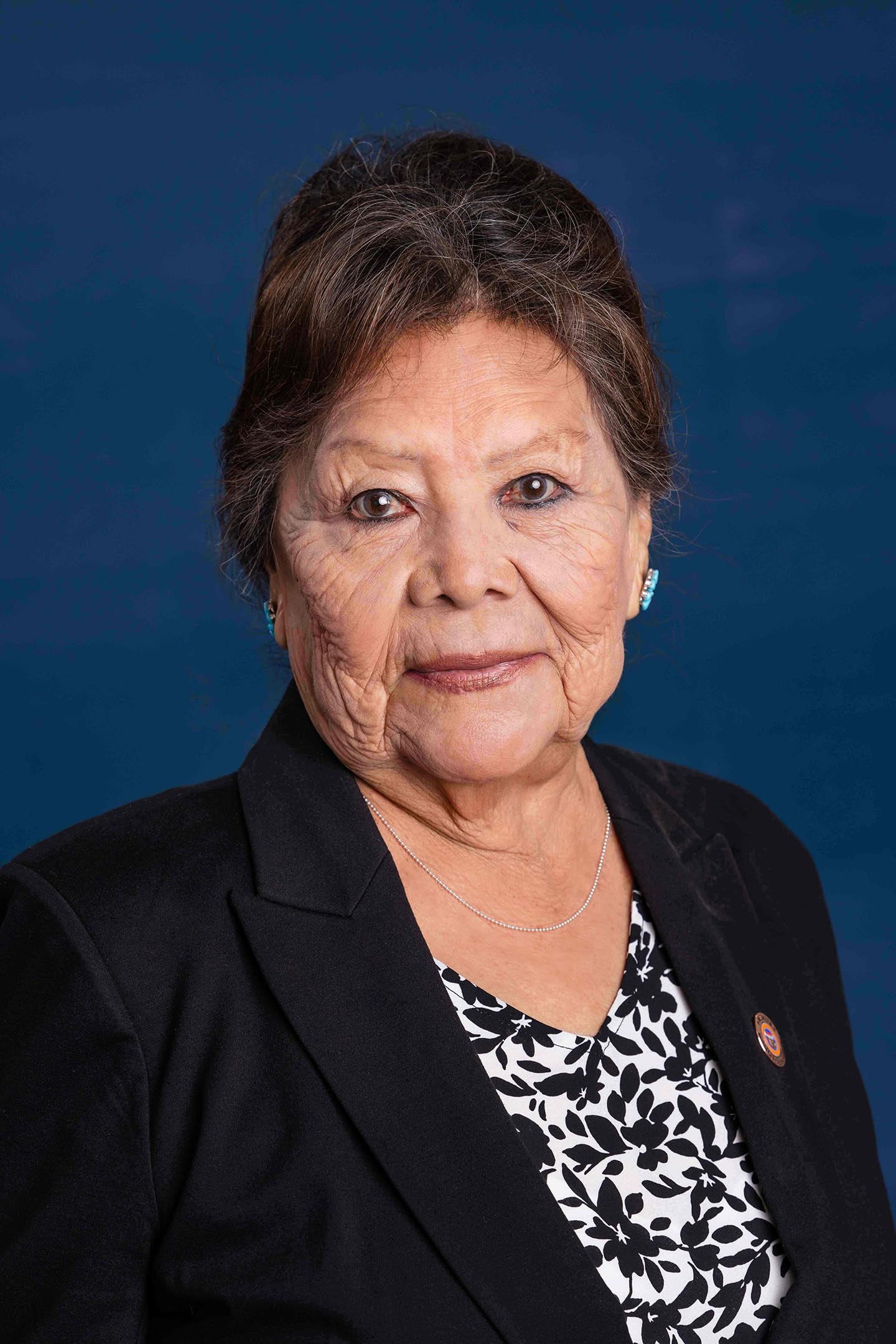
Rep. Mae Peshlakai
Sponsored bills
Maddy summaryHB 2595 appropriates $45 million from Arizona's state general fund for fiscal year 2026-2027 to Coconino County through the Attorney General. The funds will directly support constructing a new juvenile court services facility and converting the county's existing juvenile detention center into a detox, sobriety, and crisis recovery center. This bill provides concrete financial resources for physical infrastructure changes within Coconino County's juvenile services system. It does not alter eligibility or service standards but focuses on facility development and repurposing. The bill is currently in early legislative stages, having passed its first two readings.
Maddy summaryHB 2743 repeals a requirement for healthcare providers in Arizona to report certain abortion-related data to the state. It directly affects healthcare facilities and providers who previously had to submit this information under Arizona Revised Statutes Title 36, chapter 20, article 2. The bill removes this specific reporting obligation by eliminating the referenced statute from state law. This is a straightforward repeal of an existing administrative requirement with no new provisions or funding.
Maddy summaryHB 2806 commits Arizona to the National Popular Vote Interstate Compact (NPVIC), requiring the state to award its electoral votes to the presidential candidate who wins the nationwide popular vote. If enough states join the compact to control 270 electoral votes (a majority), Arizona would certify its electors based on the national popular vote winner, not the state's winner. The bill adds a new chapter to Arizona law outlining how member states would coordinate to implement this system, including requiring states to share vote totals and certify electors for the national popular vote winner. This affects Arizona's election process and its presidential electors, but only takes effect once the compact reaches the required threshold of electoral votes.
Maddy summaryHB 2744, titled the "Arizona Right to Contraception Act," establishes a legal right for Arizonans to access contraception and for health professionals to provide it. The bill prohibits any state or local law that singles out contraception services or makes access harder - such as requiring special permits for birth control or restricting where it can be distributed. It also mandates that patients must give voluntary, informed consent for sterilization procedures. This bill does not create new access to contraception but aims to protect existing access by preventing restrictive laws targeting contraceptive care.
Maddy summaryThe bill title "HB 2746: abortion; providers; waiting period; ultrasound" does not match the provided bill text, which amends Arizona's nursing board regulations (Section 32-1606, A.R.S.). The text states the board lacks authority to decide scope of practice for abortion (referencing A.R.S. §36-2151) but contains no provisions about waiting periods, ultrasounds, or abortion access. Instead, it details the nursing board's powers, such as licensing, disciplinary actions, and program approvals. This appears to be a mislabeled bill; no concrete policy changes related to abortion are described in the text.
Maddy summaryHB 2505 repeals specific Arizona law enforcement funding mechanisms and related provisions. It eliminates a $13 assessment on fines and penalties that previously funded the "gang and immigration intelligence team enforcement mission" (repealing Section 12-116.04) and removes sections defining smuggling penalties (repealing Sections 13-2928 and 13-2929). The bill also amends the smuggling statute to clarify definitions, including "family member" and "procurement of transportation," while maintaining penalties for smuggling humans under 18 or involving weapons. These changes directly affect law enforcement funding streams and the legal framework for prosecuting human smuggling cases.
Maddy summaryHCR 2029 proposes repealing Arizona's constitutional "right to work" provision (Article XXV), which currently prohibits requiring employees to pay union dues as a condition of employment. If approved by voters, this change would remove a constitutional barrier that prevents employers and unions from mandating union membership or dues. The bill would require voter approval at the next general election, as specified in Arizona's Constitution. This proposal directly affects workers and unions in Arizona by potentially altering labor agreements regarding dues payment. The measure is currently in its first reading stage in the Arizona House of Representatives.
Maddy summaryHB 2493 requires private education providers that accept Arizona empowerment scholarship funds to follow the same financial reporting and audit rules as public schools. These providers must submit financial data using the state's standard system, comply with annual achievement profile reporting, and undergo performance audits conducted by the auditor general. The bill directly affects private schools, tutoring services, or other educational entities receiving scholarship funds, mandating transparency in their financial operations. Key provisions include standardized financial recordkeeping, inclusion in state achievement reports, and specific audit requirements tailored for private businesses. This bill focuses on oversight rather than changing scholarship eligibility or funding amounts.
Maddy summaryHB 2590 amends Arizona law to clarify key definitions related to residential rental properties. It defines "residential rental property" as property leased for residential use or rented to lodgers for less than 30 days, excluding the mobile home itself in mobile home parks if owned by the tenant (not the space owner). The bill also defines "slum property" by specific hazardous conditions like structural damage, lack of water/sanitation, or dangerous waste accumulation. This bill directly affects landlords, tenants, and property managers by establishing clear terms for enforcement and regulation. As a definitional bill, it does not create new requirements but provides precise language for future legal or regulatory actions.