

Maddy summaryHCR 2034 would require background checks for most private firearm transfers in Arizona by mandating that non-dealer sellers or buyers use a licensed firearms dealer to process the transaction. This applies to all private sales not covered by specific exceptions (like law enforcement transfers, gunsmith repairs, or family gifts). The dealer must conduct a background check under federal and state law before completing the sale or returning the firearm to the seller if prohibited. Violating this rule would be a class 5 felony. The bill requires voter approval to become law.
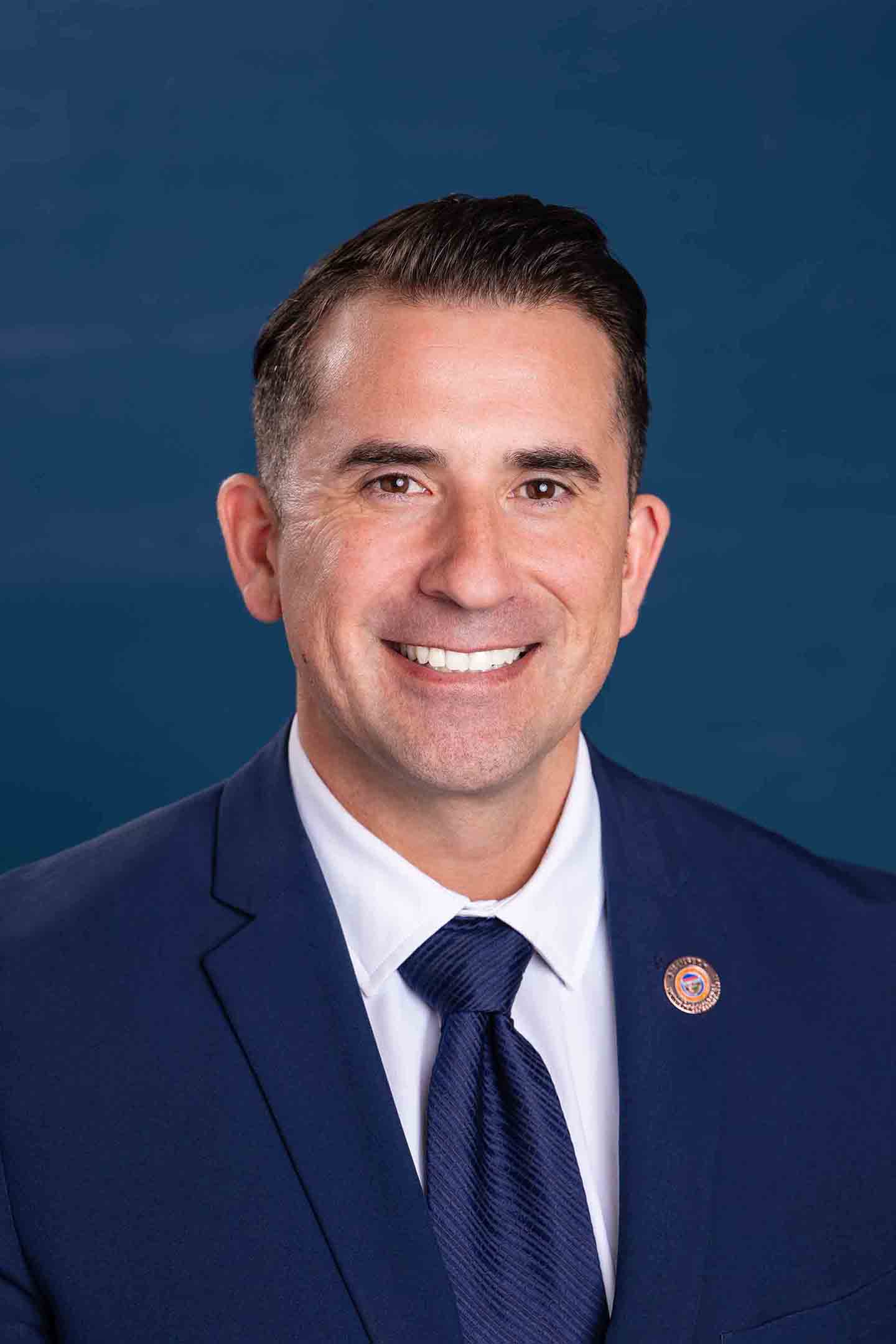
Rep. Aaron Marquez
Sponsored bills
Maddy summaryHB 2686 creates a new specialty license plate program for sororities and fraternities in Arizona. To qualify, an organization must pay a $32,000 fee to the state department to implement the program, after which the department will issue custom plates designed by the group (subject to state approval). Owners of vehicles displaying these plates pay a $25 annual fee, with $17 of that amount designated as a donation. The bill does not affect individual students but requires organizations to fund the program upfront and comply with design standards. This is a procedural change to license plate regulations, not a broad policy shift.
Maddy summaryHB 2591 appropriates $500,000 from Arizona's state general fund for the Arizona Commission of African-American Affairs' operating expenses during fiscal year 2025-2026. This procedural bill provides direct funding to the commission for its administrative costs. It does not establish new policies or affect specific groups beyond the commission's operational needs. The bill is currently in early legislative stages, having undergone House first and second readings.
Maddy summaryHB 2443 redirects unclaimed property funds (from abandoned assets like forgotten bank accounts) to Arizona's housing programs. It requires 55% of these funds to go to the state Housing Trust Fund, with at least 40% of that portion specifically for developing housing in rural areas. Additional allocations include $2 million annually to a mental health housing fund and $24.5 million yearly to an administrative fund. The bill does not directly affect individuals but changes how state funds from unclaimed property are distributed to support housing initiatives.
Maddy summaryHB 2461 establishes Arizona's state-run family and medical leave insurance program, providing wage replacement benefits to eligible workers. It directly affects employees who meet specific wage requirements (based on past earnings) or self-employed individuals who elect coverage, allowing them to take paid leave for qualifying reasons like childbirth, caring for a family member with a serious health condition, personal medical needs requiring hospitalization, military family exigencies, or safe leave related to domestic violence or stalking. Benefits cover up to 26 weeks for personal medical needs (e.g., childbirth recovery) or 24 weeks for other qualifying reasons, with payments starting within two weeks of a claim filing. The program, effective January 1, 2028, is administered by Arizona's Industrial Commission.
Maddy summaryHB 2620 requires Arizona's Department of Public Safety to create a secure online portal for federally licensed firearms dealers to verify the validity of concealed weapons permits presented by buyers. If a buyer shows a valid concealed weapons permit, dealers must check the portal before selling a firearm; if the permit is invalid, they must conduct a background check. The bill prohibits the state from collecting data on how often dealers use the portal. This affects firearms dealers and permit holders by adding a verification step during sales, with no data retention on query activity. The $300,000 appropriation funds the portal's development and maintenance.
Maddy summaryHB 2293 raises Arizona's minimum age for purchasing tobacco products and vaping devices from 18 to 21. It prohibits retailers from selling these items to anyone under 21 and makes it a petty offense for minors to buy, possess, or receive them, with penalties including fines of at least $100 or 30 hours of community service. The law includes exceptions for religious use of tobacco products and gifts of smoking paraphernalia that aren't intended for use. This directly affects underage youth, retailers, and those supplying tobacco or vaping products.
Maddy summaryBased on the provided bill text, HB 2512 is a court fee schedule amendment with no connection to firearm transfers or domestic violence as suggested by its title. The bill solely modifies Arizona Revised Statutes Section 12-284 to adjust filing fees for various court procedures (e.g., $188 for initial case filings, $100 for answers, $30 for basic documents like power of attorney). It directly affects individuals and entities interacting with Arizona's court system who pay these fees. The bill contains no provisions related to firearm transfers, domestic violence offenses, or policy changes addressing those topics. The title appears to be inaccurate or mislabeled based on the actual content provided.
Maddy summaryHB 2211 amends Arizona law to clarify that juvenile courts have exclusive jurisdiction over cases involving "severe threat orders of protection" when the person being ordered (respondent) is under 18 years old. This means minors accused of threatening others would be handled entirely within juvenile court, not adult court, for these specific protection order cases. The bill specifies that juvenile courts must manage these proceedings from start to finish, including any related hearings or dispositions. It does not create new protection orders but defines which court handles them for minors, ensuring cases involving youth threats follow juvenile justice procedures rather than adult criminal processes.
Maddy summaryHB 2513 amends Arizona's misconduct involving weapons statute (ARS § 13-3102) by adding a new provision (subsection A.17) that makes it a crime to instigate another person to commit certain weapon offenses. It directly affects individuals who encourage others to engage in prohibited weapon conduct, such as carrying concealed weapons during serious crimes or using weapons in gang-related activities. The key mechanism is criminalizing the act of provoking or urging someone else to violate existing weapon laws, expanding liability beyond the direct perpetrator. This is a substantive policy change to the existing statute, not a procedural measure.