

Maddy summaryHB 2595 appropriates $45 million from Arizona's state general fund for fiscal year 2026-2027 to Coconino County through the Attorney General. The funds will directly support constructing a new juvenile court services facility and converting the county's existing juvenile detention center into a detox, sobriety, and crisis recovery center. This bill provides concrete financial resources for physical infrastructure changes within Coconino County's juvenile services system. It does not alter eligibility or service standards but focuses on facility development and repurposing. The bill is currently in early legislative stages, having passed its first two readings.
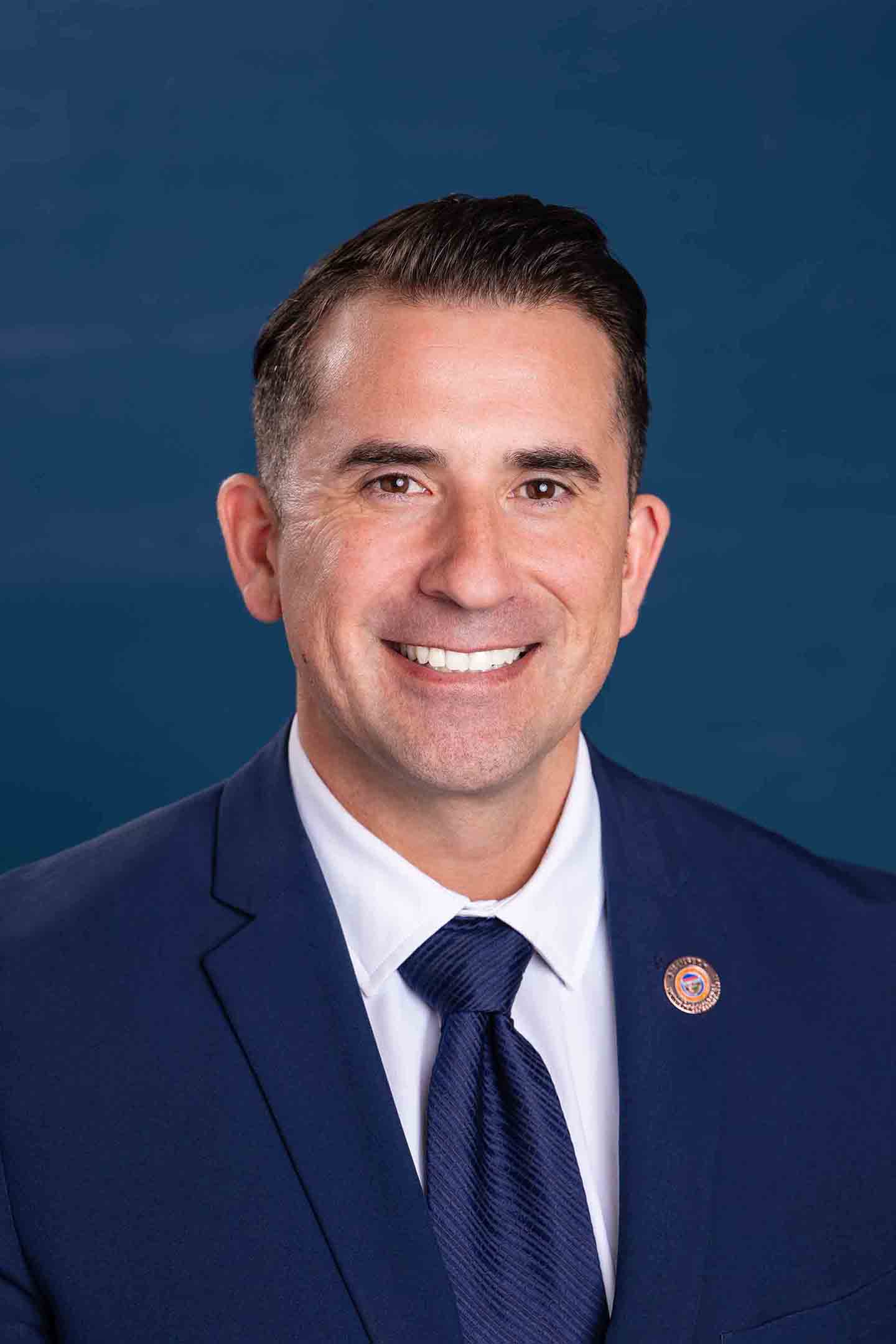
Rep. Aaron Marquez
Sponsored bills
Maddy summaryHB 2599 requires Arizona law enforcement officers to notify the military agency that entered a military protective order into the National Crime Information Center (NCIC) when they believe a service member has violated such an order in the state. The bill applies directly to Arizona police and sheriff's departments who encounter violations of military protective orders issued under federal law (10 U.S.C. § 1567) by military commanders. Key provisions mandate that officers must notify the military agency upon determining probable cause of a violation, using existing NCIC systems that track domestic violence orders and criminal histories. The bill does not create new legal obligations for service members but establishes a communication protocol between state law enforcement and military authorities.
Maddy summaryHB 2298 amends Arizona law to restrict how public universities can increase tuition and fees for in-state undergraduate students. It prohibits tuition hikes exceeding the Phoenix metropolitan area consumer price index (CPI) for resident students and freezes tuition for the first four consecutive years of enrollment. The bill requires universities to hold public hearings on proposed increases, disclose details 10 days in advance, and report enrollment data to the legislature. These changes directly affect Arizona public university students (especially in-state undergraduates) and the Arizona Board of Regents, which administers the new rules.
Maddy summaryHB 2420 requires private firearm sales or transfers between non-licensed individuals to occur through a licensed firearms dealer who conducts a background check. This directly affects private sellers and buyers who are not licensed dealers, mandating they use a dealer to complete the transaction and verify the buyer’s eligibility under federal and state law. Key provisions include the dealer performing a background check (via the National Instant Criminal Background Check System), charging a $20 fee for this service, and prohibiting transfers if the buyer is legally barred from owning firearms. Exceptions cover law enforcement, gunsmiths, temporary transfers for safety, family gifts, antique firearms, and specific recreational loans, but violations carry a class 5 felony penalty.
Maddy summaryHB 2291 creates a voluntary process allowing individuals to restrict their own firearm access. It enables people to submit a court form (via law enforcement or a healthcare provider) to be added to a "voluntary prohibited possessor list," which bars them from purchasing or possessing firearms for 180 days. After this period, individuals may request removal from the list or voluntarily extend the restriction. The bill does not apply to existing prohibited categories (like felons or undocumented aliens) but establishes a new option for self-imposed firearm restrictions. This is a procedural change focused on individual choice, not a broad policy shift in firearm laws.
Maddy summaryHB 2421 prohibits private possession of assault weapons (defined as firearms with features like detachable magazines or specific stocks) and large-capacity magazines in Arizona. It applies to most residents, with exceptions for law enforcement, military personnel, and licensed dealers selling to those agencies. The bill requires existing owners to either surrender, permanently disable, or register their weapons within 90 days, including annual background checks and strict storage rules. Violations carry fines starting at $750 for first-time possession offenses, escalating to $5,000 for felony violations. The law does not affect government or military use, and registration is mandatory for retained weapons.
Maddy summaryHB 2317 amends Arizona law to prohibit cities and towns from banning "cruising," defined as repetitive driving past the same location without a destination within a specific time period. The bill directly affects local governments by preventing them from enacting or enforcing ordinances that target this type of driving behavior. It updates Section 28-626 of the Arizona Revised Statutes to explicitly state that local authorities "shall not enact or enforce an ordinance... that prohibits cruising." This change ensures uniform traffic laws statewide, allowing cities to create other non-conflicting traffic regulations but not to ban cruising through local ordinances. The bill does not create new penalties or alter other traffic enforcement mechanisms.
Maddy summaryHB 2888 clarifies eligible expenses for Arizona's Education Savings Account (ESA) program, which provides state-funded education options for students. It directly affects parents of enrolled students and participating schools by specifying allowable uses for ESA funds, including tuition, textbooks, therapies for students meeting special education criteria, vocational training, assistive technology, tutoring, and transportation. Key provisions expand permitted expenses to cover educational therapies (like speech or occupational therapy), vocational programs, and computer hardware for learning, while requiring annual evaluations for students nearing age 22 to continue eligibility. The bill prohibits using ESAs concurrently with school tuition organization scholarships and bans homeschooling affidavits for ESA-eligible students.
Maddy summaryHB 2740 prevents Arizona cities and towns from banning or restricting short-term rentals (like vacation rentals) based on their classification or use. It allows local governments to regulate only in specific areas: protecting public health/safety (e.g., fire codes), applying zoning rules equally to all properties, banning rentals for prohibited uses (e.g., illegal drugs), and requiring owners to provide tax license details and emergency contact information. The bill mandates a local permit system with a $500 fee cap, requires $500,000 liability insurance (or use of platforms with equivalent coverage), and forces owners of new accessory dwelling units (built after Sept. 2024) to reside on-site if renting them out. Cities must process permits within 30 business days and may impose $1,000 civil penalties for non-compliance with permit or contact requirements.
Maddy summaryHB 2463 repeals Section 36-3604 of the Arizona Revised Statutes, which prohibited abortion services provided through telemedicine. This repeal removes a specific legal restriction that previously blocked telehealth providers from offering abortion care in Arizona. The bill does not create new abortion policies but eliminates an existing prohibition on telemedicine for abortion services. As a result, abortion providers could potentially offer telemedicine-based abortion care without violating this statute if the bill becomes law.