

Maddy summaryHB 2646 establishes three fundamental rights for Arizona children: the right to maintain relationships with parents (including visitation during parental incarceration), access to confidential health care services (such as contraception, STI treatment, and mental health care without parental consent), and enrollment in public schools with in-person instruction. The bill requires any law affecting these rights to prioritize the child's best interest and be narrowly tailored to a compelling government interest. It specifically allows children to consent to certain health services independently and overrides parental direction regarding public school enrollment. The law applies directly to Arizona children and their parents or legal guardians.
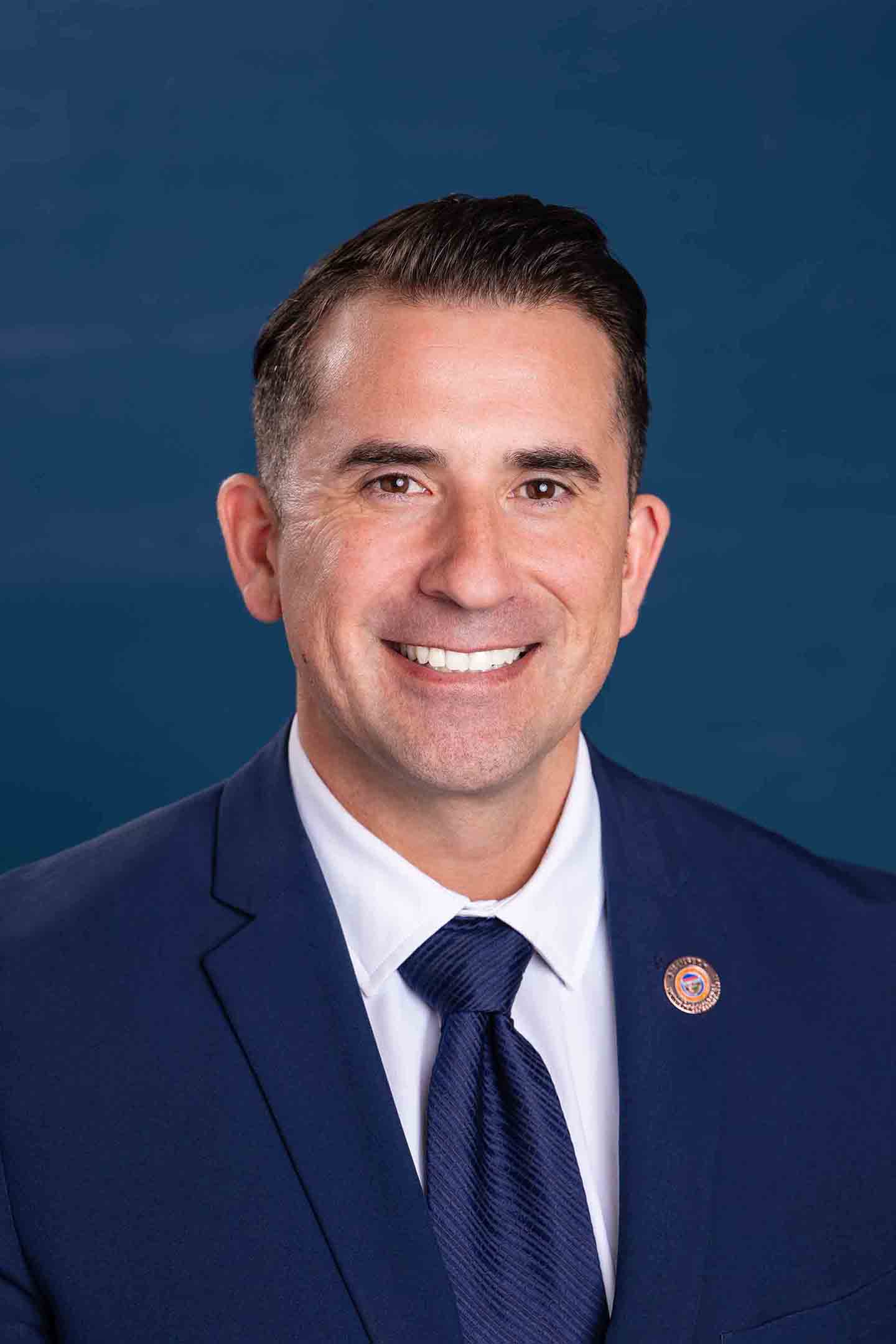
Rep. Aaron Marquez
Sponsored bills
Maddy summaryHB 2636 proposes to increase Arizona's individual income tax rates for taxable years beginning after December 31, 2021. The bill would amend tax brackets to raise rates across all income levels for both residents and nonresidents earning income within Arizona. Key provisions include adjusting the percentage rates applied to different income ranges, such as increasing the top marginal rate for single filers and married couples filing jointly. This legislation directly affects all Arizona taxpayers subject to individual income tax, with changes applying to future tax years. The bill is currently in early legislative stages (House First/Second Reading in 2026).
Maddy summaryHB 2715 repeals Section 9-461.16 of Arizona's zoning code, which previously addressed specific municipal planning procedures. This bill does not alter the main zoning regulations found in Section 9-462.01 (which governs land use, building standards, and special districts like historical or age-restricted zones). Municipalities will continue to operate under the existing zoning framework, as this repeal only removes one specific section from the statutes. The bill directly affects local governments that implement zoning ordinances but does not change how communities regulate housing or land use.
Maddy summaryHB 2300 strengthens protections for mobile home renters in Arizona by requiring landlords to follow specific notice procedures before eviction and banning excessive fees. It mandates a 5-7 day waiting period after a court ruling before eviction enforcement can begin, prevents landlords from charging fees for background checks if tenants provide their own reports, and requires written disclosure of landlord contact information before lease signing. The bill directly affects mobile home tenants and landlords by standardizing eviction processes, limiting fees, and ensuring clear communication. Key provisions include prohibiting "application fees" for background checks and requiring landlords to provide physical addresses for tenant contact. These changes aim to create fairer rental practices without altering tenant rights beyond the specified legal procedures.
Maddy summaryHB 2474 updates Arizona's legal terminology by replacing the terms "legal resident alien" and "alien" with "noncitizen" in two sections of the Arizona Revised Statutes. Specifically, it amends Section 4-202 (liquor license qualifications) and Section 5-301 (watercraft regulations definitions) to use "noncitizen" consistently. The bill does not change eligibility requirements for liquor licenses or watercraft permits; it only revises the language to modernize and clarify statutory references. This is a procedural change focused solely on terminology, not policy.
Maddy summaryHB 2719 creates a new "Community College Access and Success Special Plate" program for Arizona vehicle owners. To obtain these plates, individuals must pay a one-time $32,000 fee to the Department of Transportation (with plate design approval), plus a $25 annual fee. Of the $25 fee, $17 annually funds a dedicated "Community College Access and Success Special Plate Fund" supporting community college programs, while $8 covers administration. This directly affects vehicle owners who choose to purchase these plates, with the funds benefiting Arizona's community college system through the new dedicated fund.
Maddy summaryHB 2597 appropriates $15 million from Arizona's general fund to the Department of Health Services for tribal assisted living facilities and nursing homes. The funds must be distributed to tribal governments to open or reopen facilities, with at least $1.5 million allocated to the Hopi Tribe and $1.5 million to the Navajo Nation. Remaining funds are distributed proportionally across northern, central, and southern regions of Arizona. This bill directly affects tribal governments and their ability to operate senior care facilities.
Maddy summaryHB 2710 updates Arizona's eviction rules by clarifying when landlords can legally terminate leases. It requires landlords to give tenants 10 days to fix most lease violations (like unpaid rent) or 5 days for health/safety issues, but allows immediate eviction for serious, irreparable breaches like violent crimes, drug activity, or property destruction. Crucially, for tenants who have lived in a unit 12+ months, landlords must either waive one month’s rent or provide relocation assistance when terminating for reasons like nonpayment, lease breaches, or the landlord moving in. The bill also specifies that tenants are responsible for guests’ lease violations they could reasonably prevent.
Maddy summaryHB 2596 allocates $5 million from Arizona's state general fund for fiscal year 2026-2027 to the Department of Economic Security. This funding will be distributed directly to tribal governments across Arizona to support the creation of additional domestic violence shelter beds. The bill specifically targets tribal communities to expand emergency housing resources for victims of domestic violence. It exempts this appropriation from standard state budget lapse rules, ensuring the funds remain available for their intended purpose. The bill does not create new laws or regulations, only providing dedicated funding for tribal shelter services.
Maddy summaryHB 2461 creates a new 1% surcharge on payroll taxes for Arizona businesses employing 50 or more workers, starting in 2027. The surcharge applies to all business types (including corporations and "small business taxpayers" as defined) and funds a dedicated Community College Apprenticeship and Workforce Development Program Fund. Monies collected will be deposited into this fund to support community college workforce training programs. The bill directly affects businesses with 50+ employees across Arizona, with no changes to existing tax structures beyond this new surcharge.