

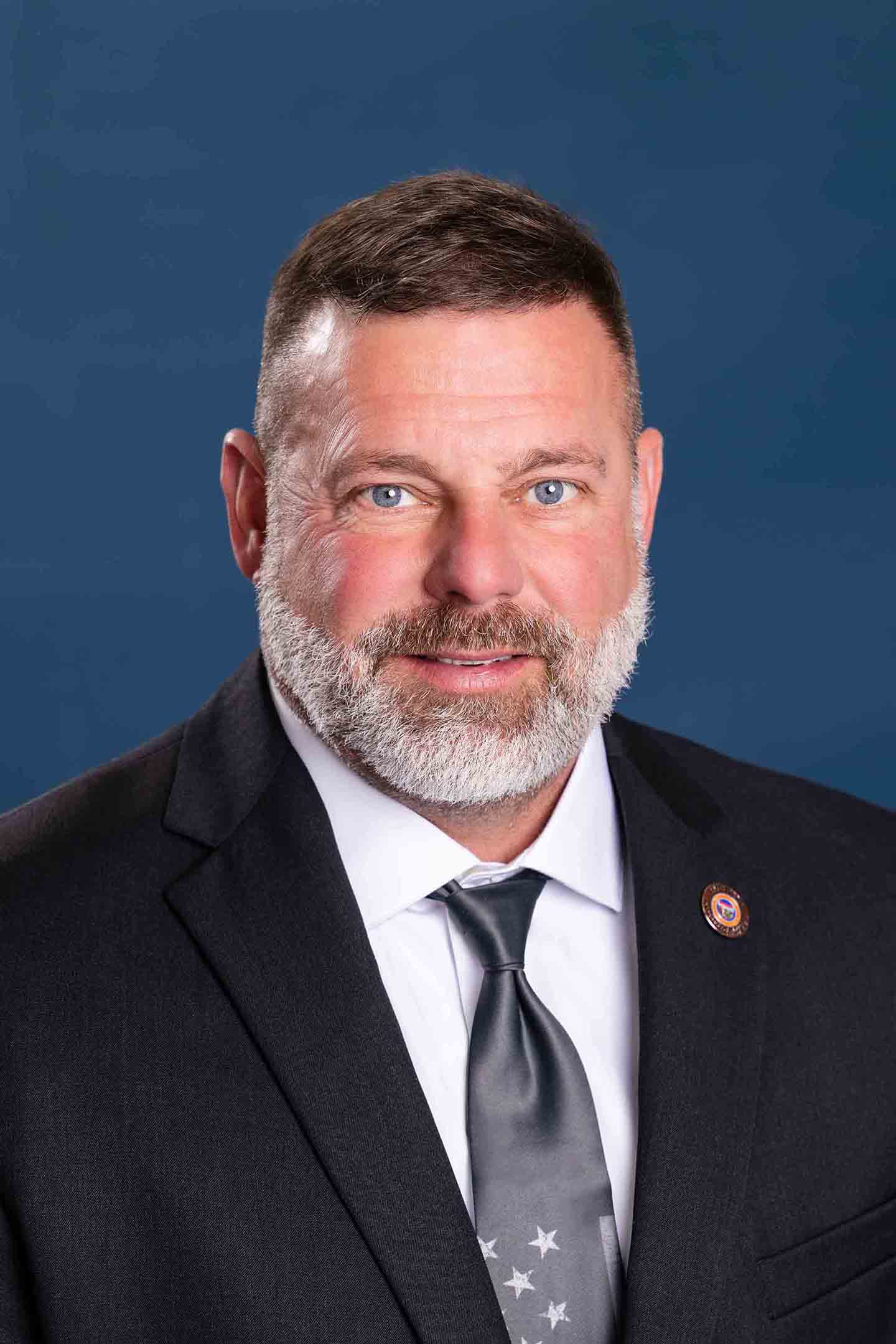
Photo of John Gillette
R Arizona House · District 30

Rep. John Gillette

Compare
Total votes
2,940
all sessions
Attendance
100%
10 missed
Higher than 77% of chamber peers
With party
97%
of cast votes
Near the chamber average
Bipartisan score
4%
crosses aisle rarely
Near the chamber average
Sponsored
327
bills & resolutions
Near the chamber average
Committees
3
assignments
327 bills and resolutions

Sponsored bills

Total
327
Primary
54
Co-sponsor
273
This page
327
matching current filters
Co-sponsor HB 2913
Failed · Arizona House · Co-sponsor
county land commissioner; state lands

Maddy summaryHB 2913 formally establishes the "county land commissioner" as a defined county officer position in Arizona statutes. It sets salary standards for this role based on county population size (e.g., $96,600 annually for commissioners in large counties starting in 2025), and explicitly defines the commissioner's duties regarding state lands within the county. The bill specifies the commissioner manages state land leases, auctions, and conflicts, determining terms, highest bids, and best land uses. These changes clarify existing responsibilities by codifying the position's role and compensation structure without introducing new policies.

Failed Mar 9, 2026 1 co-sponsor
Co-sponsor HB 2396
Vetoed · Arizona House · Co-sponsor
SNAP; allowed purchases; waiver

Maddy summaryHB 2396 requests an Arizona waiver from the U.S. Department of Agriculture to expand what SNAP (food stamp) recipients can purchase with their benefits. If approved, SNAP recipients would be allowed to buy specific items currently restricted, including fresh/frozen meats, various milks (like almond or organic), cheeses, 100% juices, eggs, whole grains, and certain cooking oils. The bill requires Arizona's Department of Economic Security to annually request this federal waiver until granted. It does not affect existing approvals under the WIC program for other nutrition benefits.

Vetoed Feb 20, 2026 1 co-sponsor
Co-sponsor HR 2006
Passed · Arizona House · Co-sponsor
Yvonne Fedderson; death resolution

Maddy summaryHR 2006 is a ceremonial resolution passed by the Arizona House of Representatives honoring Yvonne Glee Lime Fedderson, who died on January 23, 2026. The resolution expresses the House's sympathy to her family and admirers while recognizing her founding role in Childhelp and her decades of work advancing child welfare programs, including establishing the first national child abuse hotline and advocacy centers. It directs the Secretary of State to transmit copies of the resolution to her family and Childhelp organization. As a non-binding commemorative measure, it does not create new laws or affect any policies.

Passed Feb 18, 2026 1 co-sponsor
Co-sponsor HCR 2061
Introduced · Arizona House · Co-sponsor
state officeholders; dual citizenship; prohibition

Maddy summaryHCR 2061 proposes a constitutional amendment to prohibit individuals holding dual citizenship from serving in Arizona state office. It would amend the state constitution to require all state legislators and other elected officials (as listed in Article V, Section 1) to be U.S. citizens at the time of election, explicitly barring those with dual citizenship from eligibility. This change would directly affect candidates running for state legislative seats and other state offices requiring U.S. citizenship. The amendment must be approved by voters in the next general election after being submitted by the Secretary of State, as it is currently in early legislative stages (House first and second readings in February 2026).

Introduced Feb 12, 2026 1 co-sponsor
Co-sponsor HB 2842
Introduced · Arizona House · Co-sponsor
property sale; notice; escrow agents

Maddy summaryHB 2842 requires escrow agents in Arizona to report specific property details to the state department when handling real estate sales or transfers. This includes owner names, property identification numbers, physical addresses, escrow company names, and contact information. The bill also establishes a voluntary "early alert system" allowing property owners to opt in for email or text notifications about pending sales. These changes directly affect escrow agents (who must comply with reporting) and property owners (who can choose to receive alerts). The law aims to improve transparency in property transactions through standardized data sharing.

Introduced Feb 11, 2026 1 co-sponsor
Primary HB 4031
Introduced · Arizona House · Lead sponsor
special plate; historic electric vehicle

Maddy summaryHB 4031 creates a new "historic electric vehicle" special license plate program in Arizona. To qualify, individuals must pay a one-time $32,000 fee to the Department of Transportation for implementation, after which they can design the plate (subject to department approval). Annual fees of $25 apply, with $17 of that amount donated to a dedicated historic electric vehicle fund. This program specifically affects owners of historic electric vehicles who choose to participate in the special plate initiative.

Introduced Feb 10, 2026 0 co-sponsors
Co-sponsor HB 2382
Introduced · Arizona House · Co-sponsor
school district superintendents; secondary employment

Maddy summaryHB 2382 requires Arizona school district governing boards to approve any secondary employment by a superintendent in a public meeting before it can begin. This law directly affects school superintendents, who must now seek and obtain board approval for outside jobs. If a superintendent engages in secondary employment without prior approval, they face a civil penalty of up to $1,000 per month, which they must pay personally. The bill also authorizes county school superintendents to report violations to the attorney general for investigation and enforcement.

Introduced Feb 10, 2026 1 co-sponsor
Co-sponsor HB 2554
In committee · Arizona House · Co-sponsor
biennial budget

Maddy summaryHB 2554 amends Arizona's budget process by requiring the governor to submit a two-year budget plan (biennial budget) with separate annual breakdowns, instead of a single-year plan. It mandates that state agencies submit detailed financial estimates by September 1 each even-numbered year, including costs from local minimum wage increases exceeding state levels. The bill also establishes a continuous budget planning process, requires a February 15 appropriations estimate report, and specifies detailed contents for the governor's budget report (like balance sheets, income/expenditure schedules, and performance measures). This procedural bill affects the governor's office, state agencies, and the legislature by standardizing budget submission and reporting requirements for the next two fiscal years.

In committee Feb 9, 2026 1 co-sponsor
Co-sponsor HB 2952
Introduced · Arizona House · Co-sponsor
deeds; identification; forgery; notice; notaries.

Maddy summaryHB 2952 requires property buyers and sellers to provide photo ID when recording deeds at county offices (with exemptions for title agents, banks, attorneys, and government entities), as outlined in new Section 11-472. It mandates detailed affidavits for all property sales, including sale price, property description, and ownership details, to be appended at recording (Section 11-1133). The bill also creates a voluntary system for property owners to receive electronic notifications about ownership or address changes (Section 11-544) and increases penalties for forging or falsely recording property documents (Section 33-420). These changes directly affect property buyers, sellers, title companies, and county recorders by standardizing documentation and improving record accuracy.

Introduced Feb 5, 2026 1 co-sponsor
Co-sponsor HB 2669
In committee · Arizona House · Co-sponsor
railroads; train length

Maddy summaryHB 2669 sets a maximum train length of 8,000 feet for railroads operating on main tracks or branch lines within Arizona. This bill directly affects railroad operators in the state by prohibiting trains exceeding this length. The key provision is a clear, enforceable limit on train size, replacing any previous length allowances. The law applies to all railroad operations on state-maintained tracks and aims to standardize safety and operational parameters. This is a straightforward regulatory change with no additional funding or complex implementation mechanisms.

In committee Feb 4, 2026 1 co-sponsor
Showing 41 to 50 of 327 bills
Previous 1 4 5 6 33 Next