

Maddy summaryHB 2169 clarifies school board meeting locations and financial procedures in Arizona. It allows school boards to meet at public facilities outside their district if convenient, requires monthly meetings during the school year, and specifies that leftover grant funds can reduce local school taxes. These changes directly affect school district boards, administrators, and county treasurers managing district finances. The bill passed the legislature in April 2025 but was vetoed by the governor on April 18.
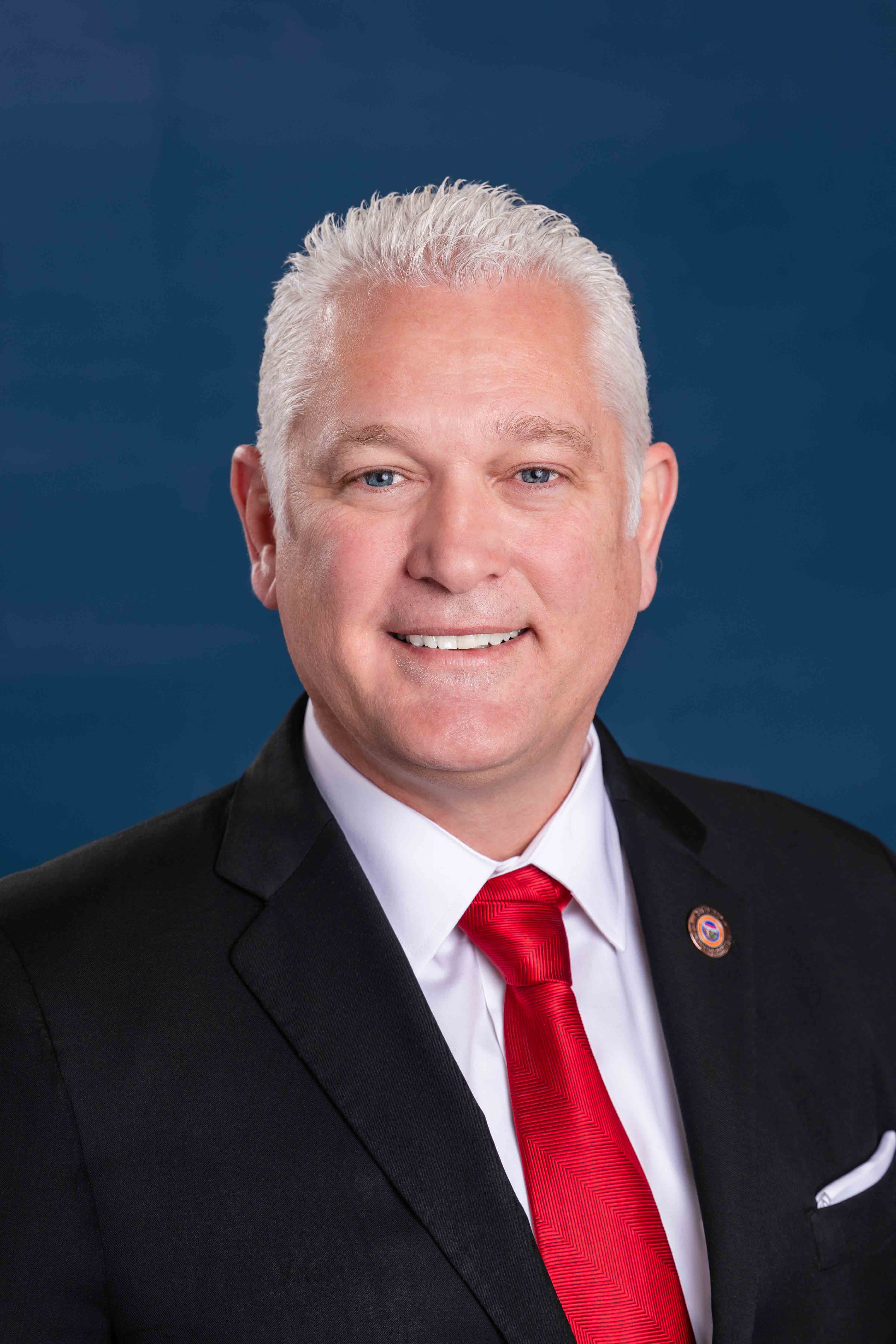
Rep. Michael Carbone
Sponsored bills
Maddy summaryHB 2733 grants legal immunity to Arizona government agencies and employees (like law enforcement) who intercept, disable, or destroy unmanned aircraft (drones) within 30 miles of the state's international border. It protects them from liability for injuries caused during these actions unless they intentionally harmed someone or were grossly negligent. The law specifically applies to drone operators (defined as anyone controlling a drone, including owners or groups acting together) and covers contractors working for government entities. This bill directly affects border enforcement practices and drone operators operating near Arizona's international border.
Maddy summarySB 1106, titled "Ava's Law," modifies Arizona's public entity liability rules regarding sexual offenses. It clarifies that public entities (like schools or government agencies) generally cannot be held liable for sexual offenses committed by employees against minors or children with disabilities, **unless** the entity violated a duty to check employee backgrounds or failed to report known risks. The law applies only to offenses occurring on or after December 31, 2027, and does not affect liability for vehicle-related incidents or emergency care. This bill focuses on defining specific circumstances where public entities may face liability, not broader policy changes.
Maddy summaryHB 2741 modifies Arizona's liquor licensing rules by adjusting how many new bar, beer/wine bar, and liquor store licenses are issued each year based on county population growth (increasing from 5,000 to 10,000 people per new license for beer/wine bars starting in 2022). It requires new license holders to pay a fee equal to the current market value of similar licenses in their county, determined through appraisals. The bill also limits off-sale liquor sales (e.g., takeout) to no more than 30% of total on-sale sales at licensed establishments. Additionally, it allows license holders to combine multiple license types (like bar + liquor store) at a single location under specific conditions. This law directly affects businesses seeking new liquor licenses or expanding existing operations in Arizona.
Maddy summaryArizona's HCM 2010 is a memorial (not a bill) passed by the Arizona legislature requesting federal action. It argues Maricopa County cannot meet EPA ozone standards (70ppb) due to natural factors beyond Arizona's control, citing studies showing ozone increased during pandemic lockdowns despite reduced activity. The memorial asks Congress and the EPA to halt penalties for nonattainment, revise regulations to comply with federal law (42 U.S.C. § 7509a), and maintain the current ozone standard. This is a procedural request, not a binding law, directed at the U.S. President and Congress.
Maddy summaryHB 2126 strengthens parental rights regarding minor children's medical information in Arizona. It directly affects Arizona parents of minors by guaranteeing their access to all medical records (including electronic portals), requiring consent for biometric scans and genetic testing, and ensuring notification if child safety concerns arise. Key provisions mandate healthcare entities to provide parents equal access to medical records and require government entities to prove compelling justification before interfering with parental health decisions. The bill establishes legal recourse for parents if their rights are violated, shifting the burden of proof to the government in such cases.
Maddy summaryThis is a symbolic resolution (not a law) passed by Arizona lawmakers expressing support for the Palo Verde Generating Station nuclear power plant and nuclear energy. It highlights Palo Verde's role as Arizona's largest clean energy source, economic contributor ($2.3 billion impact), and employer (3,000+ jobs), while noting public support for nuclear power. The resolution has no legal effect but formally endorses continued nuclear energy use and directs the Secretary of State to send copies to federal officials. It does not create new policies, funding, or regulations.
Maddy summaryHB 2677 allows Arizona middle school students (grades 6-8) to earn career and technical education (CTE) course credits that count toward both 8th-grade promotion and high school graduation. Schools offering these courses must partner with approved CTE providers, such as career districts, state-approved schools, or community colleges. They must report annually to the state on course offerings and student completions, with a final summary due by December 2028. The law applies only through the 2027-2028 school year and expires December 31, 2036.
Maddy summaryHB 2855 declares that drug cartels operating in Arizona are terrorist organizations under state law. It defines "drug cartel" to include groups involved in human smuggling, drug trafficking, or terrorism, and requires the Arizona Department of Homeland Security to address the threat they pose. The bill explicitly states this definition does not affect individuals' claims for asylum under federal law. This legislation aims to empower state agencies to combat border-related criminal activity, based on voter-approved findings about public safety concerns linked to transnational cartels.
Maddy summaryHB 2404 establishes the Arizona Commerce Authority to lead economic growth by attracting, expanding, and retaining businesses across the state. It creates a 19-member board of directors (including the governor as chair, 17 private business leaders appointed by the governor and legislative leaders, and non-voting ex officio members) to guide this work. Key provisions require appointed board members to undergo criminal background checks, mandate technical advisors from state agencies (like environmental quality and transportation), and set annual audit requirements for the authority’s funds. The bill directly affects state economic development strategy and business recruitment efforts, with the board’s decisions shaping how Arizona markets itself to companies.