

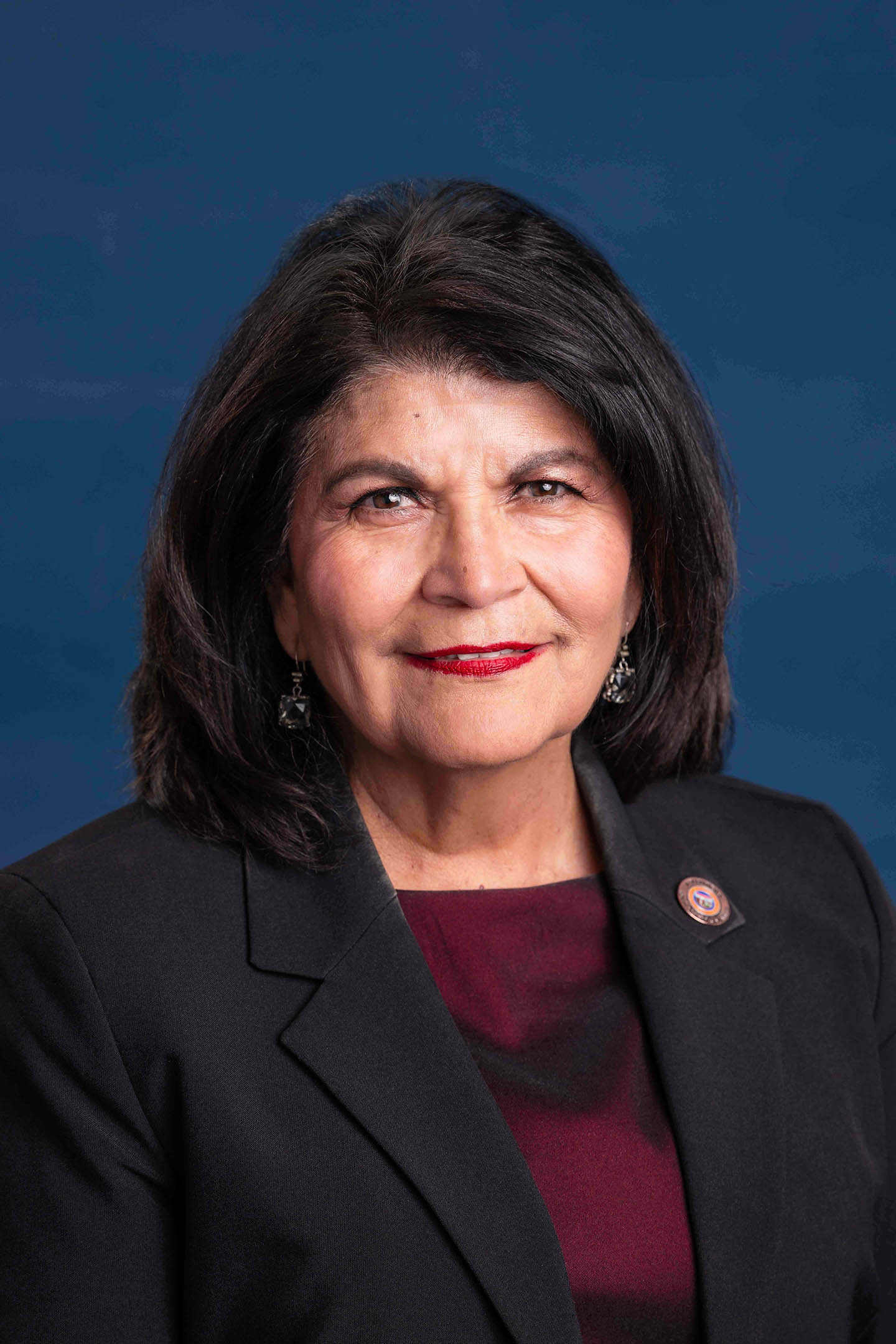
Photo of Betty Villegas
D Arizona House · District 20 On the 2026 ballot

Rep. Betty Villegas

Compare
Total votes
2,346
all sessions
Attendance
98%
37 missed
Near the chamber average
With party
96%
of cast votes
Higher than 83% of chamber peers
Bipartisan score
5%
crosses aisle rarely
Lower than 97% of chamber peers
Sponsored
481
bills & resolutions
Higher than 96% of chamber peers
Committees
4
assignments
481 bills and resolutions

Sponsored bills

Total
481
Primary
39
Co-sponsor
442
This page
481
matching current filters
Co-sponsor HB 2847
Introduced · Arizona House · Co-sponsor
DES; unemployment benefits; increase

Maddy summaryHB 2847 increases Arizona's maximum weekly unemployment benefit from $240 to $500, effective after June 30, 2022. It also raises the wage deduction threshold from $30 to $160 per week, meaning unemployed workers can earn more before their benefits are reduced. This bill directly affects Arizona residents who qualify for unemployment benefits by allowing them to receive higher payments. The change modifies specific provisions in Arizona Revised Statutes § 23-779 regarding benefit calculations and wage offsets.

Introduced Jan 27, 2026 1 co-sponsor
Co-sponsor HB 2843
Introduced · Arizona House · Co-sponsor
portable solar power devices; requirements

Maddy summaryHB 2843 establishes rules for portable solar power devices under 1,200 watts that plug into standard 120V outlets. It prohibits utility companies from charging fees, requiring permits, or demanding extra equipment for these devices. Devices must meet national safety standards, automatically shut off during power outages, and comply with electrical codes. Local governments cannot impose additional permits or inspections on compliant devices, clarifying they are distinct from larger solar systems.

Introduced Jan 27, 2026 1 co-sponsor
Co-sponsor HB 2516
Introduced · Arizona House · Co-sponsor
watershed health; use; survey

Maddy summaryHB 2516 amends Arizona water law by defining "watershed health uses" and requiring the Department of Water Resources director to conduct groundwater quality studies. The bill adds a new duty for the director to perform feasibility studies and remedial investigations on groundwater quality, with the option to enter into federal agreements under the Comprehensive Environmental Response, Compensation, and Liability Act (CERCLA). This change directly affects the Department of Water Resources, which will now have a specific administrative obligation to assess groundwater quality. The bill focuses on clarifying terminology and adding a study requirement without altering existing water rights or funding.

Introduced Jan 27, 2026 1 co-sponsor
Co-sponsor HB 2518
Introduced · Arizona House · Co-sponsor
subsequent active management area; designation

Maddy summaryHB 2518 allows Arizona's groundwater director to designate new "subsequent active management areas" for groundwater basins that aren't already covered by existing management plans. It specifies that such designations are required if groundwater preservation is needed, land subsidence threatens property or storage, or groundwater use degrades water quality. The bill mandates that these areas must cover entire groundwater basins (except for northern Arizona's regional aquifers), not partial sections. This directly affects groundwater users and landowners in newly designated basins by subjecting them to future management practices.

Introduced Jan 27, 2026 1 co-sponsor
Primary HB 2717
Introduced · Arizona House · Lead sponsor
sexual assault survivors; rights

Maddy summaryHB 2717 establishes new rights for sexual assault survivors in Arizona, directly affecting individuals reporting sexual assault and the medical/legal professionals who interact with them. The bill creates confidentiality for communications between survivors and sexual assault victim advocates (requiring advocates to complete 30 hours of training), prohibits charging survivors for medical exams, and guarantees survivors the right to consult an advocate during medical exams or police interviews. It also mandates that survivors be informed of their rights in writing before exams or interviews, restricts the use of sexual assault kits against survivors for unrelated offenses, and requires medical providers to notify law enforcement within 48 hours of collecting evidence. The law aims to protect survivors' privacy and ensure they receive support during sensitive medical and legal processes.

Introduced Jan 27, 2026 0 co-sponsors
Co-sponsor HB 2472
Introduced · Arizona House · Co-sponsor
pesticides; sale; use; restrictions

Maddy summaryHB 2472 restricts the sale and use of neonicotinoid pesticides (a class of chemicals including imidacloprid and thiamethoxam) in Arizona. It requires sellers to hold a restricted-use pesticide license and limits use to certified applicators, veterinarians, or wood preservers, with key exceptions for pet care products, personal care items, indoor pest control, and wood preservatives. Violations are classified as class 3 misdemeanors. The law takes effect on December 31, 2026.

Introduced Jan 27, 2026 1 co-sponsor
Co-sponsor HB 2576
Introduced · Arizona House · Co-sponsor
school funding; inflation adjustment

Maddy summaryHB 2576 amends Arizona's charter school funding statute to establish an annual inflation adjustment for charter school per-student payments. It sets fixed base rates ($2,131.90 for K-8 and $2,484.69 for 9-12) and requires the legislature to increase charter additional assistance by at least 2% or the GDP price deflator change (whichever is lower) starting in 2026-2027, while ensuring funding never drops below the 2026 base level. This directly affects Arizona charter schools receiving state funding, ensuring their per-student payments rise with inflation. The bill focuses on concrete funding mechanics rather than enrollment or operational rules. The bill is currently in early legislative stages (House First/Second Reading, 2026).

Introduced Jan 26, 2026 1 co-sponsor
Co-sponsor HB 2510
Introduced · Arizona House · Co-sponsor
early voting; hours; emergency voting

Maddy summaryHB 2510 modifies Arizona's election rules to allow counties to adjust polling locations for early and emergency voting. It permits county election boards to combine adjacent precincts for early voting if they anticipate reduced turnout at specific locations, and to establish emergency voting centers with specified hours and locations through a board resolution. Voters at emergency centers may update registration information without strict ID requirements. This affects county election officials, voters who use early/emergency centers, and schools that may provide polling space (though schools can deny requests for safety or space reasons). The bill does not change early voting hours but adjusts where voting can occur.

Introduced Jan 26, 2026 1 co-sponsor
Co-sponsor HCR 2024
Introduced · Arizona House · Co-sponsor
constitutional right to vote

Maddy summaryHCR 2024 proposes amending Arizona's constitution to explicitly state that voting is a fundamental right, requiring any law restricting voting to be narrowly tailored for a compelling government interest. It would strengthen protections beyond the U.S. Constitution's equal protection clause, ensuring voting rights cannot be denied based on sex and extending equal eligibility to all citizens. The amendment clarifies that voting eligibility requires U.S. citizenship, age 18+, and state residency, while excluding individuals convicted of treason or felony (unless civil rights are restored). This constitutional change must be approved by Arizona voters at the next general election, as directed by the Secretary of State.

Introduced Jan 26, 2026 1 co-sponsor
Co-sponsor HCR 2035
Introduced · Arizona House · Co-sponsor
school districts; aggregate expenditure limitation.

Maddy summaryThis proposed constitutional amendment would establish annual spending limits for Arizona school districts based on adjusted 1979-1980 spending levels, adjusted for student population growth and inflation. The limit is calculated as 1.10 times the adjusted baseline amount, prohibiting districts from exceeding this cap using local revenues (excluding specific exempted funds like federal grants, bond proceeds, and self-supporting school services). Districts could exceed the limit only if the legislature passes a two-thirds vote concurrent resolution. The measure directly affects all public school districts and community college districts in Arizona by constraining their local budget flexibility.

Introduced Jan 26, 2026 1 co-sponsor
Showing 71 to 80 of 481 bills
Previous 1 … 7 8 9 … 49 Next