

Maddy summaryHB 2163 updates Arizona's vehicle lighting requirements for farm equipment and construction machinery used incidentally on highways. It mandates that these vehicles must display magnetic-mounted strobe lights on the rear (two lights) and each side (one light) for improved nighttime visibility. This directly affects agricultural workers and construction crews operating equipment between job sites on public roads. The bill specifies exact placement and equipment types, ensuring consistent safety standards for these vehicles without changing broader traffic laws.
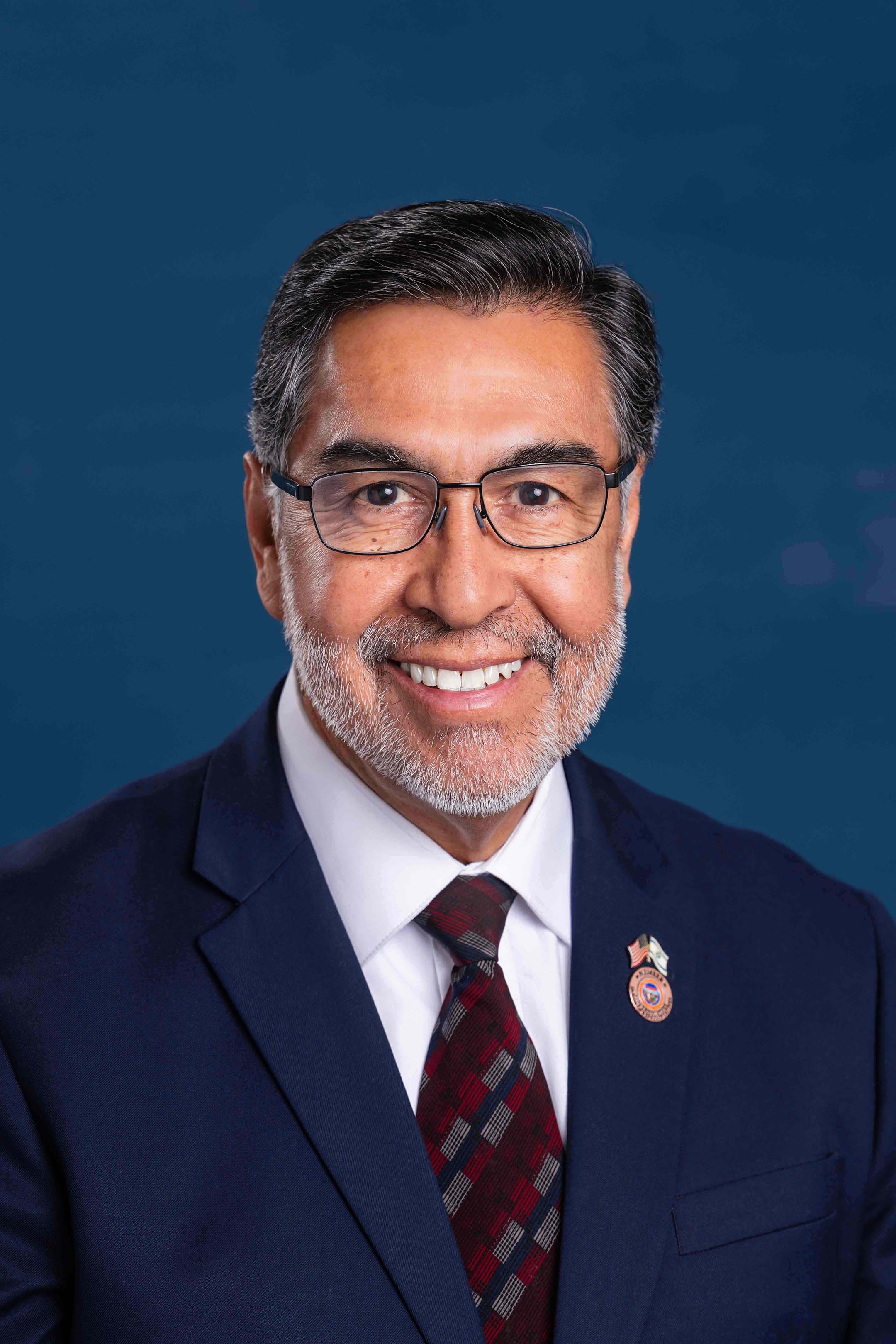
Rep. Lupe Diaz
Sponsored bills
Maddy summaryHB 2091 allows the Arizona Department of Water Resources to review pending applications for a "certificate of assured water supply" for land in the Phoenix Active Management Area (AMA) submitted between January 2021 and August 2023. It requires municipal water providers to annually report excess groundwater and offer 25% of it as water storage credits to the Central Arizona Groundwater Replenishment District (CAGRD), reducing their annual replenishment tax obligation. The bill also permits applications using older groundwater models (2006-2009) to meet physical availability requirements and retroactively dates approved certificates to 2023 for future water rights. The law expires on December 31, 2028.
Maddy summaryHCR 2055 is a voter referendum (not enacted law) proposing that Arizona declare drug cartels "terrorist organizations" under state law and direct the Arizona Department of Homeland Security to address this threat. It defines "drug cartel" as groups engaging in human smuggling, drug trafficking, or terrorism, and states that this declaration does not affect asylum claims under federal law. The resolution cites voter-approved Proposition 314 and findings about border security concerns, including fentanyl trafficking and border crossings by individuals on terrorist watchlists. This measure failed to pass in the June 27, 2025, vote and did not become law.
Maddy summaryHCR 2013 is a proposed law requiring Arizona counties to verify voters' addresses before mailing early ballots and restricting foreign funding in election administration. It mandates that large counties (500,000+ population) require voters to confirm their address each election cycle via mail, phone, or online portal before receiving an early ballot, while smaller counties must do so every four years. The measure also prohibits government election administration from using funds from foreign governments or non-U.S. individuals, requiring vendors to certify annually they receive no such funds and imposing misdemeanor penalties for violations. This referendum failed to pass in June 2025 and would require voter approval to become law.
Maddy summaryHB 2542, the "Protection Procurement Act," prohibits companies domiciled in the People's Republic of China from bidding on or entering into state contracts for goods or services in Arizona, unless they submit a certification letter confirming their non-Chinese domicile. Violating this requirement triggers a $100,000 civil penalty, contract termination, and a 60-month ban on future state bids. An exception allows contracts with Chinese companies only if no reasonable alternatives exist and not procuring the goods would pose a greater threat to the state. The bill was passed by the Arizona legislature in June 2025 but vetoed by the governor on June 25, 2025.
Maddy summaryHCR 2021 would require Arizona cities and towns to exempt most food for home or on-premises consumption from municipal sales taxes, prohibiting differential tax rates on specific food items. It sets a deadline of June 30, 2027, for cities to comply, limits tax increases to 2% without voter approval, and bans new food taxes or rate hikes in the 24 months before that date. This affects local governments (cities/towns), food retailers, restaurants, and residents purchasing food, as it standardizes food tax treatment and restricts local tax authority over food sales. The bill also exempts SNAP/food stamp purchases and food packaging from taxation. It requires voter approval for any new food tax or rate increase beyond 2% and applies retroactively to December 31, 2024.
Maddy summaryHB 2448 updates Arizona's election rules for voting locations. It allows counties to combine polling places for efficiency, establishes procedures for emergency voting centers during elections (including updated voter registration at these sites), and requires school principals to provide written reasons if denying polling space. The bill also mandates that government-owned buildings be made available for voting locations starting in 2026. These changes directly affect local election officials and voters by altering where and how elections are conducted.
Maddy summaryArizona's SB 1109 prohibits foreign principals (including governments, businesses, or individuals from countries identified by U.S. intelligence as posing national security risks) from owning or acquiring most real property in Arizona. Exceptions allow small residential parcels (≤2 acres) for natural persons with valid U.S. visas, provided the property is not near military sites or critical infrastructure. The Attorney General enforces the law, and courts can order the sale of illegally held property, with proceeds distributed to lienholders, the state, and the original owner. The bill directly affects foreign entities from designated countries but exempts existing owners and specific residential purchases meeting strict conditions.
Maddy summaryArizona's HCR 2041 is a state resolution requesting Congress to call a constitutional convention under Article V to propose term limits for U.S. House and Senate members. It asks other states with similar applications to combine their efforts to meet the two-thirds state requirement for such a convention. If Congress fails to act, Arizona and other participating states would proceed with their own convention to draft term limits. This resolution does not create new law but seeks to restart a state-led process for constitutional change, targeting federal congressional representation.
Maddy summaryHB 2679 establishes a new framework for Arizona public power entities (like municipal utilities) to finance infrastructure upgrades by issuing "Transition Bonds." These bonds are secured by future customer payments called "Financing Charges," which become nonbypassable fees added to all customers' utility bills until the costs are fully recovered. The bill creates specific definitions for terms like "Financing Charges," "Qualified Special Purpose Entity," and "Transition Bonds," ensuring these payments cannot be avoided regardless of the customer's service provider or asset ownership. This mechanism allows public power entities to shift financing costs to customers over time rather than relying solely on traditional rate increases.