

Maddy summarySB 1334 amends Arizona election law to clarify how counties designate polling places and establish emergency voting centers. It allows county election officials to combine precincts, create voting centers (where voters can cast ballots at any location in the county), and set up emergency voting centers during elections if approved by a recorded vote of the board of supervisors. Emergency centers require specific location/hours notices, permit voter registration updates at the site, and allow temporary location changes if centers become unavailable. The bill also requires counties to notify voters 33 days in advance for polling place changes and specifies that schools may deny polling place requests only for valid reasons like lack of space or safety concerns.
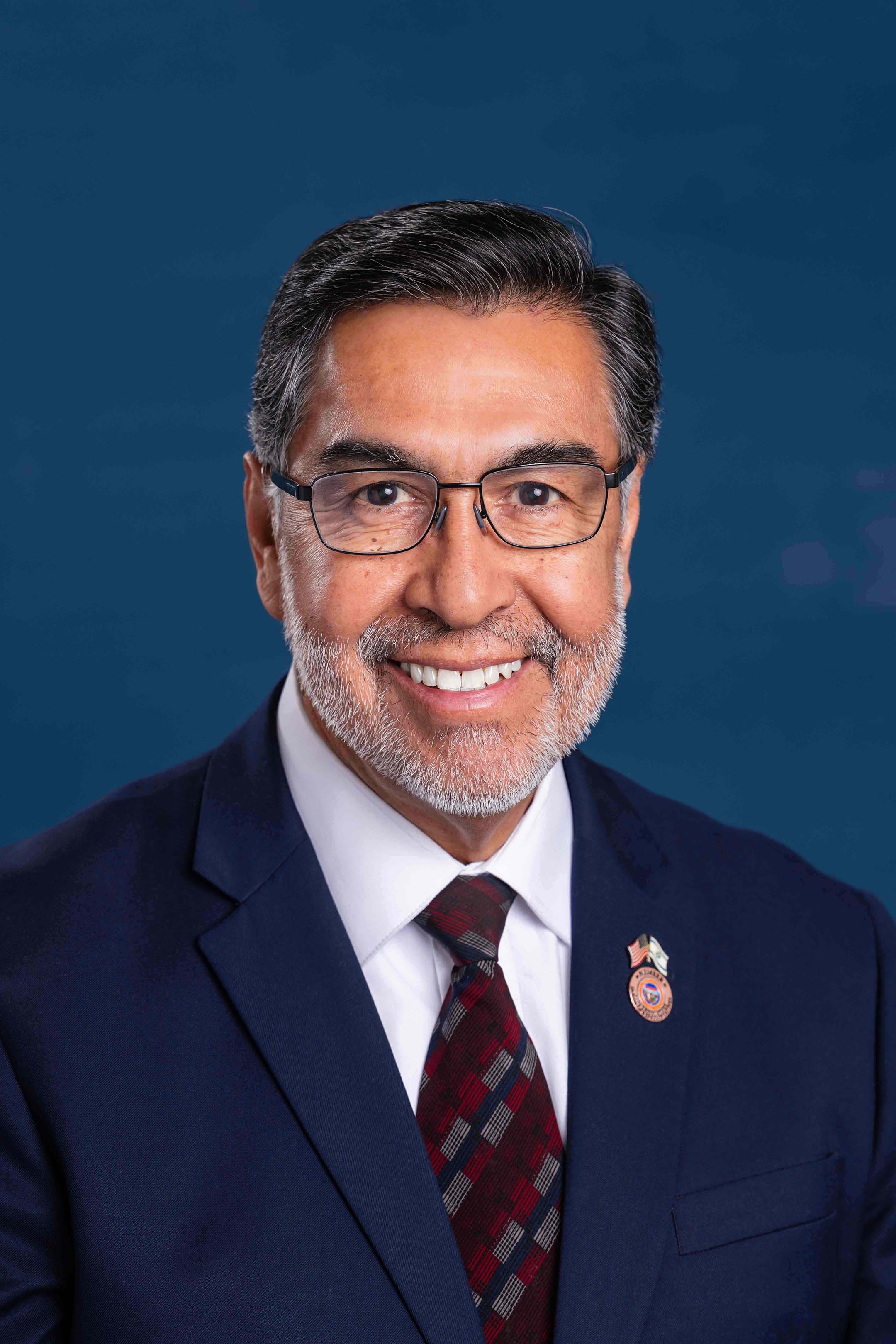
Rep. Lupe Diaz
Sponsored bills
Maddy summaryHB 2084 amends Arizona law to allow domestic water improvement districts in unincorporated areas to deliver water through "water hauling" as part of their water systems. It specifically authorizes districts to construct and operate waterworks, including systems for water delivery via hauling, and permits contracting for transportation services within districts. The bill defines key terms like "waterworks" and clarifies that large agricultural lands (20+ acres for commercial farming) may be excluded if owners object. This change directly affects unincorporated communities seeking to establish or expand water infrastructure, particularly where traditional pipelines are impractical.
Maddy summaryHB 2844 allows nonpartisan candidates (those not affiliated with any recognized political party) to appear on the general election ballot by collecting signatures through a nomination petition instead of participating in partisan primaries. To qualify, a candidate must gather signatures from at least 3% of non-partisan registered voters in their district, with signers unable to have supported other candidates in the same primary. This bill directly affects voters seeking office without party affiliation and alters how they gain ballot access in Arizona. The bill was introduced in the 2025 legislative session but failed to advance after committee review on February 19, 2025.
Maddy summaryHCM 2016 is a symbolic resolution (not a binding bill) passed by the Arizona House of Representatives. It urges the U.S. Congress to support the Palo Verde Generating Station, Arizona's largest nuclear power plant, highlighting its role as a major clean energy source (supplying 70% of Arizona's carbon-free energy), economic contributor ($2.3 billion annual impact), and employer (2,000+ full-time workers). The resolution cites the plant's use of recycled water, lower costs compared to solar, and public support for nuclear energy (56% in a 2024 survey) to make its case. It does not create new policy but requests congressional recognition and support for the facility.
Maddy summaryHB 2845 requires Arizona election officials to randomly verify 5% of candidate petition signatures within 20 days of filing. County recorders must then disqualify signatures meeting specific criteria (e.g., missing addresses, illegible signatures, invalid voter status) within 15 days and report results to the filing officer and candidate committees. This process applies directly to candidates needing petition signatures for office, standardizing verification without changing eligibility requirements.
Maddy summaryHB 2822 requires nongovernmental organizations (NGOs) in Arizona that receive state contracts and operate near the state's international border to submit quarterly financial reports. These reports must detail all funding sources (including private, federal, and state money) and all expenditures related to the state contract. The bill directly affects border-area NGOs receiving state contracts, mandating transparency to the Senate President and House Speaker. It does not change how contracts are awarded but adds specific reporting obligations for these organizations. The bill is currently in early legislative stages (first and second reading in February 2025).
Maddy summaryHB 2832 allocates $10 million from the state general fund for Graham Community College to construct a student housing facility, with funds designated for fiscal years 2026-2027 and 2027-2028. The bill exempts these appropriations from standard expiration rules under Arizona law until June 30, 2029, ensuring the funds remain available for the project. This directly affects Graham Community College District by providing dedicated funding for student housing infrastructure. The key mechanism ensures consistent financial support for construction without risk of the funds lapsing before completion.
Maddy summaryHB 2717 requires businesses constructing solar or wind energy projects to compensate agricultural lessees when the project reduces the size of their leased agricultural operation. It directly affects lessees of state or federal lands used for agriculture, as defined in the bill. The law mandates compensation for lost profits, conservation measure value, reduced operation value, relocation costs, and mitigation expenses, with lessees needing to provide credible evidence of these costs. The bill aims to protect agricultural operations by ensuring financial redress for land-use impacts from energy projects.
Maddy summaryHB 2543 requires businesses constructing solar or wind energy projects on agricultural land to compensate farmers (agricultural lessees) if the project reduces their farming operation. It mandates compensation for lost profits, conservation measures, reduced operation value, relocation costs, and mitigation of losses. Businesses must also provide the lessee with a new lease of equal or greater value. The bill does not apply if the energy project allows farming to continue unchanged on the land.
Maddy summarySB 1686 clarifies that the county recorder is the "officer in charge of elections" for Arizona counties, directly affecting county election officials. It updates rules for establishing election precinct boundaries and designating polling places, requiring county recorders to set boundaries by October 1 before elections and follow specific guidelines for combining precincts or using voting centers. The bill also mandates that public schools must provide space for polling places unless principals deny requests with written reasons like lack of space or safety concerns. These changes aim to standardize election administration procedures for county recorders managing polling locations.