

Maddy summaryHB 2780 amends Arizona's landlord-tenant law to clarify eviction rules for "cause," directly affecting tenants and landlords. It specifies that landlords can terminate leases for material breaches (like rent nonpayment or falsified application info) with 10 days' notice, or for health/safety issues with 5 days. For irreparable breaches (e.g., violence, drug activity, or criminal behavior), immediate termination is allowed. Crucially, landlords must provide one month's rent or relocation assistance to tenants with 12+ months of tenancy if evicting for reasons like the landlord moving in or removing the property from the rental market. The bill also prohibits tenants from withholding rent except as permitted by law and outlines procedures for utility disconnection after court orders.
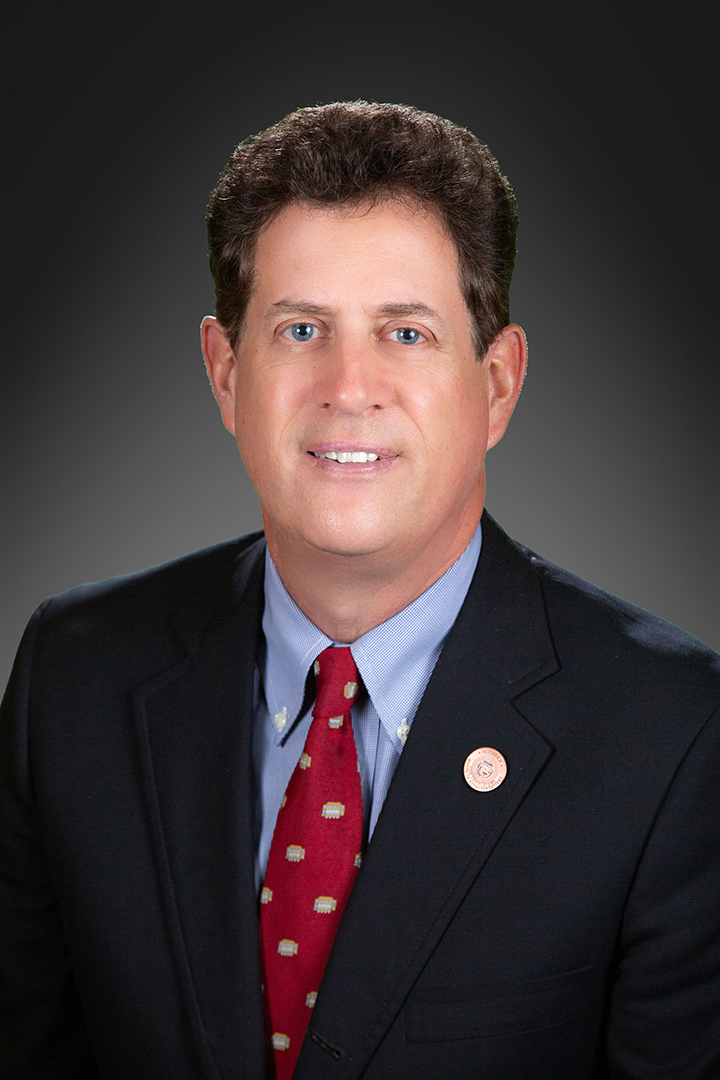
Rep. Chris Mathis
Sponsored bills
Maddy summaryHB 2350 allocates $7 million from Arizona's state general fund for fiscal year 2025-2026 to provide housing assistance to seniors aged 60 and older. The funds will be distributed by the Department of Economic Security to local area agencies on aging (which administer senior services under federal law). This bill establishes ongoing funding for this program beyond the current fiscal year and exempts the appropriation from standard budget lapsing rules. It directly affects elderly Arizonans by expanding access to housing support through existing senior service organizations.
Maddy summarySB 1425 amends Arizona law to require proof of adequate water supply for new subdivisions in rural groundwater management areas before county boards can approve final plats. It directly affects subdividers, counties, and water providers by mandating either a written commitment from a designated water supplier or a director’s determination of adequate water supply. Key provisions include establishing a specific exemption process for transporting water via vehicle/train (if safety and feasibility conditions are met) and requiring counties to document water adequacy status on subdivision plats. The bill does not create new groundwater management areas but implements water supply requirements for existing rural areas, focusing on concrete approval standards for land development.
Maddy summaryHB 2690 repeals Arizona Revised Statutes §15-120.02, which previously addressed team designations in relation to biological sex. The bill directly affects how athletic teams or similar groups in Arizona may be designated based on biological sex, removing the existing statutory requirement. Key provisions involve eliminating this specific legal provision without creating new rules or requirements. As a procedural repeal bill, it does not establish new policy but removes an existing statute, with the bill currently in early legislative stages (House First/Second Reading, January 2025).
Maddy summaryThis resolution (HR 2002) declares gun violence a public health crisis in Arizona. It cites Arizona's 2020 firearm death toll of 1,265, 2022 data showing firearms as the top cause of death for teens aged 15-17, and statistics linking gun access to increased suicides and homicides. The resolution makes no new laws or funding provisions - it is a symbolic declaration by Arizona's House of Representatives. It focuses on acknowledging the severity of gun violence as a public health issue, based on state-specific data.
Maddy summaryThis bill (HB 2348) requires Arizona health insurers - covering hospital service corporations, medical service corporations, health care services organizations, and disability insurers - to provide coverage for behavioral health services (including mental health and substance use disorder treatment) starting January 1, 2026. It mandates insurers to arrange out-of-network coverage with negotiated rates when in-network providers aren’t available within specific timeframes: 30 days for routine care, 7 days for residential care, and 24 hours for emergencies. Crucially, patients cannot pay more than their standard in-network copay, coinsurance, or deductible for these services. Insurers must also document and report out-of-network payments to the state within 20 days of request.
Maddy summaryHB 2352 repeals Arizona's state-level registration requirement for scrap metal dealers and clarifies that local cities, towns, or counties retain authority to enforce their own business licensing systems - including those requiring background checks or fingerprinting. The bill directly affects scrap metal dealers and local licensing authorities by shifting registration responsibility from the state to local governments. Key provisions include eliminating statewide registration (repealing Sections 9-500.38 and 11-269.16) while allowing local licensing systems to remain in place for existing license holders. Existing licenses held by dealers before September 13, 2013, remain valid without requiring reapplication, unless local requirements mandate updates for specific events.
Maddy summaryHB 2496 modifies Arizona's licensing rules by prohibiting state agencies from requiring applicants to provide citizenship or alien status documentation when applying for a professional license. It also mandates that agencies accept a federal tax identification number in place of a Social Security number for licensing purposes. This applies to all licenses issued by state or local agencies for businesses or services (like CPAs, contractors, or healthcare providers). The bill directly affects individuals seeking professional licenses who may lack traditional citizenship documentation, such as immigrants or non-citizens. The key change replaces prior requirements in Section 41-1080 with these new documentation standards.
Maddy summaryHB 2443 redirects unclaimed property funds (from abandoned assets like forgotten bank accounts) to Arizona's housing programs. It requires 55% of these funds to go to the state Housing Trust Fund, with at least 40% of that portion specifically for developing housing in rural areas. Additional allocations include $2 million annually to a mental health housing fund and $24.5 million yearly to an administrative fund. The bill does not directly affect individuals but changes how state funds from unclaimed property are distributed to support housing initiatives.
Maddy summaryHB 2529 repeals Arizona's "duty to retreat" requirement for self-defense. It changes the law so that people in a place where they are legally allowed to be (and not committing a crime) no longer must try to flee before using deadly force in self-defense. The bill directly affects Arizonans who may need to use force to protect themselves, removing the obligation to retreat first. This amendment clarifies that individuals can stand their ground without legal penalty if they reasonably believe deadly force is immediately necessary.