

Maddy summaryThis bill prohibits Arizona government entities and election vendors from using money or services from foreign governments or non-citizens for election administration. It also bans foreign entities from funding efforts to influence ballot measure outcomes. Vendors must provide annual written statements confirming they don’t receive foreign funds, with penalties for false statements (up to three times the contract value). The law explicitly excludes federally recognized tribal nations from the definition of "foreign government."
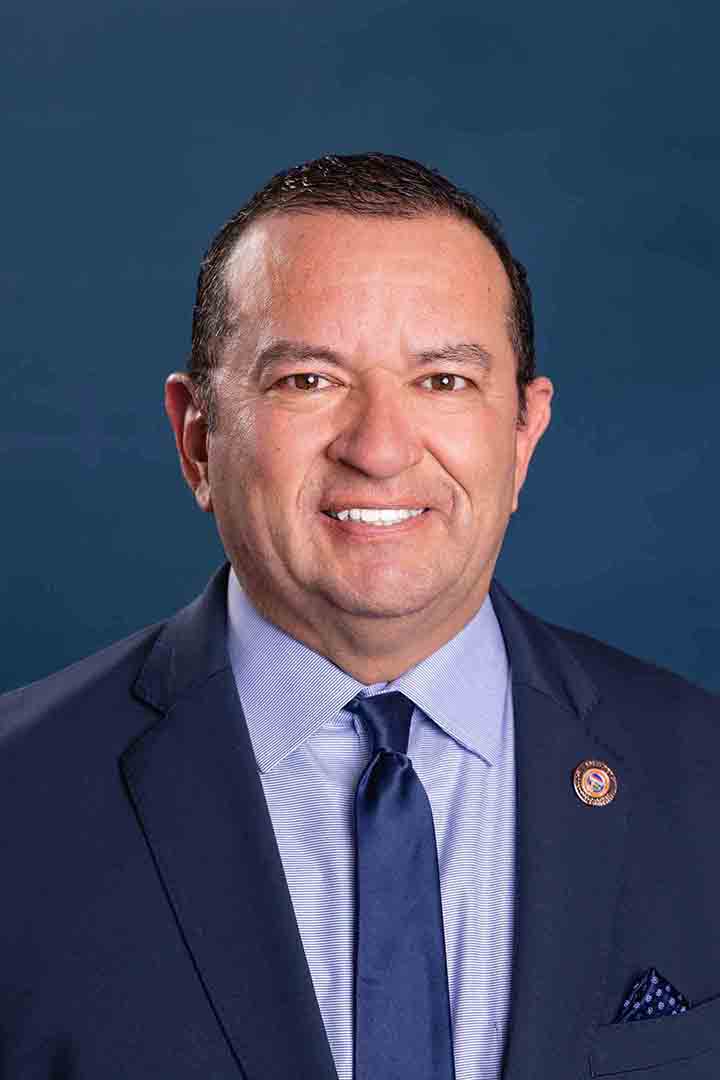
Rep. Chris Lopez
Sponsored bills
Maddy summaryHB 2800 prohibits insurance companies from canceling or refusing to renew fire insurance policies for 24 months after a governor declares a state of emergency due to a natural disaster or wildfire. It specifically protects homeowners and businesses whose properties are located within five miles of the affected disaster area. The law applies only when a state of emergency is declared under Arizona law, preventing insurers from dropping coverage during this critical recovery period. This policy change directly affects residents and businesses in wildfire-prone communities following declared disasters.
Maddy summaryHB 2739 requires manufacturers, packagers, or retailers of food products made from cultivated cells (like lab-grown meat) to label the product packaging with "This food product is derived from cultivated cells." The bill directly affects food companies producing such products sold in Arizona. Its key provision mandates this specific labeling language on all packaging, ensuring consumers can identify these products. The law does not restrict the sale of cultivated cell products but requires clear disclosure of their origin.
Maddy summaryHB 2896 is a technical correction to Arizona Revised Statutes § 8-208, which governs access to juvenile court records. It fixes grammatical errors and clarifies existing language in the statute (e.g., correcting "to determine to determine" to "to determine" and adding missing words) but does not change any substantive policy about record access. The bill leaves unchanged who can access juvenile records (e.g., prosecutors, probation departments, or courts for specific purposes) or the confidentiality rules for adoption, dependency, or victim identity. It is purely a drafting correction to improve clarity in the existing law.
Maddy summaryHB 2635 amends Arizona's tax code to add new sales tax exemptions for specific items. It exempts sales of "cash equivalents" (like gift cards, stored-value cards, and prepaid digital payment tools) and "precious metal bullion" (refined gold, silver, etc.) from retail sales tax. The bill defines "cash equivalents" as pre-paid items denominated in money redeemable for goods/services, excluding telecom prepaids, and clarifies that "monetized bullion" (coins used as currency) is exempt. This directly affects retailers selling these items, removing tax liability on such transactions. The bill focuses solely on tax policy, with no provisions related to firearm storage devices as inaccurately suggested in the title.
Maddy summaryHB 2378 allows individuals previously convicted of juvenile offenses to apply for restored firearm rights after completing probation or juvenile corrections. It specifically requires a 25-year wait for those convicted of dangerous offenses (like arson or burglary), and a 2-year wait for other felonies after discharge. The bill streamlines the process by eliminating court filing fees and directing applications to juvenile or superior courts. This directly affects Arizona residents with past juvenile felony convictions seeking to regain firearm possession rights.
Maddy summaryHB 2869 allows property owners or their contractors to hire licensed independent providers (not affiliated with them) to review building permit applications or conduct inspections instead of using municipal staff. The bill requires these providers to carry professional liability insurance ($2 million/$4 million coverage for projects under $5 million) and mandates municipalities to reduce application/inspection fees by the amount they save. It sets a 5-business-day timeline for municipalities to approve applications reviewed by independent providers or provide written reasons for rejection, with automatic approval if deadlines pass. The law directly affects property developers, contractors, and municipalities in Arizona, streamlining permitting while ensuring provider accountability and cost savings for applicants.
Maddy summaryHB 2764 proposes to make "Howdy" the official state greeting of Arizona by adding it to the Arizona Revised Statutes. This symbolic bill would require state government communications, documents, or interactions to use "Howdy" as the designated greeting. It directly affects state agencies and official state communications but has no practical policy impact on residents or services. The bill is purely ceremonial and does not alter any laws, taxes, or regulations. (Procedural bill; summary limited to 2 sentences as requested.)
Maddy summaryHCR 2014 is a proposed constitutional amendment that would change how Arizona's House of Representatives seats are designated and establish an independent redistricting commission. Starting in 2027, each legislative district would elect two representatives whose seats would be labeled "A" and "B" based on the alphabetical order of their names (surname then first name), requiring candidates to run for a specific seat. It also creates a five-member independent redistricting commission with strict rules to ensure political balance (no more than two members from the same party) and requires members to have been registered voters for at least three years without recent political office or lobbying roles. This amendment must be approved by Arizona voters to take effect.
Maddy summaryHB 2925 amends Arizona zoning law to require municipalities to mandate public dedication of rights-of-way, streets, alleys, drainage, and utilities as a condition of rezoning approvals. This directly affects property owners and developers seeking to change land use designations, as they must now secure public infrastructure commitments before rezoning can proceed. The key provision prohibits municipalities from referring these infrastructure dedication requirements to other administrative bodies, ensuring the requirement is handled directly within the rezoning process. The bill does not alter existing zoning powers but adds this specific procedural step for rezoning decisions.