

Maddy summaryThe SAVE Act (HR 8281) requires U.S. citizens to provide documentary proof of citizenship when registering to vote in federal elections. It defines acceptable proof as documents like passports, REAL ID-compliant IDs, military IDs, or birth certificates, and mandates that states verify citizenship using information from government agencies like DHS and Social Security. States must establish processes for voters without required documentation to provide an attestation under penalty of perjury. The law also requires states to remove noncitizens from voter rolls when verified evidence shows they're not citizens. This bill directly affects all applicants registering to vote in federal elections and state election officials who must implement these requirements.
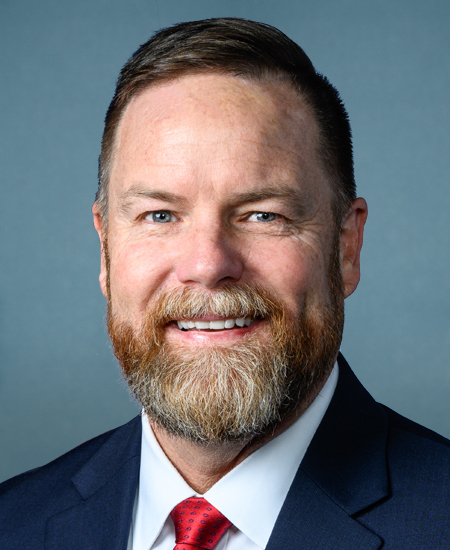
Rep. Aaron Bean
Sponsored bills
Maddy summaryHJRES 164 is a congressional resolution seeking to block a rule issued by the Department of Commerce regarding firearms license requirements. It directly targets the rule published in the Federal Register (89 Fed. Reg. 34680), which would have revised licensing procedures for firearms dealers. If passed, the resolution would prevent this rule from taking effect by invoking the congressional disapproval process under federal law. The bill does not create new regulations but aims to halt an existing rule affecting gun license applicants and dealers.
Maddy summaryThis bill amends U.S. immigration law to make certain military property trespassing a basis for denying entry or deporting non-citizens. It adds to the Immigration and Nationality Act that anyone convicted of entering military, naval, or Coast Guard property without authorization (as defined under 18 U.S.C. §1382) is both inadmissible upon arrival and deportable if already in the U.S. The law directly affects non-citizens with prior convictions for this specific offense. The key mechanism is updating existing immigration grounds for inadmissibility and deportability to include unauthorized entry onto military installations.
Maddy summaryThis bill requires schools receiving federal education funds to disclose foreign funding sources to parents. It mandates that schools provide parents with access to curricular materials paid for with foreign funds (reviewed quarterly), information on staff compensated with foreign funds, and details about foreign donations, agreements, or financial transactions. Schools must post this information annually on public websites and notify parents at the start of each school year. The law applies to all elementary and secondary schools served by local educational agencies receiving federal education funds. It defines "foreign entity of concern" per existing law and focuses solely on transparency, not restricting foreign funding.
Maddy summaryThis bill prohibits federal funding for elementary and secondary schools that partner with Chinese government-funded programs, including Confucius Institutes, Confucius Classrooms, or other entities receiving support from China's government (e.g., through teaching materials, personnel, or funds). It directly affects schools with these specific ties to the People's Republic of China. The prohibition takes effect one year after enactment, with the Education Secretary required to notify schools and provide compliance guidance within 90 days of enactment. The policy change blocks federal education funds for schools meeting the defined criteria, without altering existing educational content or curriculum standards.
Maddy summaryThis bill (HR 2365, Public Law 118-66) directs the U.S. Department of Health and Human Services (HHS) to establish the National Parkinson’s Project. It requires HHS to create and update a coordinated national plan for preventing, diagnosing, treating, and researching Parkinson’s disease and related disorders (including multiple system atrophy and progressive supranuclear palsy), while coordinating federal research and care efforts across agencies like the NIH, CDC, and VA. The law mandates annual progress assessments, an advisory council with patient advocates and diverse experts, and annual reports to Congress on federal Parkinson’s programs and recommendations for improvement. It affects federal agencies managing Parkinson’s-related programs and aims to improve care coordination and research efficiency for patients and caregivers, with the law sunsetting in 2035.
Maddy summaryHJRES 171 is a joint resolution seeking congressional disapproval of a proposed rule by the Department of Health and Human Services (HHS) regarding the Unaccompanied Children Program. The rule, published in the Federal Register on April 30, 2024, aimed to update regulations governing the placement, care, and services for unaccompanied alien children (children entering the U.S. without a parent or guardian). This resolution would block the rule from taking effect, preserving existing regulations under the current program framework. It uses a standard congressional disapproval process under Title 5 of the U.S. Code to halt the rule without altering the program’s underlying policy.
Maddy summaryHJRES 170 is a resolution seeking congressional disapproval of a federal rule that would have required new housing projects financed by the Department of Housing and Urban Development (HUD) or the Department of Agriculture (USDA) to meet specific energy efficiency standards. The rule, published in April 2024, aimed to set these standards for new construction in federally subsidized housing. If passed, this resolution would block the rule under the Congressional Review Act, making it legally void. It directly affects developers and builders of HUD- and USDA-financed housing by removing the requirement to comply with these energy standards.
Maddy summaryHR 8847, the "Confronting CCP Human Rights Abusers Act," requires the U.S. Commerce Department to add China's Ministry of Public Security's Institute of Forensic Science (including its aliases) to the Commerce Department's sanctions list within 60 days of the bill's enactment. The law directly affects this Chinese entity by restricting its access to U.S. technology and exports through sanctions. A waiver is permitted if the President certifies the institute is not involved in human rights abuses against Uyghurs and other minorities in Xinjiang, submitting this certification to Congress within 60 days. The bill's key mechanism is the mandatory inclusion on the sanctions list, with the waiver option tied to human rights certification.
Maddy summaryHRES 1305 is a procedural resolution that formally rescinds subpoenas issued by the January 6th Select Committee to four individuals (Stephen Bannon, Mark Meadows, Daniel Scavino Jr., and Peter Navarro) and withdraws the committee’s recommendations finding them in contempt of Congress. The bill specifically cancels subpoenas from September 2021, October 2021, and February 2022, along with related contempt resolutions adopted in 2021-2022. It does not alter legal proceedings but withdraws the committee’s authority to enforce these actions. The resolution is supported by House members who argue the committee was partisan and illegitimate, though the bill itself only addresses the committee’s procedural actions.