

Maddy summaryH.J. Res. 117 is a joint resolution that would disapprove an Environmental Protection Agency (EPA) rule concerning the reconsideration of National Ambient Air Quality Standards for particulate matter. The EPA rule, published on March 6, 2024, was part of the agency’s process to review these standards, which set limits for harmful air pollutants. This resolution invokes a congressional disapproval procedure under federal law to block the rule from taking effect. If enacted, the rule would have no force or effect, preserving the existing air quality standards for particulate matter.
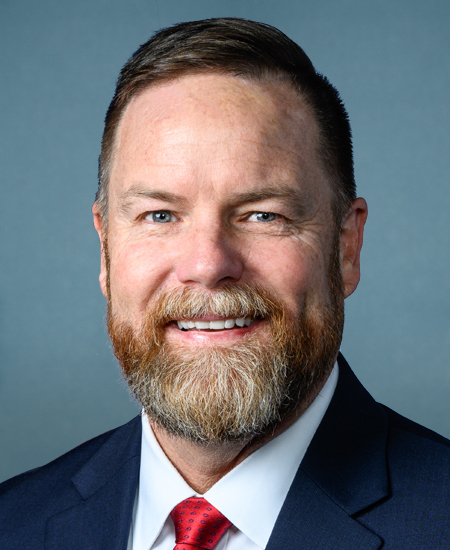
Rep. Aaron Bean
Sponsored bills
Maddy summaryHR 9657, the Detain and Deport Gang Members Act of 2024, would make it easier to detain and deport immigrants who are members of or associated with gangs that meet a new definition of "criminal gang." The bill defines a criminal gang as a group of five or more people whose primary purpose is committing serious crimes including drug trafficking, violent offenses, human trafficking, or immigration crimes. Under this bill, such immigrants would be considered inadmissible (unable to enter the U.S.), subject to mandatory detention, and deportable. The bill also creates a process for the Secretary of Homeland Security to designate groups as criminal gangs, with review procedures, and amends asylum and other immigration benefits to exclude those associated with such gangs.
Maddy summaryHR 1425, the "No WHO Pandemic Preparedness Treaty Without Senate Approval Act," requires the U.S. Senate to approve any World Health Organization (WHO) pandemic preparedness treaty through a two-thirds vote. The bill deems any convention, agreement, or international instrument on pandemic prevention drafted by the WHO’s International Negotiating Body (INB) as a treaty subject to Senate ratification, rather than allowing it to take effect as an executive agreement. This directly affects U.S. foreign policy implementation regarding WHO agreements, ensuring Congress has a formal role in approving such binding international commitments. The bill stems from congressional concerns about WHO’s pandemic response and public skepticism toward the organization, as outlined in its findings.
Maddy summaryThis symbolic resolution expresses congressional support for designating September 29, 2024, as "Veterans of Foreign Wars of the United States Day" to honor the organization's 125th anniversary. It requests the President issue a proclamation encouraging government agencies and the public to observe the day with ceremonies, though it creates no new laws or policy changes. The resolution recognizes the VFW's historical service to veterans but does not directly affect any individuals or programs.
Maddy summaryHR 7130, the FAIR Labels Act of 2024, requires clear labeling for plant-based and lab-grown products marketed as meat or poultry. It mandates that products not containing actual meat or poultry - such as plant-based "burgers" or "chicken" alternatives - must prominently display "imitation" or "cell-cultured" on labels, alongside disclaimers stating they do not contain meat or poultry. This applies to all such products sold in interstate commerce, with no exceptions allowed. The bill also specifically requires "cell-cultured" or "lab-grown" labeling for meat grown from animal cells outside a live animal, while clarifying that existing meat inspection rules still apply to conventional meat products.
Maddy summaryThis resolution aims to block a rule issued by the National Highway Traffic Safety Administration (NHTSA) that sets new fuel efficiency standards for passenger cars, light trucks (starting in 2027), and heavy-duty pickup trucks/vans (starting in 2030). If passed, it would prevent this specific rule from taking effect by disapproving it under a congressional review process. The rule directly affects vehicle manufacturers by requiring them to meet these updated fuel economy targets for future model years. This is a procedural resolution, not a new law, focused solely on halting the implementation of the existing NHTSA rule.
Freedom from Unfair Gun Taxes Act of 2024 This bill prohibits states or localities from imposing a levy or collecting an excise tax on the sale of a firearm, ammunition, or any part or component thereof, by a manufacture or retailer.
Maddy summaryThis bill defines "sex," "male," and "female" in federal law based on biological characteristics present at birth, specifically referencing reproductive anatomy (e.g., sperm production for males, egg production for females). It mandates that all federal agencies, courts, and laws interpret these terms strictly according to this biological definition, excluding self-identification or gender identity. The bill directly affects how federal programs, regulations, and legal decisions interpret terms like "sex," "gender," and "gender identity" in all federal contexts. Key provisions clarify that "gender" refers only to biological sex differences and explicitly states that gender identity does not override these definitions.
Maddy summaryHRES 1371 is a House resolution condemning the Biden Administration and Vice President Kamala Harris for failing to secure the U.S. border. It cites statistics including over 9.7 million illegal immigration encounters since 2021 and the end of the Remain in Mexico program as evidence. As a symbolic resolution with no policy changes, it publicly expresses the House's disapproval of current border policies without altering any laws or enforcement actions.
Maddy summaryHJRES 165 is a congressional resolution seeking to block a Department of Education rule issued in April 2024 that updated protections against sex discrimination in schools receiving federal funding. The resolution aims to disapprove this specific rule (published as 89 Fed. Reg. 33474), which would have required schools to address sex-based discrimination in educational programs. If passed, the rule would no longer be in effect, meaning schools would not need to comply with its requirements. This resolution directly affects all schools and educational programs receiving federal financial assistance, as it targets the implementation of the new nondiscrimination standard.