

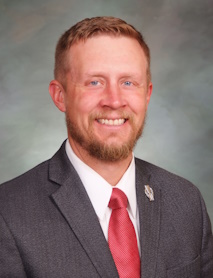
Photo of Brian Boner
R Wyoming Senate · District 2

Sen. Brian Boner

Compare
Total votes
4,655
all sessions
Attendance
98%
71 missed
Higher than 85% of chamber peers
With party
92%
of cast votes
Near the chamber average
Bipartisan score
5%
crosses aisle rarely
Near the chamber average
Sponsored
387
bills & resolutions
Higher than 96% of chamber peers
Committees
3
assignments
387 bills and resolutions

Sponsored bills

Total
387
Primary
77
Co-sponsor
310
This page
387
matching current filters
Co-sponsor SF 83
Passed · Wyoming House · Co-sponsor
Prohibiting chemical abortions.

Maddy summaryThis bill prohibits the use of chemical abortion drugs (such as RU-486, mifepristone, and misoprostol) for abortions in Wyoming, affecting healthcare providers who prescribe, dispense, or administer these drugs. Exceptions include contraceptive use before pregnancy confirmation, treatment for natural miscarriages, and medical care for immediate physical threats to a woman's life (excluding mental health concerns or self-harm risks). Violating the ban would result in misdemeanor charges with penalties of up to six months in jail or a $9,000 fine. Women undergoing abortions with chemical drugs would not face criminal prosecution under this law.

Passed Mar 8, 2022 1 co-sponsor
Co-sponsor SF 79
In committee · Wyoming House · Co-sponsor
Prohibition on private funds for conducting elections.

Maddy summaryThis bill prohibits Wyoming state and local governments from using private donations to fund voter registration, election preparation, or election administration. It specifically bans accepting or spending private funds for these election activities, with exceptions for the Secretary of State using private funds for election training/education and providing food to poll workers on election day. Federal funds for elections remain unaffected by this prohibition. The law takes effect July 1, 2022.

In committee Feb 28, 2022 1 co-sponsor
Co-sponsor HB 135
In committee · Wyoming House · Co-sponsor
General regulatory sandbox program.

Maddy summaryHB 135 creates Wyoming's "General Regulatory Sandbox Program," allowing businesses to temporarily test new products or services without full compliance with certain state regulations. It directly affects businesses seeking to innovate in Wyoming by requiring them to apply to the state council for limited, time-bound waivers of licensing or regulatory requirements. Key provisions include mandatory consumer safety assessments, requirements for businesses to maintain operations and records within Wyoming, and council oversight to ensure waivers don't violate federal law or endanger public health. The program aims to support business development while protecting consumers through structured testing protocols.

In committee Feb 25, 2022 1 co-sponsor
Co-sponsor HB 101
Failed · Wyoming House · Co-sponsor
Drilling units-mandatory royalty amendment.

Maddy summaryWyoming's HB 101 clarifies that nonconsenting landowners (those whose property is included in an oil and gas drilling unit without their agreement) are entitled to a cost-free royalty interest equal to the acreage-weighted average fee royalty of leased tracts within that unit. This policy change directly affects landowners whose mineral rights are pooled into drilling units but who did not consent to the development. The bill requires the Oil and Gas Conservation Commission to create implementing rules and applies only to new pooling orders issued after the law takes effect. It does not alter existing royalty agreements but ensures new nonconsenting owners receive a standardized royalty rate based on the unit's average lease terms.

Failed Feb 18, 2022 1 co-sponsor
Co-sponsor HB 102
Introduced · Wyoming House · Co-sponsor
Pooling orders-good faith negotiation requirement.

Maddy summaryHB 102 requires oil and gas applicants seeking a "pooling order" (which forces combined development of adjacent mineral rights) to first make good-faith lease offers to unleased mineral owners within the proposed area. It mandates that applicants provide evidence of these offers to Wyoming's Oil and Gas Conservation Commission before a pooling order can be approved. The law applies to all applications filed after its effective date (July 1, 2022), and pooling orders must expire after 12 months if drilling doesn't begin. This directly affects mineral owners who may now receive lease offers and oil/gas operators who must negotiate before forced pooling.

Introduced Feb 18, 2022 1 co-sponsor
Co-sponsor HB 138
Failed · Wyoming House · Co-sponsor
Wyoming hope scholarship program.

Maddy summaryWyoming's HB 138 creates the Hope Scholarship Program, providing state-funded scholarships to eligible Wyoming K-12 students. It directly affects Wyoming residents enrolled in public schools who qualify (e.g., attending public school for 45+ days annually), with funds usable at participating private schools. The program establishes a scholarship account funded through state education appropriations (2% of public school funding or per-student amounts), administered by a nine-member board including state education officials. Funds cover qualifying education expenses, with annual transfers from the state education budget to the scholarship program fund. The bill defines key terms like "eligible recipient" and "participating schools" but does not specify implementation timelines beyond the 2023 fiscal year.

Failed Feb 18, 2022 1 co-sponsor
Co-sponsor HB 103
Introduced · Wyoming House · Co-sponsor
Prohibit travel across private land for hunting purposes.

Maddy summaryThis bill prohibits hunting, fishing, or trapping on private land without the owner's permission, including traveling across such land. It directly affects hunters, anglers, and trappers who enter private property without consent. The law expands existing penalties to include travel across private land, imposing fines up to $1,000, up to six months in jail, or forfeiture of illegally taken game. It became effective July 1, 2022.

Introduced Feb 18, 2022 1 co-sponsor
Co-sponsor HB 74
Introduced · Wyoming House · Co-sponsor
Runoff elections.

Maddy summaryHB 74 would require runoff elections in Wyoming for statewide and legislative offices (including governor, state treasurer, and state legislature) if no candidate receives a majority (over 50%) of votes in the primary election. The top two vote-getters would advance to the runoff, with specific tie-breaking procedures for tied vote counts. The bill also changes primary election timing to the first Tuesday after the third Monday in August and standardizes runoff ballot formats to include clear voting instructions and write-in options. This bill was introduced in 2022 but was not considered for advancement by the legislature.

Introduced Feb 18, 2022 1 co-sponsor
Co-sponsor HB 145
Introduced · Wyoming House · Co-sponsor
Hunting and fishing-donations to support public schools.

Maddy summaryHB 145 allows hunters and anglers in Wyoming to voluntarily add a $2 or more donation when buying hunting or fishing licenses to support public schools. The bill amends license fee statutes to provide this option on application forms, with funds deposited into the state's common school account within the permanent land fund. It does not require any fee increase but gives license purchasers a choice to contribute directly to school funding. The provision applies to all license buyers (including nonresidents) purchasing licenses through the state's game and fish department. The bill was scheduled to take effect July 1, 2022, but was introduced in February 2022 without further action noted.

Introduced Feb 18, 2022 1 co-sponsor
Co-sponsor HB 94
Introduced · Wyoming House · Co-sponsor
Drilling units-size limitation.

Maddy summaryHB 94 sets a maximum size of 1,280 acres for oil and gas drilling units in Wyoming, directly affecting oil and gas operators who establish these land groupings for drilling. The bill amends state law to require that drilling units must be large enough to efficiently drain with one well but cannot exceed 1,280 acres. This change applies to all new drilling unit orders issued on or after July 1, 2022. The law aims to standardize unit sizes for operational efficiency without specifying environmental or economic impacts.

Introduced Feb 18, 2022 1 co-sponsor
Showing 201 to 210 of 387 bills
Previous 1 … 20 21 22 … 39 Next