

Maddy summaryThis bill prohibits abortions after fetal viability (when a fetus can survive outside the womb) except to preserve a woman’s life or health, or in cases of incest or sexual assault (with assault reports required within 5 days of the incident or victim’s capacity to report). It also bans state funds from covering abortions except in those specific exceptions. The bill repeals prior conflicting provisions in Wyoming law regarding abortion restrictions and funding. These changes apply immediately upon enactment.
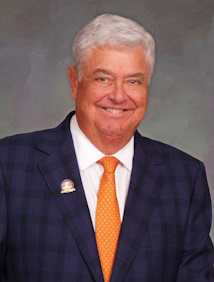
Sen. Mike Gierau
Sponsored bills
Maddy summaryThis bill limits train lengths in Wyoming to 8,500 feet or the shortest passing track/siding length on any route, whichever is shorter, and prohibits trains from routinely blocking intersections for over 10 minutes. Railroad companies operating in Wyoming must comply with these rules, facing fines of $500-$1,000 per foot for exceeding limits, or up to $250,000 for gross negligence causing injury. Penalties collected are deposited into the state highway fund. The law takes effect July 1, 2023.
Maddy summaryHB 136 modifies Wyoming's rules for state capital construction projects by removing a requirement that public works contracts must first be offered to Wyoming residents. The bill allows state agencies to award contracts to nonresident contractors when no qualified resident contractor is available for the specific work. It clarifies definitions of terms like "capital construction project," "renovation," and "routine maintenance" to ensure consistent application of the new rules. These changes directly affect state agencies managing public building projects and contractors bidding on construction work for state facilities. The law takes effect July 1, 2023.
Maddy summaryHB 138 requires Wyoming school districts to provide age-appropriate, evidence-based suicide prevention education to students. It directly affects all public school districts and their students across the state. The bill mandates that programs align with existing state materials under W.S. 21-2-202(a)(xxxv) and training requirements in W.S. 21-3-110(a)(xxxiii). The law was scheduled to take effect July 1, 2023, if passed. This is a policy change requiring specific educational programming in schools, not a procedural or commemorative measure.
Maddy summaryHB 202 creates a Wyoming community college loan program to cover costs for students pursuing aviation degrees and commercial pilot certificates at Wyoming community colleges. It directly affects Wyoming residents or high school graduates enrolled in eligible aviation programs who commit to working as airline pilots in Wyoming for three years to avoid repaying the loan in cash. Key provisions include requiring applicants to seek federal aid first, limiting loans to tuition/certification costs minus other aid, and allowing debt forgiveness for undue hardship. The program is funded by a $1.5 million state appropriation for 2023-2026, with repayment options deferred for military service.
Maddy summaryHJ 8 proposes constitutional changes to Wyoming's ballot initiative and referendum process. It would lower signature requirements from 15% to 5% of voters who chose the governor in the last election and eliminate the need for signatures in two-thirds of counties. The bill also changes the vote threshold to require more than 50% of voters supporting the measure (instead of 50% of all voters) and removes the ban on initiatives that dedicate funds or make spending decisions. These changes aim to make it easier for citizens to propose laws or reject legislation through direct voting.
Maddy summaryHB 162 allows Wyoming counties to voluntarily impose an excise tax on high-value real estate sales to fund affordable housing. Specifically, counties must first get voter approval (via petition or resolution) to tax sales exceeding $1.5 million at a 1% rate, with all revenue dedicated exclusively to local affordable housing projects for low/moderate-income households. The bill requires counties to define "affordable housing" based on local income standards and exempts common transfers like spousal gifts, deeds correcting prior records, and property transfers under $1.5 million. It does not mandate the tax but creates a framework for counties to adopt it through democratic processes.
Maddy summaryThis Wyoming bill (SF 180) amends trespass laws to create an exception for incidental contact when moving between adjacent land parcels. It directly affects landowners and individuals authorized to access two connected parcels of land that share a common corner. The key provision states that a person does not commit criminal trespass or game/fish trespass if they accidentally touch or pass through another person's land while traveling between two parcels they are permitted to access. This change applies to both general trespass and hunting/fishing trespass laws, effective July 1, 2023.
Maddy summaryHB 96 increases the annual salaries for five Wyoming state elected officials following the 2022 general election. The governor's salary rises from $105,000 to $140,000, while the secretary of state, state auditor, state treasurer, and superintendent of public instruction each see their salaries increase from $92,000 to $125,000. The bill also establishes a process for future cost-of-living adjustments to these salaries, tied to budget appropriations and requiring specific footnote disclosures in budget bills. These changes took effect July 1, 2022, with funding allocated for the 2023-2024 fiscal period.
Maddy summaryThis bill amends Wyoming's regulations for nuclear facilities, focusing on advanced reactors and high-level radioactive waste storage. It requires operators to submit detailed reports before construction on job creation, local/state tax impacts, and community benefits (including training and security systems). Operators must also share all public federal regulatory reports (from the Nuclear Regulatory Commission) with the state within 15 days. These provisions apply specifically to facilities operating under federal Nuclear Regulatory Commission licenses.