

Maddy summaryThis bill would create an annual tax holiday during the first weekend in August, exempting sales tax on school-related items like clothing (under $100 per item), school supplies (under $50 per item), computers, computer hardware, software, and sports equipment. It excludes expensive items (e.g., computers over $1,500), accessories like jewelry, resale purchases, and rentals. The holiday would run from 12:01 a.m. Friday to 11:59 p.m. Sunday each August, applying to both in-store and layaway purchases made during that window. The bill was introduced in 2023 but died in committee before becoming law.
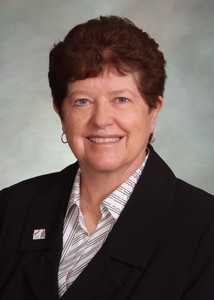
Sen. Wendy Schuler
Sponsored bills
Maddy summaryHB 68 requires drivers to stop for pedestrians in marked school zone crosswalks. It allows schools to install video systems to monitor compliance, operating only during school hours (7 a.m. to 4 p.m. on school days). If a driver’s identity is unknown, the vehicle’s registered owner faces a $195 fine (not counted as a moving violation), and video evidence can be used in court but must be deleted after one year. The bill affects drivers in school zones and vehicle owners, with specific protections for owners who didn’t consent to the driver or sold the vehicle before the violation. It became law effective July 1, 2023, though it died in committee before passing.
Maddy summaryHB 122 establishes a licensing system for anesthesiologist assistants (AAs) in Wyoming, directly affecting AAs seeking to practice and supervising anesthesiologists. The bill requires AAs to graduate from approved programs, pass national certification exams, and work under the direct, on-site supervision of a licensed anesthesiologist who must be physically present during procedures. Key provisions define the AA's scope of practice - including performing preoperative evaluations, airway management, administering anesthesia, and managing medications - all while working within the supervising anesthesiologist's approved scope and requiring their co-signature within 24 hours. This creates formal requirements for licensure, supervision, and practice boundaries, replacing the previous unregulated status for AAs in the state.
Maddy summarySF 150 allows individuals with valid enhanced concealed carry permits to carry concealed firearms on public areas of Wyoming's state capitol grounds, including the connection to the Herschler building. It requires permit holders to notify the Wyoming State Highway Patrol at least 24 hours before entering the capitol with a firearm and restricts carrying to public areas only, excluding private or restricted spaces. The law would take effect on July 1, 2023, but only if Senate File 149 (a separate bill) is enacted. This bill does not change general concealed carry laws outside the capitol grounds.
Maddy summaryHB 167 reauthorizes Wyoming's teacher shortage loan repayment program, targeting educators in high-demand subjects like special education, math, science, world languages, reading, and English as a second language. The bill allows teachers to repay student loans without cash payments by teaching at least 50% of their time in these specific areas within Wyoming public schools, with repayment required within the loan amount's repayment period plus two years after graduation. It appropriates $500,000 from the legislative stabilization reserve for the program during fiscal 2023-2024, with up to 5% allocated for administrative costs. The program requires annual reporting to the legislature on its impact in addressing teacher shortages and funding needs.
Maddy summaryHB 78, titled "Protection of parental rights," would have amended Wyoming statutes to expand where parental rights protections apply. It specifically required that parental rights protections cover judicial proceedings involving custody, neglect, or termination of parental rights (under Title 14), and mandated that schools and educational agencies communicate with parents about their children (under Title 21). The bill aimed to ensure parents' rights in family court decisions and school-related communications. However, it died in committee in February 2023 and did not become law.
Maddy summaryHB 177 modifies Wyoming's school expulsion policy for students possessing deadly weapons, requiring a mandatory one-year expulsion from public schools for such violations. The bill allows school boards to extend expulsion beyond one year if the district provides alternative educational services during the additional period. It directly affects public school students in Wyoming who are found with deadly weapons, as defined under existing law. The policy change takes effect July 1, 2023, and does not alter the grounds for expulsion but specifies the minimum expulsion duration.
Maddy summaryHB 176 limits the number of K-12 content standards Wyoming schools must teach, capping at four per subject for grades K-6 and eight per subject for grades 7-12. It allows school districts to use course completion (like passing a class) instead of standardized tests to measure student performance in some cases. The bill requires districts to report on their assessment systems and directs the state to propose reducing testing by August 2023, potentially using college entrance exams to meet federal requirements. This directly affects Wyoming public schools, teachers, and students by changing curriculum expectations and assessment methods.
Maddy summaryHB 77 modifies Wyoming's definition of "average daily membership" (ADM), the metric used to calculate state school funding. It lowers the threshold for counting part-time students as full-time from 80% to 75% of a full-time schedule, allowing districts to include more part-time students in funding calculations. The bill clarifies that part-time enrollment is prorated based on actual hours attended versus full-time hours, and excludes students absent over 10 consecutive days or withdrawn. This change directly affects school districts receiving state education funding starting with the 2023-2024 school year.
Maddy summaryHB 198 authorizes city clerks (or their designees) to serve as ex officio clerk for civil service commissions without additional pay. It also clarifies that preliminary expenses for these commissions can be covered from existing funds or included in the next budget cycle. This procedural bill affects local government administration in Wyoming cities and towns, streamlining civil service commission operations.