

Maddy summarySF 164 adds three specific definitions to Wyoming's gaming laws related to pari-mutuel rodeo events. It defines "groom" (a person caring for rodeo animals), "rodeo contestant" (a competitor), and "rodeo stock contractor" (a person providing livestock). These definitions clarify who must obtain licenses and undergo background checks under the Wyoming Gaming Commission rules. The bill directly affects rodeo event staff, competitors, and livestock providers participating in events with betting. It takes effect July 1, 2025.
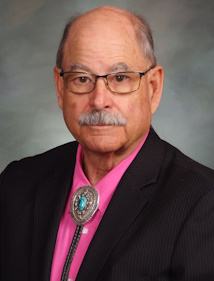
Sen. Ogden Driskill
Sponsored bills
Maddy summarySF 144 creates the Wyoming-Ireland Trade Commission to promote economic collaboration between Wyoming and Ireland. The commission, composed of nine appointed members (including representatives from Wyoming businesses, higher education, and the Irish-American community), will focus on expanding trade, investment, and business/academic exchanges. It requires quarterly meetings, annual reports to the governor and legislature, and reimburses non-legislative members for travel and per diem expenses. This bill directly establishes a formal structure to advance Wyoming-Ireland economic partnerships, affecting businesses, educational institutions, and the Irish-American community through their representation on the commission.
Maddy summaryThis Wyoming joint resolution (SJ 8) requests Congress to propose a constitutional amendment allowing states and Congress to establish reasonable limits on money spent to influence elections. It specifically seeks authority to distinguish between natural persons (individuals) and artificial entities like corporations, unions, or AI when setting these limits. The resolution argues that current Supreme Court interpretations equating unlimited spending with free speech undermine political equality, election integrity, and local representation. It does not create new laws but formally asks Congress to initiate a constitutional amendment process to address these concerns.
Maddy summaryThis is a ceremonial resolution (SJ 7) passed by the Wyoming Legislature to recognize the National Conference of State Legislatures (NCSL) on its 50th anniversary in 2025. It commends NCSL for its role in supporting state legislatures and fostering bipartisan cooperation, as detailed in the resolution's preamble. The resolution directs Wyoming's Secretary of State to send copies to Wyoming's Congressional delegation and NCSL's leadership. It does not create new laws or affect any specific groups or policies.
Maddy summaryHB 324 makes employees of Wyoming's secretary of state, state auditor, state treasurer, and superintendent of public instruction "at-will" employees, meaning these officials can terminate them at any time without cause (except for illegal reasons). It exempts these employees from standard executive branch personnel rules, including compensation plans, job classifications, and discipline procedures. The bill does not affect existing employment contracts signed before July 1, 2025, and specifically states it won't override contracts that already specify employment terms. The law would take effect on July 1, 2025, if passed.
Maddy summaryThis bill allocates over $143 million in state funds to address wildfire impacts in Wyoming from 2024. It provides $1 million for wildfire suppression coordination, $30 million to the state fire suppression account, and $100 million for restoring vegetation, habitats, and public infrastructure on both private and state lands, plus $10 million for water system repairs. A steering committee - including state agency representatives, legislators, and agricultural experts - will review grant applications and recommend fund distribution, with annual reports due until December 2026. The bill directly affects landowners, communities, state agencies, and wildfire-impacted areas by funding immediate restoration and prevention efforts.
Maddy summaryThis bill creates the Wyoming Generational Investment Account (WGIA), a permanent trust fund for state investments. Starting July 1, 2025, it requires annual transfers of $100 million from the legislative stabilization reserve into the WGIA. Funds must be invested to mirror an 85% private equity/15% private credit portfolio, with earnings from each transfer locked in for 30 years. After 30 years, 37.5% of investment earnings from each transfer must be deposited into the state's general fund, while the remainder stays invested in the WGIA. (SF 197)
Maddy summaryWyoming's SJ 1 is a joint resolution requesting Congress to call a constitutional convention under Article V. It asks for a convention limited to proposing amendments that would impose fiscal restraints on the federal government, reduce federal power over states, and limit terms for federal officials. The resolution includes specific safeguards, such as requiring two-thirds of states to agree on the same purpose before Congress acts, clarifying Congress only has the power to set a time and place for the convention, and stating states would vote one state, one vote. This procedural bill directly affects Wyoming's application to Congress and sets boundaries for any potential convention.
Maddy summaryThis bill repeals Wyoming's "budget reserve account" and changes how excess state funds are managed. Instead of holding surplus general fund money in this account, it requires transferring unobligated balances above a set amount directly to the "legislative stabilization reserve account" at the end of each biennium. The bill also removes outdated references to the repealed account from state statutes and adds reporting requirements. This is a procedural budget adjustment affecting state financial management, not specific programs or services.
Maddy summaryHB 235 creates a new categorical grant program to fund career and technical education (CTE) supplies, materials, and equipment for Wyoming public school districts. It provides funding calculated as $14,184.68 per full-time equivalent CTE teacher (based on district reports from the prior year), paid by February 15 of each school year. Funds must be used exclusively for CTE program supplies/equipment and cannot replace existing education funding. School districts must apply annually, report expenditures, and comply with department of education rules.