

Maddy summaryHB 164 allows Wyoming prescribers (doctors, physician assistants, dentists, optometrists, and advanced nurses) and pharmacists to legally prescribe and dispense FDA-approved medications for medical conditions not listed on the drug's official label. The law protects these healthcare professionals from disciplinary action by licensing boards or employers solely for using medications off-label, as long as the prescription follows standard medical practice. However, the bill explicitly excludes prescriptions involving schedule I/II controlled substances, gender transition treatments for minors, or abortions. This law aims to expand treatment options for patients while providing legal safeguards for healthcare providers.
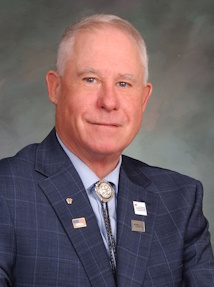
Rep. Bill Allemand
Sponsored bills
Maddy summaryWyoming's HB 228 prohibits state and county election officials (including county clerks) from accepting private money, grants, or services for election administration costs like voter education, registration, or outreach. The bill requires all election-related expenses to be funded solely with public money, with exceptions only for meals provided to poll workers on election day or during training. It also bans private entities from offering such funds and explicitly allows federal election funding. The law takes effect July 1, 2025, and creates misdemeanor penalties for violations.
Maddy summaryThis bill repeals Wyoming's "strategic investments and projects account" and requires all remaining funds in that account to be transferred to the state general fund by July 1, 2026. It eliminates a dedicated state fund that previously held money for capital projects, redirecting those resources to the general budget. The bill also includes reporting requirements for the state auditor on the transfer process. This is a procedural budget adjustment affecting state fund management, not a policy change impacting specific programs or constituents.
Maddy summaryHB 32, titled "What is a Woman Act," defines "sex" as biological sex at birth for all state laws, rules, and regulations. It requires state agencies, schools, and public facilities to distinguish between males and females based on biological sex (e.g., XX chromosomes for females, XY for males) and mandates separate accommodations in settings like restrooms, prisons, shelters, and sports. The bill also requires collecting vital statistics identifying individuals as male or female at birth and states that sex-based distinctions are permitted when related to safety, privacy, or health objectives. It explicitly states that "woman" refers only to biological females and includes protections for intersex individuals under disability laws.
Maddy summaryHB 64 requires healthcare providers to offer an ultrasound to women seeking a chemical abortion (using drugs) at least 48 hours before dispensing the medication. The ultrasound must show the fetus and, if audible, the heartbeat, and providers must document details like the date, physician, and fetal age. Before providing the abortion drugs, the physician or pharmacist must verify the ultrasound occurred. The law excludes exceptions for life-saving care, ectopic pregnancy, or medical treatments where the fetus may be harmed, and penalties for non-compliance apply only to providers (not patients). This directly affects women seeking medication abortions and the healthcare facilities providing them in Wyoming.
Maddy summaryHB 183 amends Wyoming's net metering rules by setting a 25-kilowatt maximum per meter for residential systems and 200 kilowatts per meter for nonresidential systems. It allows customer-generators to combine multiple meters on their property under specific conditions, such as being physically located on the same premises, using the same electricity rate, and served by the same power line. Electric utilities must report annually by July 1 on the total installed capacity and peak demand of net metering systems, with additional reporting to a legislative committee when systems reach 5% of an utility's peak demand. The bill takes effect on July 1, 2025.
Maddy summaryHB 79 requires local governments in Wyoming to meet two conditions for bond elections held on days other than general elections: (1) a majority of voters must support the bond, and (2) at least 50% plus one of the qualified voters who participated in the previous general election must cast ballots. This directly affects cities, school districts, and other political subdivisions seeking to issue bonds for projects like infrastructure or facilities. The bill does not change rules for bond elections held on general election days, and applies only to elections starting July 1, 2025. It aims to ensure broader voter participation for non-general election bond measures.
Maddy summaryWyoming's HB 286 establishes a fixed annual mountain lion hunting season running from September 1 to August 31 each year. It removes all previous restrictions, including hunt areas, mortality limits (statewide or per area), bag limits, and time restrictions - allowing mountain lions to be taken 24/7 with a valid license. Hunters holding valid antelope, deer, or elk licenses can now take mountain lions without needing a separate mountain lion permit, and the bill repeals prior "mountain lion pursuit seasons." The law also requires the Game and Fish Commission to issue possession tags for mountain lions taken and permits trapping/snaring under new rules. This bill directly affects hunters and wildlife management practices by significantly expanding hunting flexibility while removing regulatory limits.
Maddy summaryHB 211 amends Wyoming law to allow hunters to pursue and take predatory wildlife (such as wolves, coyotes, or mountain lions) from vehicles, including cars, snowmobiles, and aircraft - previously prohibited for all wildlife. The bill creates a specific exception for predatory animals only, leaving general hunting from vehicles banned for non-predatory species. It also permits the Wyoming Game and Fish Commission to exempt handicapped hunters from the vehicle-hunting restrictions. The law would take effect on July 1, 2025.
Maddy summaryHB 291 would require Wyoming to maintain a "Restricted Financial Institution List" of banks that boycott energy companies without a valid business reason. It defines a boycott as refusing to do business with fossil fuel-related entities (including exploration, production, or transportation) unless the bank can demonstrate a legitimate financial, legal, or risk-mitigation purpose. The state treasurer and auditor would be barred from entering into banking contracts with institutions listed on this public register, after the Secretary of State provides 45 days' notice and a 30-day correction period. The list would be updated annually and published online, with clear disclaimers that inclusion does not indicate financial instability or consumer risk.