

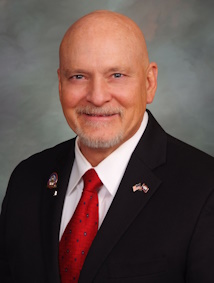
Maddy summaryHB 234 prohibits state and local governments from collecting or maintaining lists of privately owned firearms or their owners using specific merchant codes (like "firearms codes") in payment processing. It also bans payment processors from requiring such codes for firearm retailers or discriminating against them by charging higher fees or refusing transactions based on firearm sales. The bill directly affects firearm retailers, payment processors, and state agencies by restricting how firearm-related transaction data can be handled. Violations could lead to civil actions or criminal penalties, including misdemeanor charges for knowingly violating these provisions.
Sponsored bills
Maddy summarySF 156 prohibits Wyoming school districts from using state foundation program funds for capital construction or major facility repairs/replacements. The bill specifically blocks these funds from covering costs for educational buildings, offices, portable classrooms, or "enhancements" (non-essential upgrades), and restricts special reserve funds from being spent on similar projects. It affects all Wyoming public school districts receiving foundation program funds, requiring them to separate these funds from capital improvement budgets. The law amends existing statutes to clarify these spending restrictions and requires districts to report compliance in annual financial reports.
Maddy summaryHB 250 defines "person" in Wyoming law to mean living human beings possessing at least one biological function (e.g., heart, brain, or respiratory activity). It prohibits health care decisions harming these functions except in medical emergencies to save a pregnant woman's life or when discontinuing life-sustaining treatment with documented no chance of recovery. The bill directly affects medical providers, patients, and families making health care decisions, requiring Wyoming Board of Medicine review for certain exceptions. It excludes the Wyoming Health Care Decisions Act and takes effect July 1, 2025.
Maddy summaryHB 274 prohibits students assigned male at birth from competing on women's sports teams at Wyoming schools and colleges, affecting high school and higher education athletic programs. It expands existing rules to include institutions of higher education, creates liability for government entities that violate the prohibition through negligent or intentional acts, and establishes private lawsuits for harmed students or schools. The bill adds whistleblower protections for employees reporting violations and removes immunity for entities that retaliate against those who report or pursue legal action under the law. It also sets a three-year statute of limitations for filing lawsuits related to violations. The law takes effect July 1, 2025.
Maddy summaryHB 102 changes Wyoming's Attorney General from a governor-appointed position to a statewide elected office starting in the 2026 general election. It establishes a four-year term, sets the salary, and creates rules for filling vacancies, making the Attorney General a state-elected official like the governor and other top state officers. The bill also updates ethics laws and other statutes to apply to the elected Attorney General, requiring them to be a licensed attorney with four years of practice. This directly affects Wyoming voters, who will elect the Attorney General beginning in 2026, and the Attorney General’s office, which will now operate under elected official rules.
Maddy summaryHB 248 prohibits Wyoming's governor from authorizing increases to legislative appropriations from the public school foundation program account, except to ensure sufficient funds are available to cover the foundation program as defined by state law for each school district. This bill directly affects the governor's budget authority and school districts relying on foundation program funding. The key mechanism is a new restriction on executive actions regarding school funding adjustments, with the exception only allowing increases necessary to maintain the program's full funding level. The bill takes effect immediately upon becoming law.
Maddy summaryHB 159 regulates chemical abortions in Wyoming by requiring healthcare providers to: (1) physically examine patients, be present during drug administration, schedule follow-up visits within 7 days, and provide labeled catch kits and medical waste bags for disposal. The bill defines "chemical abortion" as using drugs to intentionally terminate pregnancy or kill an unborn baby, with exceptions for medical emergencies like ectopic pregnancy. It also holds drug manufacturers strictly liable for environmental cleanup if abortion drugs enter wastewater or water supplies, requiring proper disposal of medical waste. The bill directly affects healthcare providers and drug manufacturers in Wyoming, with penalties including up to 3 years in prison or $10,000 fines for noncompliance.
Maddy summaryThis bill designates a 36.5-mile segment of US Highway 16 in Johnson County (between mile markers 52.47 and 89) as the "USMC CPL Seth Rasmuson Memorial Highway" to honor a Marine Corps corporal. It authorizes the Wyoming Department of Transportation to install appropriate signage and appropriates $3,000 from the general fund for this purpose, with funds expiring June 30, 2026. The bill has no policy impact beyond naming the highway segment and installing commemorative signage.
Maddy summaryWyoming's SF 124 would require employers to verify the immigration status of potential employees before hiring and report unauthorized workers to law enforcement. It mandates that law enforcement officers ask about immigration status during detentions and notify federal agencies when encountering unauthorized aliens. The bill also requires verification of lawful presence for individuals applying for state or local public benefits (excluding emergency medical care and disaster relief). These provisions directly affect employers, law enforcement agencies, and immigrants seeking public benefits or employment in Wyoming. The bill is currently pending in the Judiciary Committee with a recommendation for amendment.
Maddy summaryThis Wyoming constitutional amendment (SJ 10) clarifies that taxation and spending authority belongs solely to the state legislature and governor (executive branch), not the courts. It allows the legislature to delegate local taxing power to counties/cities (with elected officials serving ≤4-year terms) and delegate routine debt payments to the executive branch, with courts enforcing these tasks. For public school funding, it requires the legislature to create a judicially reviewable funding formula, but the appropriation amount itself cannot be challenged in court. If funding falls short, school spending would be reduced uniformly across all districts. The amendment must be approved by voters to take effect.