

Maddy summaryHB 72 requires public facilities in Wyoming, including schools, correctional facilities, and government buildings, to designate multi-occupancy changing rooms, restrooms, and sleeping quarters exclusively for males or females. It prohibits access to opposite-sex designated areas and allows individuals to sue public entities if they encounter someone of the opposite sex in a designated space, unless exceptions apply (like single-occupancy unisex rooms, medical emergencies, or cleaning staff). The bill defines "female" and "male" biologically and specifies that civil lawsuits must be filed within two years of a violation, with successful plaintiffs able to recover attorney fees. This directly affects public facility operators and users in shared spaces, aiming to enforce single-sex facility use through legal accountability.
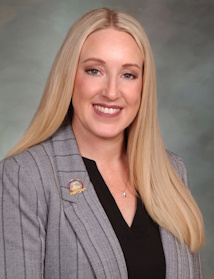
Sponsored bills
Maddy summaryHB 96 prohibits discrimination in public services based on a person's vaccination status, face covering use, or COVID-19 testing results. It applies to businesses and entities receiving state or federal subsidies, banning them from refusing services, goods, or facilities based on these factors. The bill also prohibits advertising or publishing requirements for masks, vaccines, or testing as conditions for accessing public services. Individuals harmed by violations can seek up to $5,000 in civil damages through a lawsuit.
Maddy summaryWyoming's HB 60 requires all public schools, the University of Wyoming, and Wyoming community colleges to designate athletic teams by sex and prohibits male students from competing on teams designated for female students. The bill creates legal remedies allowing schools or students harmed by violations to seek damages, attorney fees, and injunctions through private lawsuits within two years of the violation. It defines "female" and "male" based on biological reproductive systems and prohibits schools from participating in female-designated sports with teams known to include male students. The law takes effect July 1, 2025, for all institutions.
Maddy summaryThis bill changes how vacant elected offices in Wyoming are filled. It requires state or county committees to appoint replacements from a pre-approved list if vacancies aren't filled by the original deadline, and creates an automatic presumption that appointed individuals meet all legal qualifications for the office. The process applies to most state offices (excluding congressional seats or school board positions), with state committees handling certain vacancies and county committees managing others. If appointments aren't made within specified timeframes, a special election may be triggered under defined conditions. The bill takes effect July 1, 2025.
Maddy summaryWyoming's HB 160 repeals the provision allowing school identification cards as valid forms of ID for in-person voting. The bill directly affects voters in Wyoming who previously used school IDs to verify their identity at polling locations. It removes school IDs from the list of acceptable voter identification documents, effective July 1, 2025. This change modifies the state's voter ID requirements without adding new ID types or altering other voting procedures.
Maddy summaryHB 135 (Wyoming) establishes rules for autologous and direct blood donations. It requires hospitals and licensed health facilities to allow patients to donate their own blood (autologous) or donate blood specifically for another person (direct) before a medical procedure, as ordered by a healthcare provider. Blood banks must follow these orders unless the donor has health conditions making donation unsafe, and may charge reasonable fees for facilitating and storing the blood. The bill directly affects hospitals, blood banks, and patients seeking pre-donated blood for future procedures. It takes effect July 1, 2025, with rulemaking by the Department of Health required for implementation.
Maddy summaryHB 209 repeals Wyoming's low-carbon energy standards for public utilities, removing requirements that previously mandated certain carbon-reduction measures. The bill directly affects electric utilities by eliminating statutory obligations related to low-carbon energy generation and dispatchable/reliable power definitions. Key provisions repeal specific sections of Wyoming law (W.S. 37-1-101, 37-18-101, and 37-18-102) that established these standards. The Public Service Commission must then create new rules to implement the repeal, with the bill taking effect immediately upon enactment.
Maddy summaryHB 77 requires ride-share drivers in Wyoming to provide proof of Wyoming motor vehicle registration before they can operate through transportation network companies (like Uber or Lyft). Specifically, ride-share companies must verify that drivers submit a copy of their Wyoming vehicle registration for the vehicle they use to provide rides. This requirement applies to all drivers using Wyoming-registered vehicles for ride-sharing services and takes effect on July 1, 2025. The bill does not create new fees or alter driver licensing rules, only mandating registration verification as a precondition for drivers to work.
Maddy summaryThis Wyoming bill prohibits using eminent domain (government power to take private land) for pipelines transporting carbon dioxide used in carbon capture, utilization, or storage projects. It directly affects companies developing carbon capture infrastructure, preventing them from acquiring land through eminent domain for CO2 pipelines. The law applies only to projects starting construction on or after July 1, 2025, and amends existing eminent domain statutes to exclude carbon dioxide pipelines from standard utility rights. It does not impact other pipeline projects or existing carbon capture operations.
Maddy summaryHB 269 establishes a licensure system for naturopathic medicine in Wyoming, requiring practitioners to graduate from accredited naturopathic programs (CNME-accredited in the U.S. or Canada) and pass the NABNE licensing exam. It creates the "Wyoming Board of Acupuncture and Naturopathic Medicine" with nine members, including three licensed naturopathic physicians, to oversee licensing, set practice standards, and enforce penalties for unlicensed practice. The bill directly affects naturopathic medicine practitioners, who must obtain a license by January 1, 2026, to legally practice. Key provisions include defining "naturopathic medicine," establishing board authority, and requiring continuing education for license holders.