

Maddy summaryWyoming's HB 197 limits fees that local governments can charge developers to fund affordable or workforce housing. It caps these fees at 4% of construction costs (or less based on impact studies), exempts the first 3,000 square feet of single-family homes and 1,750 square feet of multi-family units, and prohibits fees for agricultural land subdivisions. Developers must receive written fee notices within 30 days and can request a detailed, individualized explanation of the fee calculation from local authorities. The law applies to all cities, towns, and counties issuing land use permits for residential or commercial projects.
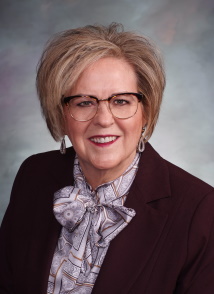
Rep. Martha Lawley
Sponsored bills
Maddy summaryHB 19 requires social media companies to obtain explicit parental or guardian permission before allowing Wyoming minors under 18 to create accounts on their platforms. The bill mandates that companies verify this consent, establish processes for parents to revoke consent, and comply with rules created by the state Attorney General. This law directly affects Wyoming minors and social media companies operating within the state, taking effect on July 1, 2025.
Maddy summaryHB 74 proposes a procedure for Wyoming county clerks to address frivolous legal filings. It authorizes clerks to temporarily hold or reject filings they deem frivolous (lacking legal/factual basis or filed for improper purposes like harassment), after seeking a district court order. If the court declares a filing frivolous, the clerk must reject it, refund any filing fees within 10 days, and add a "frivolous" notation to previously filed documents. This bill would make frivolous filings legally ineffective, directly affecting individuals submitting such documents and county clerks managing court records.
Maddy summaryHB 261 amends Wyoming's penalties for "accessory after the fact" (helping a criminal after a crime is committed). It creates three penalty tiers: 1) For non-violent felonies where the accessory is not a relative (3 years max jail or $3,000 fine), 2) For violent felonies (same as above), 3) For non-violent felonies when the accessory is a relative or the principal is a minor (6 months max jail or $750 fine). The bill directly affects individuals who assist criminals post-crime, with lighter penalties for family members or minors involved. It is pending legislative action and would take effect July 1, 2025, if passed.
Maddy summaryWyoming's HB 302 creates legal immunity for government entities when public employees use or fail to use firearms while performing official duties. It amends two statutes (W.S. 1-39-104 and W.S. 21-3-132) to state that governmental entities cannot be held liable for tort claims arising solely from such firearm-related actions. This applies to all public employees, including school district staff carrying firearms on school property as permitted by law. The bill takes effect July 1, 2025, and does not change existing firearm laws or create new obligations for employees.
Maddy summaryHB 148 regulates surgical abortion facilities in Wyoming by requiring them to obtain a specific license as ambulatory surgical centers. It mandates that only licensed physicians with hospital admitting privileges within 10 miles of the facility can perform surgical abortions, and facilities must comply with health department rules for surgical centers. Violations carry penalties: misdemeanor fines up to $1,000 for facilities or physicians, and felony charges (1-14 years imprisonment) for unlicensed providers. The bill directly affects surgical abortion facilities, licensed physicians performing abortions, and hospitals with admitting privileges, while defining key terms like "surgical abortion" and "abortion facility."
Maddy summaryHB 45 creates a property tax exemption for single-family homes in Wyoming, directly affecting homeowners with residential structures. The exemption covers increases in a home's value above 5% of the previous year's assessed value, meaning homeowners pay tax only on growth exceeding that threshold. However, the exemption doesn't apply if the value increase comes from new construction, additions, or if the property was purchased in the prior year. The law requires tax assessment notices to include exemption details and applies to tax years starting January 1, 2024.
Maddy summaryThis Wyoming bill (SF 61) allows charter schools to directly apply for and receive federal and state education grants by treating them as local education agencies (LEAs). It requires school districts to pay charter schools based on specific funding formulas and repeals previous rules designating school districts as the LEA for charter schools. Charter schools will now handle special education services for their students under federal law. The changes take effect July 1, 2024.
Maddy summaryThis bill creates a new legal right for vulnerable adults in Wyoming to sue anyone who exploits them. It allows vulnerable adults (or specific representatives like guardians, family members, caregivers, or nursing facilities) to seek compensation for actual damages, punitive damages, and attorney fees. The law applies to exploitation cases and permits lawsuits in any appropriate court. It takes effect on July 1, 2024.
Maddy summaryThis Wyoming bill (SF 76) updates prostitution and solicitation laws by expanding the definition of prohibited acts to explicitly include "sexual contact" and "sexual intrusion" as defined in existing law. It affects individuals engaging in or soliciting commercial sexual acts, now covering specific acts previously not explicitly listed under these statutes. The bill maintains the same penalties: up to six months in jail, a $750 fine, or both for violations. The law becomes effective July 1, 2024.