

Maddy summaryHB 235 creates a new categorical grant program to fund career and technical education (CTE) supplies, materials, and equipment for Wyoming public school districts. It provides funding calculated as $14,184.68 per full-time equivalent CTE teacher (based on district reports from the prior year), paid by February 15 of each school year. Funds must be used exclusively for CTE program supplies/equipment and cannot replace existing education funding. School districts must apply annually, report expenditures, and comply with department of education rules.
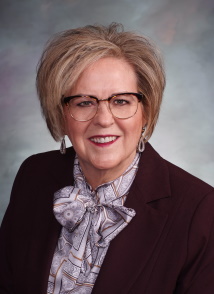
Rep. Martha Lawley
Sponsored bills
Maddy summaryHB 166 requires Wyoming's state auditor to publish detailed vendor payment information on the official state auditor website within 30 days of each payment. It directly affects all state agencies making vendor payments by mandating the public posting of payment dates, vendor names, agencies involved, amounts, and payment descriptions. The law specifies that this information must remain online for at least five years, applying to all payments made on or after July 1, 2025. The bill aims to increase transparency in state spending without altering existing procurement processes.
Maddy summaryHB 214 allows Wyoming cities, towns, and counties to pay claims and demands using electronic payments or fund transfers, instead of physical checks or warrants. It updates existing laws to explicitly permit electronic methods while maintaining current requirements, such as requiring claim certification by a manager and approval by a governing body before payments over $50. The bill ensures electronic payments must still specify the purpose, be payable to specific recipients, and be documented in county payment registers, with effective implementation set for July 1, 2025.
Maddy summaryHB 41 amends Wyoming law to clarify which financial institutions can issue irrevocable letters of credit (a type of financial guarantee) that environmental operators may use instead of bonds. It specifies that these letters must be issued by U.S.-organized banks insured by the FDIC or credit unions insured by the NCUA. The bill directly affects mining operators (especially noncoal operations on non-federal land) and solid waste facility operators who need to post financial security with the Wyoming Department of Environmental Quality. The changes apply to letters of credit issued on or after July 1, 2025, and require the Environmental Quality Council to create implementing rules.
Maddy summaryThis bill changes how Wyoming charter schools receive funding from their school districts. It requires districts to allocate a portion of their central office nonpersonnel expenses and personnel costs to charter schools based on the charter school's average daily membership compared to the total district membership. For example, if a charter school has 10% of the district's students, it would receive 10% of those allocated district costs. The bill takes effect July 1, 2025, and directly affects all Wyoming charter schools operating within public school districts.
Maddy summaryThis joint resolution (SJ 3) commemorates the 100th anniversary of Nellie Tayloe Ross becoming the first woman governor of the United States in 1925. It formally recognizes her historic achievement and legacy through a symbolic resolution passed by the Wyoming Legislature. The bill has no policy provisions or direct impact on citizens; it serves only as a ceremonial acknowledgment. Wyoming's legislature will transmit copies of the resolution to federal officials as part of the commemoration. This is a purely symbolic measure with no legislative or financial effects.
Maddy summaryHB 189 prohibits adults (18+) from engaging in a "pattern of communication" with minors (under 18) that includes obscene content defined as explicit sexual descriptions, requests for sexual images, or attempts to normalize adult-minor sexual contact. It specifically targets communications intended for personal sexual gratification, requiring two or more instances across any communication method (written, electronic, or verbal). Violations are felonies with penalties up to 20 years in prison and fines up to $20,000, plus social media restrictions and device forfeiture for convicted individuals. The law exempts school, college, or university activities involving sexual education. It directly affects adults communicating with minors in non-educational contexts and provides victims a civil lawsuit option.
Maddy summaryHB 170 clarifies when documents filed by nonprofit corporations and statutory trusts in Wyoming become effective. It amends two sections of Wyoming law to specify that documents are effective at the time they are received for filing, as shown by the secretary of state's endorsement date and time on the original document. This procedural change directly affects nonprofit organizations and statutory trusts that file documents with the state. The bill does not alter substantive requirements but updates the legal language to remove ambiguity about effective dates. It takes effect on July 1, 2025.
Maddy summaryHB 237 modifies Wyoming's license plate issuance process. It shifts responsibility for issuing standard license plates from county treasurers to the Department of Transportation (DOT), clarifies the number of plates provided per vehicle, and eliminates the requirement to replace plates after a fixed time period. The bill also mandates rulemaking by the DOT and updates related statutes. This procedural change primarily affects all vehicle owners who register vehicles in Wyoming by streamlining plate issuance and removal of outdated replacement rules.
Maddy summarySF 133 (Wyoming) creates a legal right for parents to challenge government actions that infringe on parental rights in court. It amends state law to allow parents to assert violations of parental rights as a defense or claim in any judicial or administrative proceeding, regardless of whether the government is a party. The bill specifies that parents may seek remedies like court orders, compensation, and attorney fees if their rights are violated. This directly affects parents and government entities in Wyoming, making government liability possible for such violations starting July 1, 2025. The law does not change parental rights themselves but provides new legal tools to enforce them.