

Maddy summaryThis bill appropriates $79 million from Wyoming's general fund to remodel the state veterans' home in Buffalo, Wyoming. It specifies that construction costs must not exceed $103.85 million total, including state funds, federal funds received for the facility, and other authorized spending. The bill requires federal funds received for the veterans' home to offset the state appropriation dollar-for-dollar, reducing the state's required contribution. Any unspent state funds remaining after project completion must revert to the general fund, per state law.
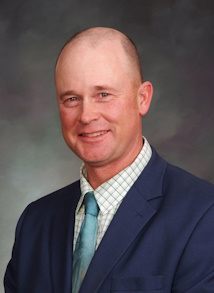
Rep. J.D. Williams
Sponsored bills
Maddy summarySF 172 establishes Wyoming's participation in the Physical Therapy Licensure Compact, allowing physical therapists licensed in Wyoming to practice in other participating states without obtaining separate licenses. The bill creates a framework for mutual recognition of licenses between member states, requiring criminal background checks for new applicants and enabling states to share disciplinary information through a centralized data system. This directly affects licensed physical therapists seeking to practice across state lines, particularly military spouses relocating with their families, and improves patient access to physical therapy services. The compact preserves each state's authority to regulate practice and protect public safety while streamlining licensure for therapists.
Maddy summaryThis Wyoming joint resolution (SJ 8) requests Congress to propose a constitutional amendment allowing states and Congress to establish reasonable limits on money spent to influence elections. It specifically seeks authority to distinguish between natural persons (individuals) and artificial entities like corporations, unions, or AI when setting these limits. The resolution argues that current Supreme Court interpretations equating unlimited spending with free speech undermine political equality, election integrity, and local representation. It does not create new laws but formally asks Congress to initiate a constitutional amendment process to address these concerns.
Maddy summaryThis bill allocates over $143 million in state funds to address wildfire impacts in Wyoming from 2024. It provides $1 million for wildfire suppression coordination, $30 million to the state fire suppression account, and $100 million for restoring vegetation, habitats, and public infrastructure on both private and state lands, plus $10 million for water system repairs. A steering committee - including state agency representatives, legislators, and agricultural experts - will review grant applications and recommend fund distribution, with annual reports due until December 2026. The bill directly affects landowners, communities, state agencies, and wildfire-impacted areas by funding immediate restoration and prevention efforts.
Maddy summaryWyoming's SJ 1 is a joint resolution requesting Congress to call a constitutional convention under Article V. It asks for a convention limited to proposing amendments that would impose fiscal restraints on the federal government, reduce federal power over states, and limit terms for federal officials. The resolution includes specific safeguards, such as requiring two-thirds of states to agree on the same purpose before Congress acts, clarifying Congress only has the power to set a time and place for the convention, and stating states would vote one state, one vote. This procedural bill directly affects Wyoming's application to Congress and sets boundaries for any potential convention.
Maddy summaryWyoming's SF 179 modifies rules for compensatory mitigation related to greater sage-grouse habitat. It allows operators (like energy or development companies) to use their own mitigation measures on equivalent lands within Wyoming instead of purchasing credits, requiring them to maintain responsibility for these measures throughout the impact period. The bill prohibits using eminent domain for mitigation activities and mandates the Board of Land Commissioners to create implementing rules. This law, effective July 1, 2025, directly affects businesses with land impacts in sage-grouse habitat areas.
Maddy summaryHB 232 requires manual hand counting for certain election recounts in Wyoming, directly affecting county clerks, candidates, and election officials. The bill mandates that recounts requested by candidates must be conducted by hand (not electronic systems), revises primary and canvass deadlines to allow time for this process, and specifies that candidates can request recounts based on defined criteria. It clarifies that county clerks must appoint counting boards for recounts and authorizes the secretary of state to establish rules for handling ballots during manual counts. The bill does not change who can request recounts but replaces electronic recount options with mandatory hand counting in specified cases.
Maddy summaryWyoming's SF 64 is a state policy resolution opposing a federal rule requiring electronic ear tags for livestock. It states Wyoming's position that the state will continue using traditional identification methods (like brands, ear tags, and tattoos) under existing law, rather than adopting mandatory electronic devices. The bill requires state and local veterinarians to inform livestock producers about these traditional options and clarifies that Wyoming livestock buyers in other states would be responsible for electronic tagging if required there. This bill does not change Wyoming's current identification rules but formally rejects the federal mandate as unnecessary and costly.
Maddy summaryHB 226 creates special "Search and Rescue" license plates for Wyoming residents registering non-commercial vehicles. Owners pay a $100 one-time eligibility fee (waiving the first year's $25 annual fee) and can donate additional voluntary amounts. All fees and donations go directly to the state's Search and Rescue Account under Homeland Security, managed per existing law. The plates must feature Wyoming's bucking horse and rider symbol and will stop production if fewer than 1,000 sets are issued by 2032. This program directly affects vehicle owners who choose to participate in funding search and rescue services.
Maddy summaryHB 235 creates a new categorical grant program to fund career and technical education (CTE) supplies, materials, and equipment for Wyoming public school districts. It provides funding calculated as $14,184.68 per full-time equivalent CTE teacher (based on district reports from the prior year), paid by February 15 of each school year. Funds must be used exclusively for CTE program supplies/equipment and cannot replace existing education funding. School districts must apply annually, report expenditures, and comply with department of education rules.